
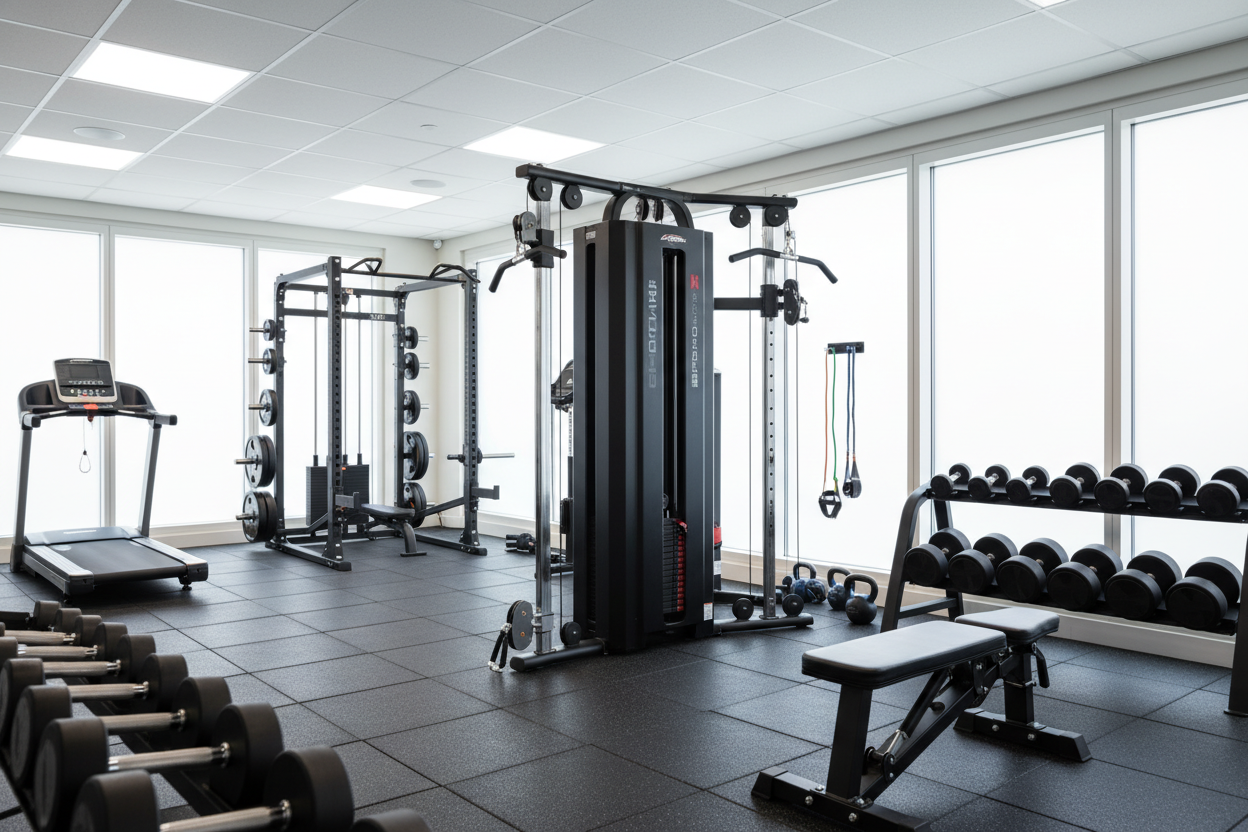
We have all been there. You walk into a commercial gym, see a sea of black steel and pulleys, and realize you have no idea what anything is called. You want to follow that new program you found, but it lists a 'Seated Row' and you are staring at three different contraptions that all look like rowing machines. I have spent the last decade loading, dropping, and breaking gear, and I have finally matched every gym machine with name and purpose so you do not have to look like a tourist in your own workout.
It is not just about avoiding embarrassment. Knowing the proper work out equipment names allows you to actually search for form videos that keep your rotator cuffs intact. Whether you are looking for a list of gym equipment to build your own space or just trying to navigate the local LA Fitness equipment names, this breakdown covers the heavy hitters you will see on the floor.
- Leg Day Essentials: Differentiating between the Leg Press, Hack Squat, and Pendulum Squat.
- Upper Body Staples: Identifying the Lat Pulldown, Pec Deck, and Row variations.
- The Multi-Tools: Understanding Cable Crossovers and Smith Machines.
- Home Gym Logic: Which commercial machines actually deserve space in your garage.
Why Is It So Hard to Learn What Gym Equipment Is Called?
Manufacturers are partly to blame. One brand calls it a 'Vertical Press,' while another calls it a 'Chest Press.' If you are looking for a name of weight lifting equipment, you often find yourself staring at a faded placard that has more warnings about lawsuits than actual instructions. It is frustrating because 'exercising machines names' should be universal, but marketing departments love to invent proprietary terms for a basic lever arm.
When you do not know the equipment gym list, you end up sticking to the same three machines you recognize. This is the fastest way to hit a plateau. I remember my first month in a real powerlifting gym; I called the GHR (Glute Ham Raise) 'the weird back-extension thing with the rollers.' I felt like an idiot, but more importantly, I was using it wrong because I did not understand the biomechanics of the name. Knowing the gym parts name helps you understand the 'why' behind the movement.
If you are trying to find all gym equipment names with photos online, you are likely overwhelmed by the sheer volume of variations. From cardio machines names with images to the specific gym leg machines names with pictures, the list is massive. But here is the secret: most machines fall into a few basic categories of human movement: push, pull, squat, or hinge. Once you identify the category, the specific name matters less than the muscle it targets.
The Leg Day Lineup: Sleds, Pendulums, and Extensions
Lower body machines are the biggest space-hogs in any facility. The most common is the Leg Press, often called a 'Sled.' You are sitting or lying down and pushing a platform away from you. But do not confuse it with the Hack Squat. In a Hack Squat, you are standing up, your back is against a pad, and you are moving your entire body weight plus the machine's carriage. It is much harder on the quads and mimics a true squat pattern more closely.
Then there is the Pendulum Squat—the holy grail for quad growth. It uses a circular arc motion that takes the stress off your lower back and puts it directly on the vastus lateralis. If your gym has one, use it. You will also see the Leg Extension (sitting and kicking your legs straight) and the Seated or Prone Leg Curl (bending your knees against resistance). These are isolation machines, meaning they only work one joint (the knee) and are perfect for finishing off a workout without systemic fatigue.
For those looking at gym equipment and their names for home use, these big units are usually the first to be cut due to their footprint. However, understanding how gym machines work—specifically the leverage and pivot points—allows you to replicate these movements with simpler tools like bands or a sissy squat bench. The 'tip machine gym' users often refer to is usually a Tibialis Trainer, a small but vital tool for knee health that has seen a massive surge in popularity lately.
Upper Body Stations That Actually Build Mass
Upper body machines are where the 'gym machines and muscles they work' list gets long. The Lat Pulldown is the big one—the gym machine where you pull yourself up (or rather, pull the bar to you). It is the primary tool for back width. Right next to it, you will usually find the Seated Cable Row. If you want a thick back, that is your station. Look for 'chest gym equipment names' and you will find the Pec Deck (or Butterfly Machine) and the Converging Chest Press.
I am a huge advocate for machines that allow for unilateral movement. A standard fixed-bar press forces your body into a specific path that might not suit your shoulder anatomy. Using an independent arms chest press machine is a better choice because it allows each side of your body to work through its own natural range of motion. This prevents your dominant side from doing all the heavy lifting and actually helps fix those annoying muscle imbalances.
Do not overlook the 'back machine workout names' like the T-Bar Row or the Plate-Loaded High Row. These machines use heavy-duty levers to provide a different resistance curve than free weights. While a barbell row is hardest at the bottom, many of these machines are designed to be hardest at the peak contraction, where your muscles are technically weakest. That constant tension is a recipe for hypertrophy that is hard to match with just a pair of dumbbells.
The Multi-Tool Rigs: Cables and Guided Rails
The centerpiece of almost every gym is the Cable Crossover or Functional Trainer. This is the 'all equipment of gym' king because you can do almost anything with it. By changing the handle and the height of the pulley, you can go from bicep curls to face pulls to cable flyes. If I could only have one piece of equipment from the wellness equipment list, it would be a high-quality cable station with a 2:1 ratio for versatility.
Then we have the Smith Machine. It gets a lot of hate from 'purists' who think if it is not a barbell, it is not lifting. They are wrong. A Smith machine home gym station is an incredible tool for hypertrophy because the guided rails remove the need for stabilization. This sounds like a downside, but it actually allows you to push closer to absolute failure without worrying about the bar drifting or pinning you. It is a safety net that lets you destroy your muscles without destroying your joints.
Understanding how to use all gym equipment in the cable section requires learning about attachments. The 'rope' is for triceps and face pulls; the 'V-bar' is for heavy rows; the 'D-handle' is for single-arm work. Most people struggle with how to work gym machines in this category because they do not realize the pulleys are adjustable. Always check the pin—if it is yellow or red, it probably moves.
Which of These Actually Belong in Your Garage?
After years of finding the best weight equipment, I have learned a painful lesson: you cannot fit a commercial gym in a two-car garage. I once bought a used leg press that was so big I had to shimmy past it just to get to my squat rack. It was a total waste of space. For most of us, the 'gym machines all' dream needs to be tempered by the reality of square footage.
If you are building a home gym, focus on versatility. A power rack, a good bench, and a cable system cover 90% of what those fifty commercial machines do. You do not need a dedicated 'gym running equipment names' list if you have a patch of pavement outside, but you definitely need a way to do pull-ups and rows. Choose machines that offer multiple functions rather than single-use units that will just end up holding your laundry.
My biggest mistake was trying to replicate the 'gym weight equipment names' I saw at the local club instead of focusing on what actually builds strength. You do not need a seated calf raise machine when a block of wood and a barbell do the same thing. Focus on the big movers, buy gear with high-quality bearings, and stop worrying about having every name of weight lifting equipment in your inventory. Real progress happens in the work, not the gear list.
FAQ
What is the machine where you pull yourself up called?
That is usually the Assisted Pull-Up/Dip Machine. It uses a weight stack to offset your body weight, making the movement easier. If it does not have weights and it is just a frame, it is a Power Tower.
How do I know what muscle a machine is working?
Look at the pivot point and the direction of resistance. If you are pushing away from your chest, it is a chest/triceps move. If you are pulling toward your torso, it is a back/biceps move. Most modern machines also have a small diagram on the frame showing the target muscles in red.
Is the Smith Machine better than a squat rack?
Neither is 'better,' they just serve different purposes. A squat rack builds more stability and core strength. A Smith machine is better for isolating specific muscles and training to absolute failure safely when you do not have a spotter.
Share:
I Fit a Heavy-Duty Compact At Home Gym Into 50 Square Feet
Why the Different Weights of Barbells Are Messing Up Your PRs