
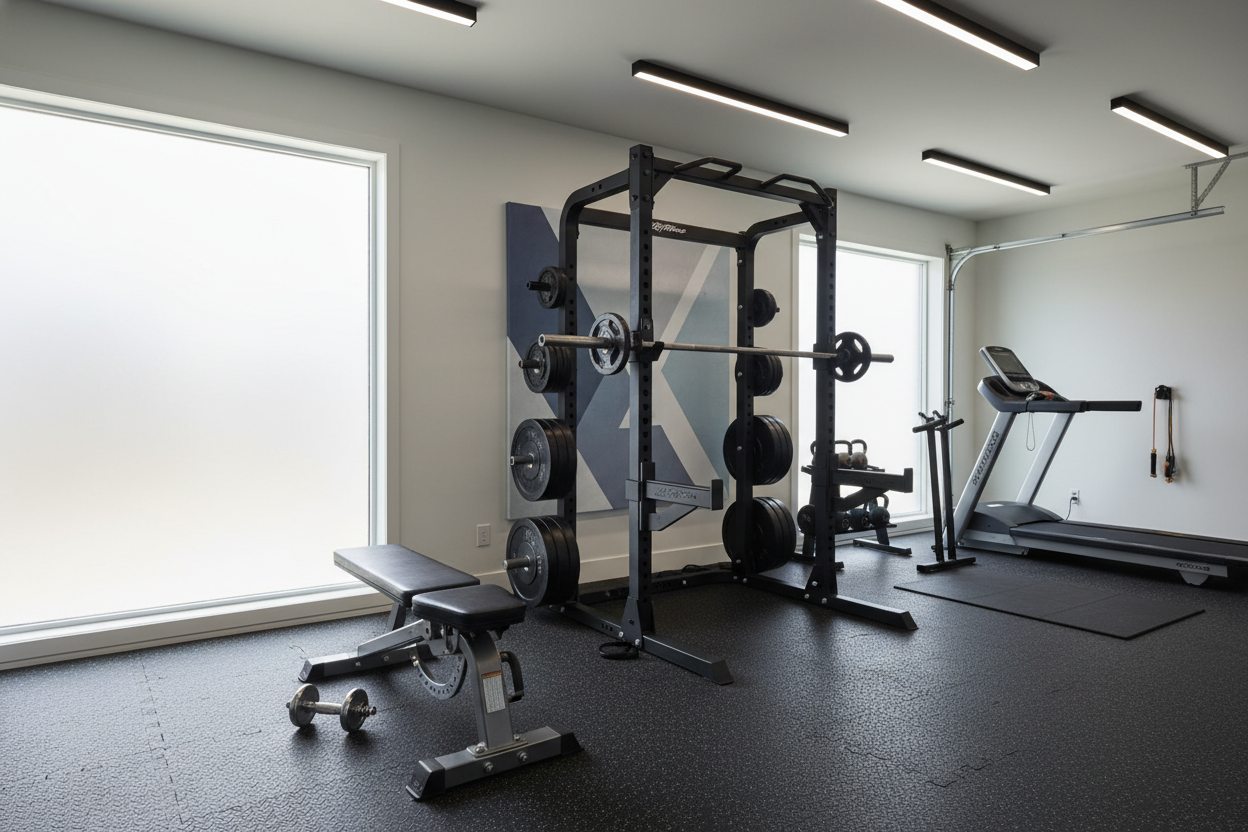
You have seen the ads for 'commercial grade' machines on Amazon. You buy one, spend four hours assembling it, and the first time you try a heavy set, the whole frame wobbles like a Jenga tower. It is frustrating to realize you spent five hundred bucks on thin-walled tubing and plastic pulleys. That is why I stopped looking at shiny new consumer junk and started hunting for the life fitness pro series on the secondary market.
- Built with 11-gauge steel that will literally outlast your mortgage.
- Standard 300-lb weight stacks that provide actual resistance for serious lifters.
- Universal parts availability because these were the 'gold standard' in every health club for decades.
- Biomechanics designed by engineers, not accountants trying to save on shipping costs.
The Golden Era of Health Club Steel
The Life Fitness Pro1 and Pro2 lines represent a specific era in fitness history—the late 90s and early 2000s—where durability was the only metric that mattered. These machines were built to survive 18 hours of daily abuse from guys who think 'controlled eccentric' is a type of yoga. They do not have fancy touchscreens or Bluetooth connectivity, and that is exactly why you want them.
The frames are mostly oversized, rectangular steel tubing with massive weldment points. Unlike modern home gym gear that uses bolts for every single joint to save on box size, these machines feature fixed-weld frames. This means zero lateral play. When you sit in a Pro2 chest press, the movement path is locked in. The biomechanics still hold up against machines triple their price because the pivot points are placed exactly where your joints actually move.
Why These Machines Rule the Secondary Market
The math is simple: a new commercial selectorized machine costs between $3,500 and $5,000. You can often find a used Pro1 or Pro2 unit for $400 to $800 on Facebook Marketplace. You should stop paying the upcharge for fake pro fitness equipment that uses 14-gauge steel and 2-inch pulleys. The Pro series uses 4.5-inch or 6-inch fiberglass-reinforced nylon pulleys that make the weight feel incredibly smooth.
The weight stacks are the real draw. Most home-grade machines max out at 160 or 210 lbs, and the resistance feels 'light' because of the pulley ratios. A Life Fitness Pro stack is usually a true 300-lb beast. If you are training for hypertrophy, having that headroom is essential. You aren't going to outgrow a machine that was designed for professional athletes and bodybuilders.
The Hidden Costs of Moving a 500-Pound Monster
Before you get excited and hit 'buy' on that Craigslist find, you need a plan. These are not IKEA flat-packs. A standard Life Fitness Pro machine weighs between 450 and 700 lbs. I once weighed every Life Fitness Smith machine bar just to show people that 'lightweight' does not exist in their vocabulary. You cannot just slide this into the back of a Honda CR-V.
You need a truck with a ramp, a heavy-duty furniture dolly, and at least one friend who does not value their lower back. The biggest headache is the width. Many of these frames are 32 to 36 inches wide. If you are trying to get a fixed-weld seated row through a standard 30-inch bedroom door to reach your basement, you are going to lose that battle. You often have to strip the weight plates off the guide rods just to make the frame light enough to tilt through a doorway, which adds two hours to your moving day.
What to Inspect Before Handing Over Your Cash
When you show up at a closing gym or a dusty warehouse, do not just look at the paint. Check the cables or belts first. Many Pro series machines used Kevlar-reinforced belts. Look for fraying or 'teeth' missing on the inner side. If it is a cable machine, run your hand (carefully) along the housing to feel for 'bird-caging' or breaks in the plastic coating.
Next, inspect the guide rods. They should be shiny and smooth. If they are pitted with rust, the machine will feel 'scratchy' no matter how much lubricant you apply. Finally, check the selector pin and the top plate. People love to drop the stack from the top, which can crack the weight plates or bend the center selector rod. If that rod is bent, the pin will stick every time you try to change the weight.
When You Should Skip the Refurbish and Buy New
As much as I love a good 'marketplace find,' sometimes a 20-year-old machine is just too far gone. If the frame has structural rust or if the proprietary plastic shrouds are shattered, it might not be worth the floor space. Also, if you are working in a tight 10x10 spare bedroom, a massive selectorized machine is a space killer. It only does one thing.
In those cases, I usually recommend going with a modern, plate-loaded option like a chest press machine independent arms Z1 Pro. It gives you that same heavy-duty commercial feel and independent arm movement, but it is much easier to move into a residential space and you do not have to worry about 20 years of someone else's sweat inside the weight stack. It is the 'smart' move for lifters who want the performance without the logistics nightmare of a 600-lb vintage tank.
My Personal Experience
I once picked up a Pro2 Lat Pulldown from a local YMCA for $300. It looked like it had been through a war—the upholstery was ripped and the frame was covered in chalk. After a $50 bottle of touch-up paint and a $60 replacement seat pad, it became the centerpiece of my garage. My biggest mistake was not measuring my ceiling height. The top pulley sat at 92 inches, and my garage ceiling was 91 inches. I had to cut a hole in the drywall just to let the cable housing clear. Measure your space before you drive three hours for a 'deal.'
FAQ
Are replacement parts still available for the Life Fitness Pro series?
Yes. Because these were installed in thousands of gyms worldwide, you can find cables, pulleys, and pads on dozens of fitness repair sites. You do not have to rely on the manufacturer for legacy parts.
Can I use WD-40 to lubricate the guide rods?
Absolutely not. WD-40 is a solvent, not a long-term lubricant. It will eventually gum up and attract dust. Use 100% silicone spray or a specialized PTFE lubricant to keep the stack sliding smoothly.
How do I know if it will fit through my door?
Measure the widest part of the welded frame. If the frame is wider than your door, you have to find an alternative route. You cannot 'disassemble' a welded steel box.
Share:
The Truth About the Best Fitness Equipment Home Gyms Actually Use
Your Lifting Math Is Wrong: The Truth About Barbell Weight Sizes