
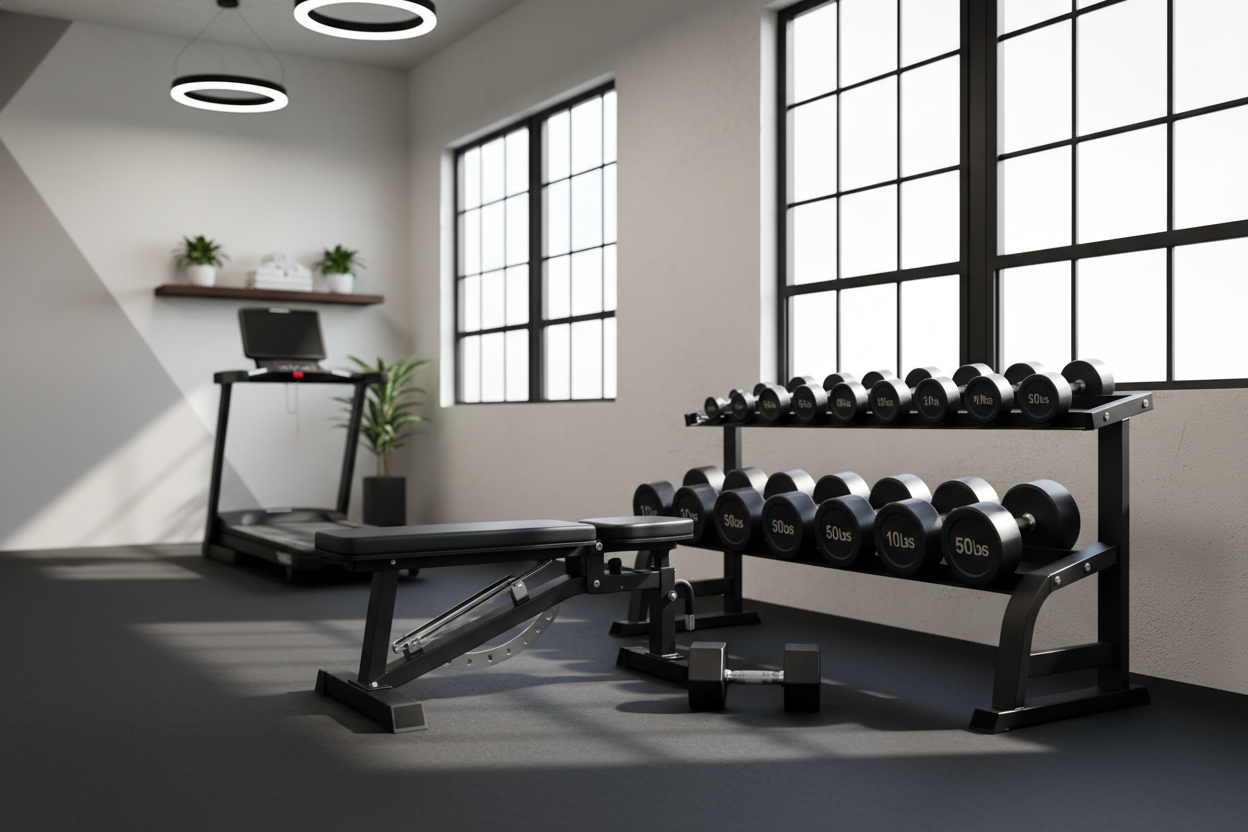
I remember the exact moment I gave up on high-tech gym gear. I was midway through a heavy set of overhead presses when my fancy adjustable handle jammed. One side of the weight plates wouldn't lock, leaving me lopsided and annoyed. I spent the next twenty minutes digging chalk out of a plastic gear with a toothpick instead of training.
That was the day I went back to basics. A standard weight dumbbell doesn't have a motherboard, it doesn't have plastic clicking pins, and it doesn't care if you drop it when your lungs are screaming. It just works. If you are tired of fragile equipment that feels more like a toy than a tool, it is time to look at why the classic fixed dumbbell is still the king of the garage gym.
Quick Takeaways
- Durability: Fixed weights can survive a lifetime of drops; adjustables rarely survive one.
- Speed: Transitioning between weights is instant—no clicking or aligning plates.
- Feel: A solid iron or rubber hex dumbbell has better balance and no 'clinking' noise.
- Maintenance: Zero. No gears to grease or plastic parts to snap.
The Fatal Flaw of Plastic Dials and Moving Parts
Most adjustable weights are engineering marvels until they meet a real-world garage. Dust, pet hair, and lifting chalk are the natural enemies of internal gear systems. Once a bit of grit gets into those plastic dials, the mechanism starts to grind. Eventually, it jams, and you are left with a very expensive paperweight.
I have seen guys snap the selector pins on those 'as seen on TV' sets just by setting them down a little too hard. If you absolutely cannot fit a rack in your house and space forces you to go the adjustable route, you have to skip the cheap big-box stuff. You must invest in a heavy-duty model like the Adjustable Dumbbells Ab01 rather than the plastic-heavy alternatives that dominate the market. But even then, simplicity usually wins the long game.
What Actually Qualifies as a Standard Weight Dumbbell?
When I talk about a standard dumbbell, I am usually referring to the fixed-head variety. You have two main players here: the classic cast-iron 'pro-style' dumbbell and the modern rubber hex. The rubber hex is the gold standard for home use because it won't roll away when you set it down on an uneven garage floor.
There is also the loadable 1-inch standard dumbbell handle, which uses small plates and collars. While these are budget-friendly, they are a hassle to change mid-workout. If you want the most seamless experience, browse the wider variety of fixed Dumbbells to see the difference between a loadable bar and a fully welded commercial-grade weight. For my money, the welded hex is the sweet spot of price and performance.
The Drop Test: Why Fixed Weights Always Win
Let's be real: sometimes you have to bail. If you are pushing for a PR on a heavy chest press and your triceps give out, you aren't going to gently place those weights back on the floor. You are going to drop them. With a dial-system, that $400 investment might shatter on impact. The anxiety of 'protecting' your equipment actually ruins your focus during the lift.
A welded Rubber Hex Dumbbell Set Ds01 is built specifically for this. The heads are permanently joined to the handle, and the rubber coating acts as a shock absorber. You can drop these on a stall mat all day without worrying about snapping a selector pin. That peace of mind allows you to train harder because you aren't babying your gear.
Supersets and Pacing: The Hidden Cost of Clicking
The biggest lie in the fitness industry is that adjustable weights are 'just as fast' as a rack. They aren't. If you are doing a mechanical drop set—going from 50s to 35s to 20s—the last thing you want to do is stop, bend over, align the plates perfectly, and wait for a click. It kills your heart rate and your momentum.
With a standard setup, you just toss one pair down and grab the next. That five-second difference matters when you are deep in the 'pain zone' of a high-intensity workout. The flow of a workout is much better when you have a physical 'library' of weights to pull from rather than one handle that tries to do everything.
How to Build a Fixed Rack Without Going Broke
The main argument against fixed dumbbells is the cost and the footprint. Yes, a full 5-100 lb rack is expensive and huge. But you don't need every increment. I started my current gym with just three pairs: 15s, 30s, and 50s. That covers high-rep lateral raises, moderate rows, and heavy-enough presses for most accessory work.
You can fill in the gaps over time as you get stronger. I actually wrote a guide on how I Finally Built A Weight And Dumbbell Set That Doesnt Suck by being strategic with my purchases. Don't buy the massive 20-pair set on day one. Buy what you use most, and your gym will grow with your physique.
Personal Experience: The $300 Lesson
Early in my lifting career, I bought a pair of adjustable dumbbells that went up to 52.5 lbs. I thought I was being smart. A month later, I dropped the right one while doing walking lunges. The internal plastic casing cracked, and the 10lb plates would no longer stay attached. I was out $300 and had to go back to the gym anyway. Since switching to fixed rubber hex weights, I haven't had to replace a single piece of equipment in six years. I've left them in a humid garage, dropped them, and even moved them across three states. They look exactly the same as the day I bought them.
FAQ
Do iron dumbbells rust in a garage?
If you live in a humid climate, yes. Raw iron will eventually get some surface rust. That is why I recommend rubber-coated heads and chrome-plated handles—they handle the elements much better.
Is a 1-inch loadable handle better than fixed?
Only if you are on a very tight budget. The handles are long and awkward, and the collars can slide off if you are doing vertical movements. Fixed is always superior for safety and feel.
Do I need a rack for my dumbbells?
It helps with organization and saves your lower back from constant bending, but it isn't strictly necessary. You can line them up on a rubber mat, just make sure they aren't a tripping hazard.
Share:
How to Avoid Junk When Buying Fitness Equipment in Pakistan
Is American Exercise Equipment Actually Worth the Premium?