
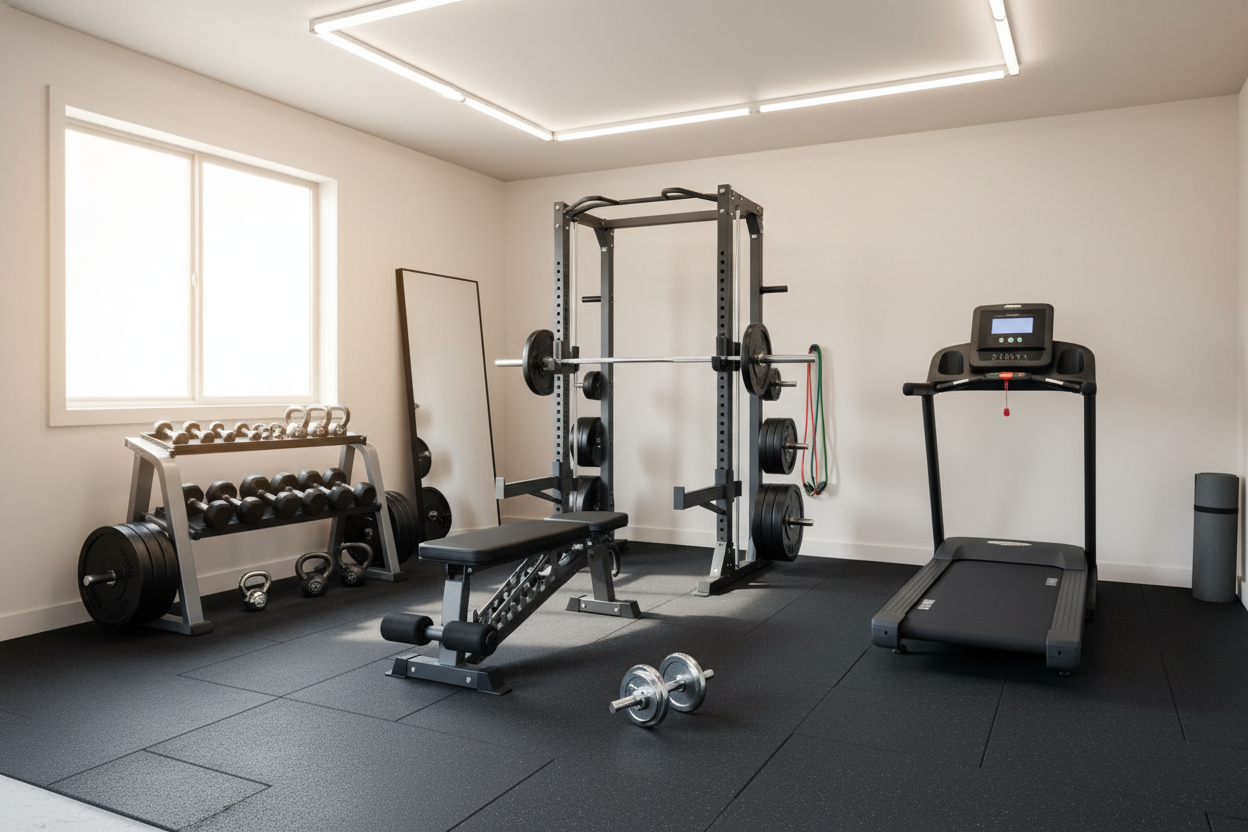
I remember the day I almost ate a 225-pound barbell because I thought a $40 'black Friday special' was good enough for my garage. The frame flexed, the vinyl felt like a slippery trash bag, and my confidence vanished the second I uncradled the weight. Buying a budget bench for work out shouldn't be a gamble with your dental insurance or your rotator cuffs.
If you are serious about getting stronger, you have to stop treating your bench like an afterthought. It is the literal foundation of your upper body power. A bad setup doesn't just feel cheap; it actively sabotages your mechanics and limits how much weight you can safely move.
Quick Takeaways
- Stability is king: If the bench wobbles when you sit down, it will fail you under load.
- Pad width matters: Anything under 11 inches won't support your shoulder blades properly.
- Density over softness: Squishy foam bottoms out, leaving your spine pressing against hard steel.
- Capacity headroom: Always buy a bench rated for at least 200 lbs more than your max lift plus body weight.
The Danger of 'Making Do' on Chest Day
We've all seen the 'home workout hacks' involving piano benches, coolers, or even just pressing off the floor. While the floor press has its place for tricep development, using makeshift furniture for a full-range bench for fitness is a recipe for a plateau. You can't get a full stretch in the pectorals if your elbows hit the carpet halfway through the rep.
Worse yet is the lack of stability. When you use a dining chair or a flimsy folding pad, your stabilizer muscles are too busy trying to keep you from tipping over to actually help you move the weight. You end up lifting 20% less than you're capable of simply because your brain knows the surface beneath you is unreliable. A dedicated gym and bench setup allows you to drive your feet into the floor and your traps into the pad, creating the tension necessary for real growth.
What Happens to Your Shoulders on a Bad Pad
Proper bench pressing requires scapular retraction—pinning your shoulder blades back and down. To do this effectively, you need a gym equipment bench with a 'grippy' vinyl and a pad wide enough to actually hold your shoulders in place. If the pad is too narrow, your shoulders hang off the sides, forcing the small muscles of the rotator cuff to stabilize a load they weren't meant to handle.
Cheap benches often use low-grade hardware at the pivot points. This is Why Your Adjustable Gym Bench for Home Feels So Unstable during heavy sets. When the backrest has side-to-side play, your body subconsciously compensates by shifting the load. This uneven loading is how 'gym shoulder' starts. You need a benched gym equipment piece that feels like a rock, not a see-saw, especially when you're grinding out that final rep of a heavy 5x5.
The 3 Non-Negotiable Specs for Your Next Buy
Forget the flashy colors and the 'as seen on TV' stickers. When you're looking for a serious exercise workbench, you only need to care about three things. First is pad density. Reach out and squeeze the pad; if you can feel the wood or steel base with your thumb and forefinger, it's too soft. You want high-density rebonded foam that supports your weight without compressing into a pancake.
Second is the steel gauge. Look for 11-gauge or 14-gauge steel. If a manufacturer doesn't list the gauge, it's probably thin 16-gauge 'toy' steel that will twist over time. Third is the tripod vs. four-leg design. A tripod front (one leg in the middle) is superior for a workout bench gym because it stays out of the way of your feet, allowing for better leg drive. A solid gym press bench should feel like it's bolted to the earth even if it's just sitting on your stall mats.
Should You Get an All-in-One Station or Just a Pad?
This depends on your goals and your square footage. If you're a minimalist who mostly uses dumbbells, a standalone seated workout bench is all you need. It’s easy to wheel out of the way when you're doing deadlifts or HIIT work. However, if you're building a dedicated strength cave, a Multi Function Bench Press Set can be a massive space saver, giving you a place to rack the bar without needing a separate power rack.
For those who want the best of both worlds, something like the Weight Bench With Barbell Rack And Biceps And Leg Extension Curl Station Z3 is a smart move. It provides the stability of a fixed rack but includes attachments for leg extensions and curls. The key is ensuring the 'extra' features don't compromise the core stability of the press. I've tested plenty of combo units that felt like they were made of coat hangers; look for heavy-duty bolts and thick uprights to ensure it can handle a benched gym lifestyle.
Final Verdict: Build Your Foundation First
You wouldn't build a house on a swamp, so don't build your physique on a wobbly bench for workouts. It’s easy to get distracted by fancy specialty bars or high-tech adjustable dumbbells, but the bench is where you spend the majority of your 'heavy' time. Investing in a pro-grade bench for work out sessions is the single most effective way to protect your joints and ensure that every ounce of effort you put into the bar actually results in a stronger chest and back.
Personal Experience: The Lesson I Learned the Hard Way
Early in my home gym journey, I bought a bench that claimed a 600-lb limit. I weighed 200 lbs and was benching 225. On paper, I was safe. In reality, the 1.5-inch thin foam bottomed out so hard my spine felt like it was resting on a 2x4. The 'gap' between the seat and backrest was so wide it swallowed my lower back. I eventually sold it for $20 on a local marketplace and bought a 12-inch wide flat bench with 3-inch thick padding. My bench press went up 15 pounds in two weeks simply because I finally felt stable enough to push 100%.
Frequently Asked Questions
How wide should a gym bench be?
The standard for competition is about 12 inches. For home use, stay between 11 and 12.5 inches. Anything narrower and your shoulders won't have enough surface area to stay pinned.
Is a flat bench better than an adjustable one?
Flat benches are always more stable because they have no moving parts. If you only do flat press, go flat. If you want variety for incline or overhead work, get a high-quality adjustable with a minimal 'gap' between the pads.
What is the best way to clean a workout bench?
Avoid harsh chemicals that dry out the vinyl. Use a simple mixture of mild dish soap and water. Wipe it down after every session to prevent sweat from eating through the stitching over time.
Share:
I Went Back to the Big Life Gyms (Here is What I Realized)
I Stopped Trying to Build a Commercial Dumbbell Set Gym at Home