
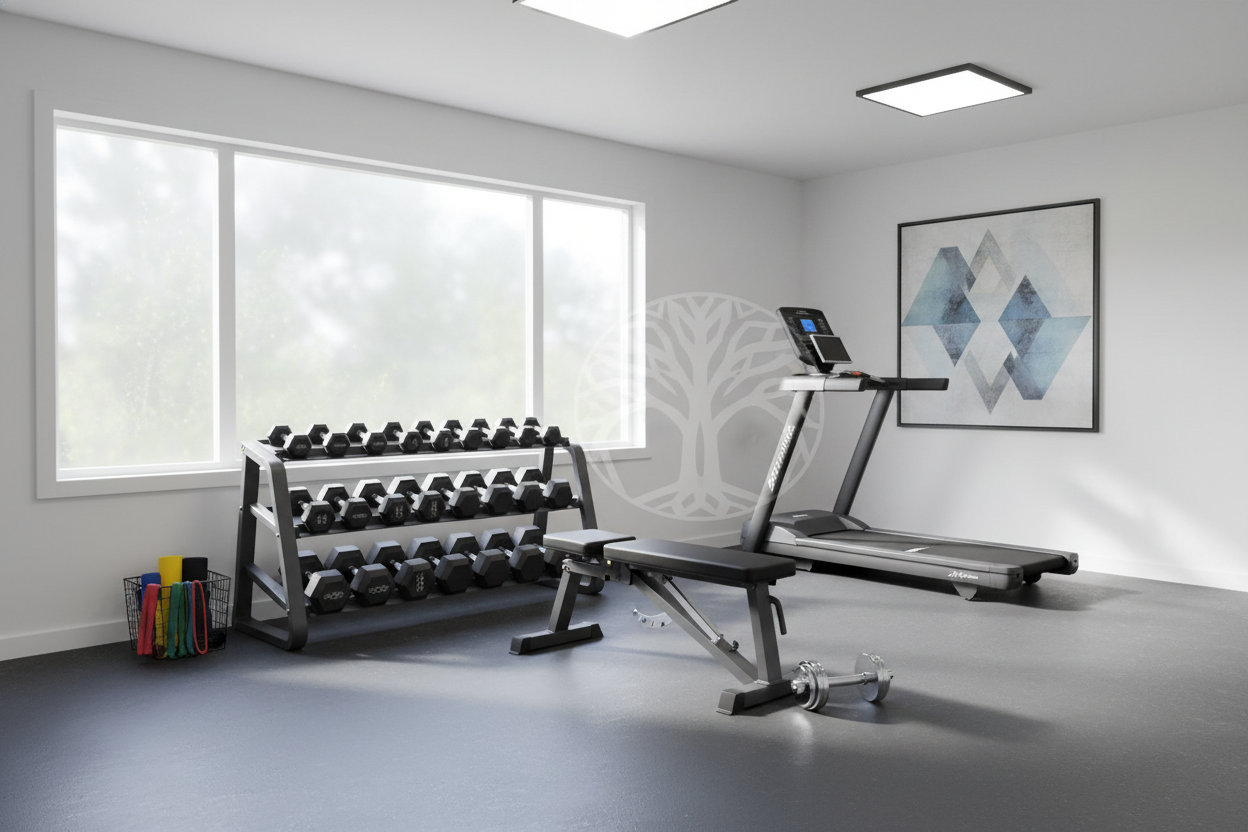
I walked into the lobby of a massive life gyms location last Tuesday. It smelled like expensive eucalyptus spray and filtered air. After five years in my garage training on a rack I bolted to the floor myself, I felt like a tourist in a foreign country. I was there for a day pass, mostly to see if I was missing out on the high-end experience I used to pay for every month before I started buying my own iron.
- Commercial machines provide great isolation but rarely beat a heavy barbell for building raw, functional strength.
- Membership costs over five years can buy a world-class power rack, a barbell, and enough plates to last a lifetime.
- The atmosphere of a big club is often more about social posturing than actual hard training.
- You can replicate 90% of a commercial gym's utility with three key pieces of home gear.
The Allure of the Mega Health Club
The initial appeal of a high-end life fitness health club is undeniable. You walk in and see 40 treadmills lined up like soldiers, a life fitness centre with every cable attachment known to man, and towels that don't have grease stains. It feels like you're about to have the best workout of your life because the environment is so sterile and professional. The mirrors are perfectly angled, the lighting is designed to make every vein pop, and the air is always a crisp 68 degrees.
For a home gym owner, the climate control is the biggest draw. My garage hits 95 degrees in July and 30 degrees in January. Stepping into a life fitness center feels like a vacation from the elements. There’s something to be said for not having to wipe ice off your barbell before you can bench press. You start to think, 'Maybe the $150 a month is worth it just for the HVAC and the sauna.'
Then you see the rows of specialized machines. A dedicated lateral raise machine, three different types of chest presses, and a leg extension that actually has a smooth cam profile. It’s a playground for someone used to just a rack and a bench. But as I walked past the juice bar, the nostalgia started to wear off and the reality of commercial lifting set in.
The Reality of Training in a Crowded Center
Reality hits the moment you try to actually move some weight. I tried to hit a leg day during peak hours at a life fitness california location. I spent 15 minutes watching a guy scroll TikTok while sitting on the only functional leg press. This is the hidden tax of the 'amenities.' You aren't just paying with your wallet; you're paying with your time.
Even with generous life fitness hours, the 5:00 PM rush is a war zone. You aren't just training; you're navigating a logistics puzzle. You want to superset? Forget about it. Someone will have moved your towel and claimed your bench before you can finish a set of rows. The gym life fitness center experience is often more about waiting in line than moving weight. In my garage, the life fitness gym is whoever I invite over, and the squat rack is always open.
There is also the 'broken machine' factor. In a massive life fitness gym, there is always at least one cable crossover or leg curl machine with an 'Out of Order' sign taped to it. It stays that way for three weeks because they have to wait for a specific technician to show up. When my home gear breaks, I fix it that afternoon. I’m not at the mercy of a corporate maintenance schedule.
Do You Actually Need Massive Commercial Machines?
Do you really need those $5,000 selectorized machines to get big? A real Life Fitness machine is a masterpiece of engineering, but for most of us, it is total overkill. These machines are built to survive 18 hours of abuse a day from people who don't know how to use them. They have thick steel frames and heavy shrouds because they have to be 'idiot-proof.' You don't need that level of over-engineering for a home setup where you're the only one using it.
I saw rows of Life Fitness dumbbells that look pretty in the rack, but they don't lift any differently than a standard set of iron hex weights. The the life fitness gym model relies on you being impressed by the chrome and the branding. If you're chasing a pump, a set of bands and a decent cable pulley will give you the same metabolic stress without the monthly bill. Free weights require more stabilization and core engagement anyway.
The biomechanics of high-end machines are great, but they are fixed paths. A barbell allows your body to find its own natural movement pattern. I’ve found that my joints actually feel better after a month of heavy barbell work at home than they did after a week of using the 'perfectly' designed machines at the club. Machines are a supplement, not the foundation.
The Cost Breakdown: Memberships vs. Buying Your Own Iron
Let's look at the raw math. A premium life fitness club membership in a major city can easily run $150 a month. Over five years, that is $9,000. That’s not including the gas to get there, the initiation fees, or the 'club maintenance' charges they sneak in every October. You are essentially paying for a lease on someone else’s dream.
For $9,000, you could build an incredibly capable home gym. We’re talking a 3x3 power rack with 1-inch hardware, a stainless steel barbell with aggressive knurling, and a full set of urethane bumper plates. When you own the iron, you’re building equity in your health. When you pay for a life gym fitness membership, you’re just renting space. If you ever decide to stop lifting, you can sell your home gear for 70% of its value. You can't sell a used gym membership.
Think about the time cost, too. If it takes you 20 minutes to drive to the life fitness center and 20 minutes back, that's 40 minutes a day. Over a year of training four times a week, that's 138 hours spent in a car. I’d rather spend that time sleeping, eating, or actually lifting. My home gym has a zero-minute commute.
Replicating the Commercial Vibe at Home
You can get that commercial feel without the life fitness club crowds. The biggest thing people miss is the stability of big machines. Investing in a Smith machine home gym station gives you that stabilized, heavy-loading capability for incline presses and squats without needing a spotter. It’s the closest you’ll get to that life fitness center feel in a 10x10 spare room.
To truly replicate the vibe, focus on the 'extras.' Put up floor-to-ceiling mirrors so you can check your form. Buy a high-quality rubber flooring that absorbs sound and vibration. Install some bright LED shop lights so the room doesn't feel like a dungeon. You’re trying to eliminate any reason to miss the big club.
I realized that the 'vibe' I liked at the big gym was just the focus. I can create that focus at home by turning off my phone and cranking the music. I don't need a $200,000 equipment circuit to get a world-class workout. I just need a bar, some plates, and the discipline to use them without a crowd of people watching me.
Is a life fitness health club worth the price?
Only if you actually use the sauna, pool, and childcare. If you are there strictly to lift weights, you are overpaying for a lot of fluff that doesn't contribute to your squat max.
How do life fitness hours affect training consistency?
Commercial gyms have closing times and holiday schedules that can break your rhythm. A home gym is open 24/7. Consistency is much easier to maintain when the gym is twenty feet from your bedroom door.
Are commercial machines better for muscle growth?
They offer specific resistance curves that are hard to mimic with just a barbell, but you can bridge that gap with a functional trainer or high-quality resistance bands for a fraction of the cost. Free weights remain the king of hypertrophy.
Share:
I Put Professional Exercise Equipment in My Garage (And Regretted It)
Why Your Flimsy Bench for Work Out Is Killing Your Gains