
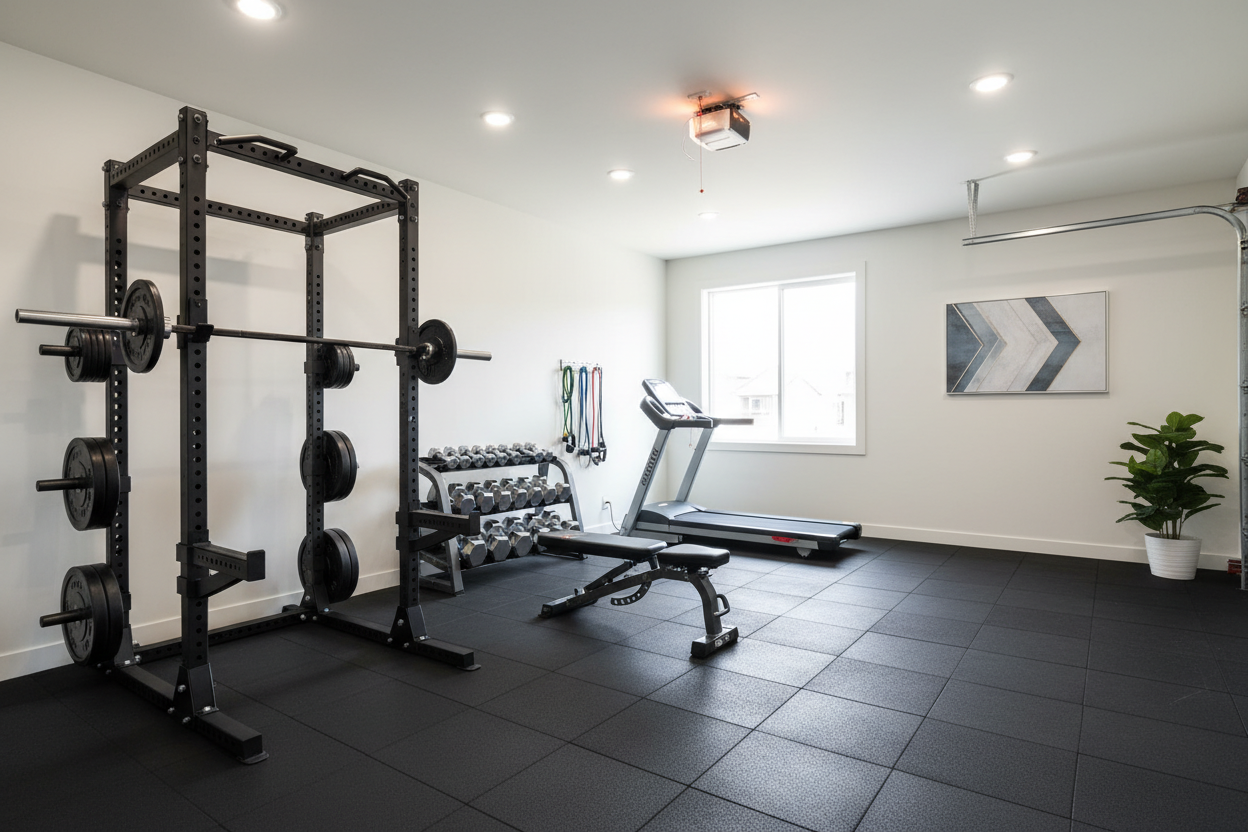
I remember the day I finally quit my commercial gym. They bumped the monthly fee to $80, and I spent half my session waiting for a power rack while some kid filmed TikToks in the mirror. I went home, cleared a spot between the lawnmower and the holiday decorations, and thought I had the best weight room in the neighborhood. I was wrong; I just had a pile of iron in a cold garage.
Building a home gym is more than just buying a barbell and a rack. If you don't plan the layout, you'll end up tripping over a rogue dumbbell while trying to hit a PR. I learned the hard way that a functional space is about flow, not just the brand name on your uprights.
Quick Takeaways
- Measure your space twice before buying a single plate.
- Ditch the foam tiles; 3/4-inch rubber stall mats are the only real choice for heavy lifting.
- Keep your rack, bench, and plates within a few steps of each other.
- Prioritize multi-functional gear over single-use machines to save floor space.
Cramming Gear Into a Corner Doesn't Work
The biggest mistake I see is the 'buy now, organize later' mentality. You see a deal on a 300-lb weight set and a cheap rack, shove them into the back corner of your garage, and realize too late that you can't actually load a 7-foot Olympic bar because it hits the wall. I've been there, scraping the drywall every time I tried to slide a 45-lb plate on the sleeve.
You need a minimum of 12 to 18 inches of clearance on both sides of your barbell sleeves. If you're working in a tight 10x10 space, every inch matters. Before you click 'buy,' map out your floor plan with painter's tape. It feels silly until you realize your folding rack won't actually fold because of the water heater.
The 'Working Triangle' of a Proper Lifting Space
In kitchen design, they talk about the triangle between the fridge, stove, and sink. Your gym needs the same logic. Your power rack, plate storage, and weight bench should form a tight cluster. If you have to walk six feet across the room to grab a pair of 2.5-lb change plates, you're breaking your rhythm and wasting energy during your rest periods.
I keep my plates on a tree right next to the right-side upright of my rack. My bench stays centered. This setup allows me to transition from squats to bench press in under two minutes. Efficiency is the difference between a 45-minute focused session and a 90-minute slog where you're constantly hunting for gear.
Why Your Floor Dictates Your Entire Workout
If you're still using those colorful foam puzzle tiles from the big-box store, stop. They are great for a toddler's playroom, but they're dangerous for a heavy squatter. Foam compresses under load. When you've got 315 lbs on your back, the last thing you want is your foundation shifting like a bowl of Jell-O. It kills your power transfer and ruins your balance.
The only real foundation for a serious setup is 3/4-inch recycled rubber flooring. I use heavy-duty stall mats. They're dense, they don't move, and they protect your concrete slab when you inevitably fail a deadlift. Yes, they smell like a tire fire for the first week, but that's a small price to pay for a stable lifting surface that will last a decade.
Versatility Beats Footprint Every Single Time
In a garage gym, square footage is your most precious resource. I've seen guys buy a massive corner multi-gym that takes up 40 square feet but only lets them do mediocre lat pulldowns and leg extensions. It’s a waste of space and money. You want tools that do five things, not one.
Instead of a dedicated leg press machine, get a high-quality rack with a cable attachment. Instead of five different flat benches, invest in a solid Adjustable Weight Bench Owb01. A good adjustable bench allows for incline, decline, and flat work without needing a second piece of equipment taking up space. I’ve used benches that felt like they were made of soda cans, but a heavy-duty steel frame with a 1,000-lb capacity is non-negotiable for safety.
Creating Dedicated Zones for Accessory Work
Once you have your 'Working Triangle' set up, you need a secondary zone for accessory movements. This is where you do your curls, lateral raises, or chest flys. Separating this from the rack keeps the main lifting area clear. If you have the room, adding a dedicated station like a Weight Bench Chest Press Machine Independent Arms Z1 Pro can be a huge win for hypertrophy work without the setup time of a barbell.
My accessory zone is tucked into the corner furthest from the garage door. It’s got my dumbbells and a small mirror. By keeping the 'heavy' zone and the 'pump' zone separate, I can train with a partner without us constantly bumping into each other. It makes the space feel like a professional facility rather than a storage unit with some weights in it.
Personal Experience: My $500 Mistake
When I first started, I bought the cheapest squat stand I could find online. It had a 300-lb capacity and felt okay until I actually put 225 lbs on it. The whole thing wobbled like a folding chair. I was so scared of it tipping that I didn't push my sets. I ended up selling it for half what I paid and buying a real 3x3 steel rack. Don't buy 'starter' gear if you plan on actually getting strong. Buy the gear you'll need two years from now, not the gear that fits your budget today.
FAQ
How much space do I really need for a home gym?
At a bare minimum, you need an 8x10 foot area. This gives you enough room for a standard rack and a 7-foot barbell with just enough space to load plates. If you want to do Olympic lifting or HIIT, you'll want at least 12x12.
Can I put a weight room on the second floor?
I wouldn't recommend it unless you have a structural engineer look at your floor joists. A rack, weights, and a person can easily exceed 1,000 lbs in a very small footprint. Plus, the noise of a dropped deadlift will shake the whole house.
Do I need a mirror in my garage gym?
It's not just for ego. A mirror is a vital tool for checking your form, especially on movements like deadlifts or overhead presses where you can't easily see your back angle. A simple 2x5 foot wall mirror is usually enough.
Share:
I Finally Tried One of Those Trendy Digital Weight Machines
Why Most Leg Press Machines for Sale Used Are a Trap