
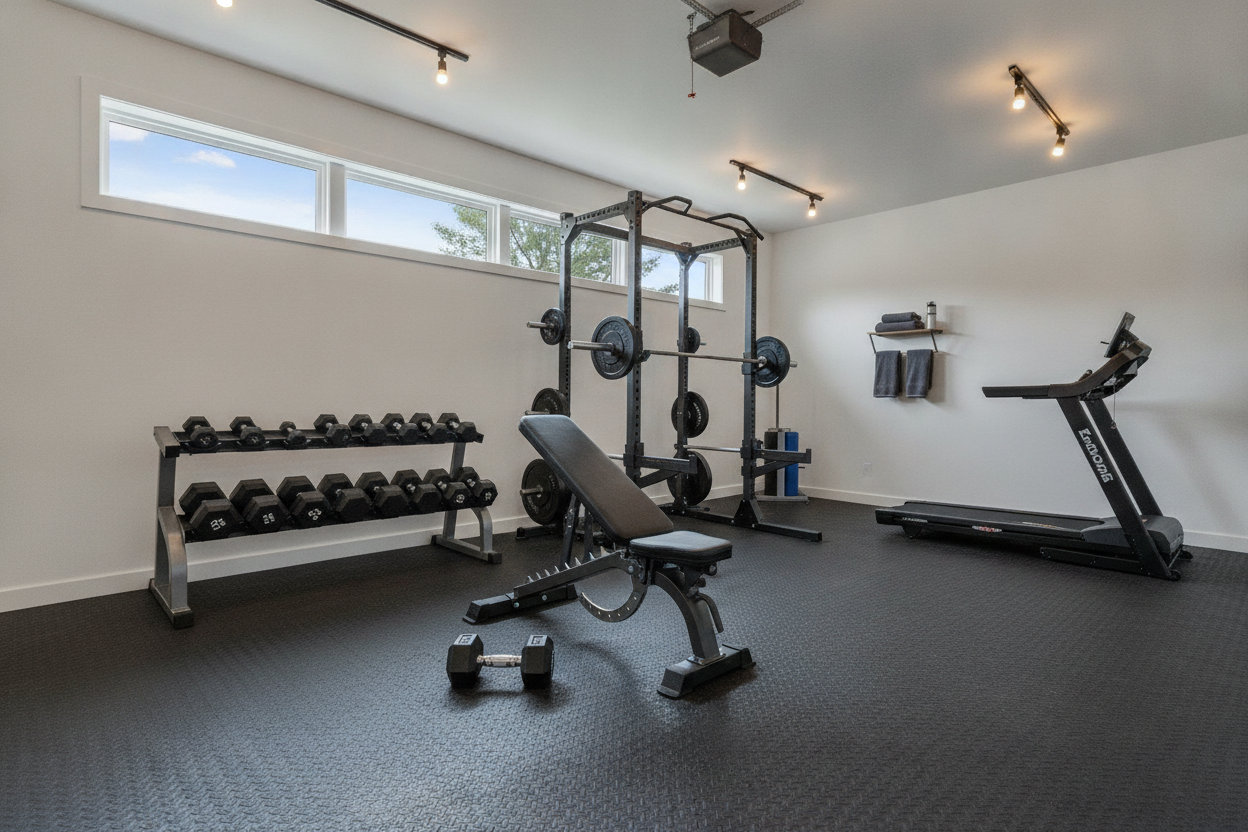
I remember the first time I tried to build a home gym on a shoestring budget. I scrolled through listings at midnight, eventually pulling the trigger on a $150 special that promised a complete free weight set with bench. It arrived in two beat-up boxes, and within ten minutes of assembly, I knew I’d messed up. The bar was thin, the 'weights' were literally plastic shells filled with sand, and the bench felt like it was made of recycled soda cans. If you’re tired of the local commercial gym raising dues while their equipment stays broken, I get it. But buying junk just to save a buck is the fastest way to kill your motivation.
Quick Takeaways
- Avoid 1-inch 'standard' bars; they have no resale value and bend under moderate loads.
- Look for a bench made of at least 11 or 12-gauge steel.
- Cast iron or rubber bumper plates are the only way to go for long-term durability.
- Measure your space for the bar width (usually 7 feet), not just the bench length.
The Plastic Plate Trap Most Beginners Fall Into
We’ve all seen them: those shiny, black vinyl-coated bench and weight packages at the local big-box store. They look like a steal. You get a bar, some plates, and a bench for less than the price of a decent pair of lifting shoes. The problem is that these sets are designed by accountants, not lifters. They are built to hit a specific price point on a shelf, not to handle a 200-pound man trying to push his limits. When you are buying a pre-packaged weight set that costs less than $200, you aren't buying fitness equipment; you're buying future landfill fodder.
These budget bundles usually feature 'standard' sizing, which means a 1-inch diameter hole. This is the kiss of death for your progress. Almost every high-quality piece of equipment in the world uses 2-inch Olympic sizing. If you buy the cheap stuff now, nothing you buy later will be compatible. You’ll be stuck with a set of weights that can’t be expanded and a bar that feels like a toothpick in your hands. I’ve seen these bars literally bow permanently after being loaded with just 150 pounds.
What Actually Makes a Bundle Worth Your Money?
A legitimate full weight set with bench should be a 'buy once, cry once' investment. To get it right, you have to look at the three pillars: the barbell, the plates, and the bench frame. If any one of these is garbage, the whole experience is ruined. You want a setup that can grow with you. If you start benching 95 pounds today, you want a rig that won't feel sketchy when you're hitting 225 pounds two years from now. I look for thick steel, solid welds, and plates that don't rattle like a box of Legos every time you move the bar.
The Barbell: Hollow Tubes vs. Solid Steel
The bar is the most important interface between you and the weight. Most entry-level bundles sneak in a hollow or multi-piece bolt-together bar. These are dangerous. A real Olympic barbell is a single piece of solid steel, 7 feet long, and weighs exactly 45 pounds (20kg). It should have a sleeve diameter of 2 inches. Check the weight capacity. If it doesn't explicitly state it can handle at least 500 pounds, keep walking. You might not lift 500 pounds today, but a bar rated for 500 is built with a safety margin that a 200-pound rated bar completely lacks. Also, look for decent knurling—that sandpaper-like texture. If it's too smooth, the bar will slide out of your hands the second you break a sweat.
The Plates: Why Sand-Filled Vinyl is a Scam
Those thick, chunky plastic plates are a nightmare. Because they are filled with sand or cement, they have to be massive to reach a decent weight. You’ll find that you can only fit maybe three or four plates on each side of the bar before you run out of room. This effectively caps your strength gains. Cast iron plates are much thinner, allowing you to stack the bar heavy. Plus, plastic plates crack. One hard drop and you’ve got sand leaking all over your garage floor. Cast iron might rust if you live in a humid climate, but a quick coat of spray paint fixes that. They last forever. Your grandkids could lift with these things.
The Bench: Checking Plywood and Steel Gauge
If you’ve ever been halfway through a heavy set and felt the bench start to sway side-to-side, you know why frame quality matters. Most cheap wobbly weight bench setups use thin 14-gauge steel and narrow tripods that feel like they’re going to tip. You want a frame made of 2x2 or 3x3 inch steel tubing. The pad itself should be firm. If you can feel the plywood base through the foam with your thumb, your shoulders are going to hate you. A solid adjustable weight bench should have a dense, grippy pad that keeps you locked in place. I always look for a bench that has a total weight capacity (user + weights) of at least 600 pounds. Anything less feels like a toy.
Sizing Up the Rig for Your Garage Space
Don't just measure the footprint of the bench and call it a day. A full weight set with bench takes up a surprising amount of 'operational' space. A standard Olympic bar is 84 inches wide. You need at least 12 inches of clearance on both sides of the bar to actually slide the plates on and off without punching a hole in your drywall. If your 'gym' is a tight 8-foot wide strip in the garage, you’re going to be frustrated. You also need to account for the bench length and the space behind it if you plan on having a spotter. If space is tight, you might find that buying quality weight benches separately from a rack is better than a combined unit, as it allows you to tuck the bench away when you’re doing standing overhead presses or rows.
Final Verdict: Stop Buying Equipment Twice
The temptation to save $200 today is real, but I promise you’ll spend that $200 again in six months when your starter set starts to fall apart. A high-quality free weight set with bench is the foundation of any home gym. If you buy a solid 45-pound bar, a set of iron plates, and a heavy-duty bench, you never have to buy them again. You can focus on getting stronger instead of wondering if your equipment is going to snap mid-rep. Spend the extra money on steel, not plastic.
Personal Experience: My 'Bargain' Disaster
I once bought a bench that had a built-in leg developer and a 'preacher curl' attachment. It looked like a Swiss Army knife of fitness. In reality, it was so cramped I couldn't actually perform a full range of motion on anything. The uprights were so narrow that my hands were constantly getting pinched when I tried to re-rack the weight. I sold it for $40 on Craigslist three months later and bought a simple, heavy-duty flat bench. I learned the hard way: versatility is a lie if the basic function—the bench press—feels like a death trap. Stick to the basics and prioritize steel quality over flashy attachments.
FAQ
Is a 300-lb weight set enough for a beginner?
Yes, for most people, a 300-lb Olympic set (which includes the 45-lb bar) will last you a year or two of solid training. The beauty of Olympic sets is that you can always buy more 45-lb plates later as you get stronger.
Can I use a 6-foot bar instead of a 7-foot bar?
Only if the 'rackable' distance between the sleeves is the same as a 7-foot bar. Many 6-foot bars are too narrow to fit on a standard bench press rack, meaning you’ll have to load the plates inside the uprights, which is a massive pain.
Do I need an adjustable bench or a flat bench?
If you can only afford one, get a high-quality flat bench. They are usually more stable for the price. However, an adjustable bench allows for incline work, which is great for hitting the upper chest and shoulders. Just make sure the hinge mechanism is beefy.
Share:
I Tested the New Equipment at Planet Fitness (Is It Any Good?)
Can a Bench Squat Machine Actually Replace Your Power Rack?