
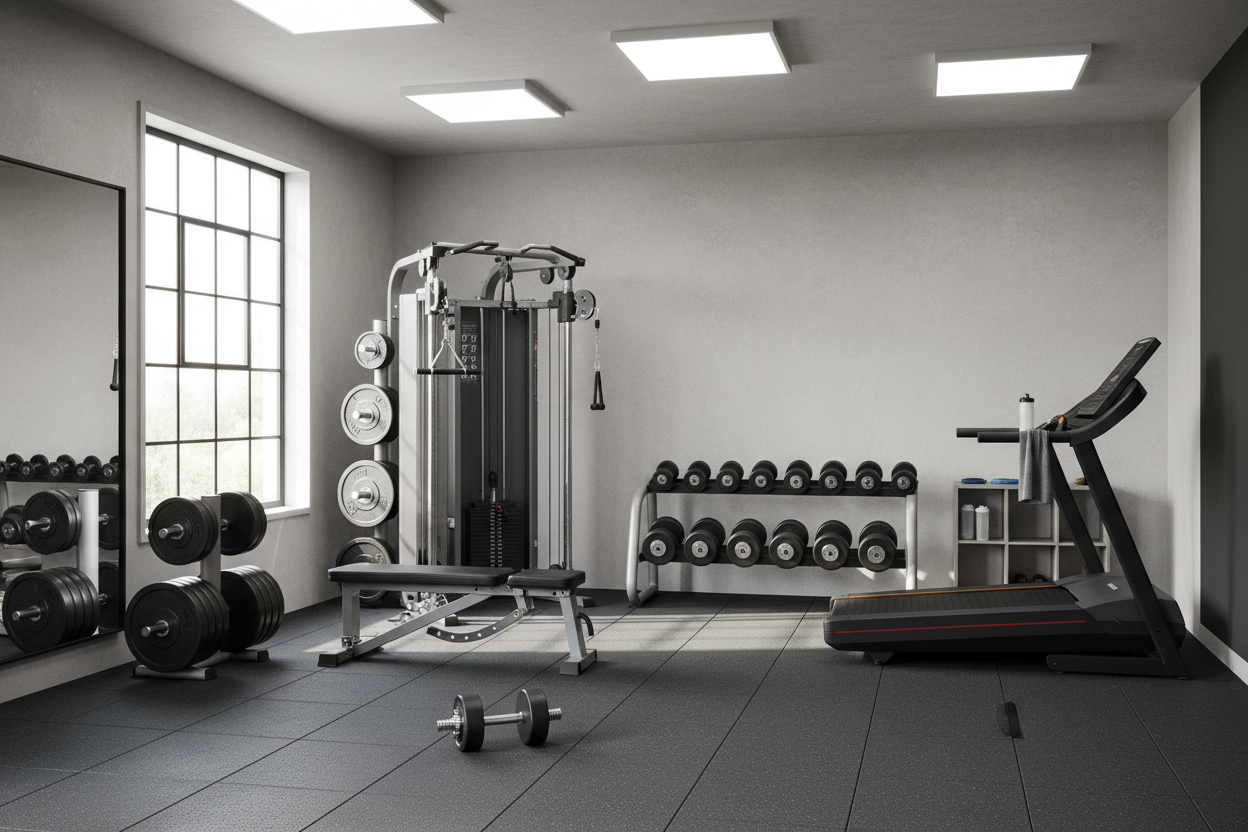
I used to be that guy. The one who looked at someone on a leg press and thought, 'Why aren't you squatting?' My garage gym is built around a heavy-duty power rack, and for years, I believed that if it wasn't a barbell, it wasn't worth my time. But after a decade of heavy lifting, my elbows started clicking like a Geiger counter and my lower back was perpetually 'tight.' I had to ask myself: are machines good for building muscle, or was I just being a stubborn elitist about my iron?
Quick Takeaways
- Your muscles respond to tension and load, regardless of whether the weight is 'free' or on a track.
- Machines offer superior stability, allowing you to train closer to true muscular failure without your form breaking down.
- Free weights are still king for core stability and athletic carryover, but machines are arguably better for pure hypertrophy.
- A hybrid approach—using machines for isolation and barbells for compound strength—is the gold standard for most lifters.
Why I Ditched My Barbell for 6 Months
My ego was the biggest hurdle. I associated 'hard work' with the struggle of balancing a 315-lb bar on my back. But the reality was that my stabilizers were giving out before my quads were. I decided to run a 6-month block using zero free weights. No dumbbells, no barbells, no kettlebells. Just levers, cables, and pins. I wanted to see if I could build muscle with machines without the constant 'beat up' feeling that heavy free weights left me with every Friday night.
The first few weeks were a shock. I realized I had been using momentum and body English to cheat my way through barbell rows and bench presses. On a machine, there is no 'swing.' You are locked in. The constant tension was brutal, and the pump was unlike anything I had felt in years of traditional lifting. I began to realize that can machines build muscle wasn't the right question—the question was why I hadn't used them sooner.
Do Workout Machines Build Muscle? The Science of Tension
Physiologically, your muscle fibers are pretty dumb. They don't have eyes. They can't see the brand name on your plates or tell if you're holding a $1,000 barbell. They only sense mechanical tension. When you use a machine, the equipment handles the stabilization for you. This sounds like 'cheating,' but for muscle growth, it's actually a massive advantage. It allows you to focus 100% of your neural drive on the target muscle.
This is exactly what are Smith machines actually doing for your gains—they remove the need to balance the load. When you don't have to worry about the bar tipping or falling on your face, you can push much deeper into the 'pain cave.' You can reach absolute failure safely, which is the primary driver for hypertrophy. If you've ever wondered do machines build muscle, just look at modern bodybuilders. They lean heavily on fixed-path gear because it allows for maximum intensity with minimum risk.
Where Fixed-Path Gear Actually Beats Free Weights
There are specific movements where do gym machines build muscle better than their free-weight counterparts. For example, a chest press machine with independent arms is often superior to a flat barbell bench press for chest size. The independent arms allow for a converging movement pattern—your hands come together at the top—which matches the actual function of the pec muscles better than a straight bar does.
Then there’s the lower body. I love a good back squat, but setting up for a heavy hip thrust with a barbell is a nightmare. It’s awkward, it hurts your hips, and the bar always rolls. Using a dedicated hip thrust machine changed my leg days. I could load up 400+ lbs and just focus on the squeeze. If you want to know do machine weights build muscle, try doing four sets of 12 on a dedicated glute machine and tell me your legs don't feel like they're going to explode. The efficiency of the setup alone means you can get more volume done in less time.
The Drawbacks: Is It Bad to Only Use Machines at the Gym?
It’s not all sunshine and cable crossovers. Is it bad to only use machines at the gym? It depends on your goals. If you only use machines, your 'real world' strength might take a hit. Machines don't train your core to stabilize a heavy load under gravity. If you spend six months on a chest press and then try to jump back onto a traditional weight bench, you’ll find that the weight feels incredibly shaky. Your prime movers might be strong, but your stabilizers have gone on vacation.
Another issue is the 'one size fits all' nature of many machines. While high-end gear is adjustable, some cheaper machines have fixed paths that might not align with your specific limb lengths. If a machine feels like it’s grinding your shoulders or knees, stop. Unlike a dumbbell, which you can move in any direction to find a 'pain-free' path, a machine forces you to follow its lead. This is why do workout machines build muscle effectively only when the machine actually fits your frame.
My Verdict: Can You Build Muscle on Machines Long-Term?
After my 6-month experiment, the results were clear: I had put on noticeable mass in my chest and quads, and my joints felt like I had de-aged five years. So, can you build muscle on machines? Yes, and for many people over the age of 30, it might actually be the faster route to hypertrophy because you can recover so much better. Do machine weights build muscle? Absolutely. I’ve since moved to a 60/40 split—60% machines for that targeted destruction and 40% free weights to keep my 'old man strength' intact. Don't let the barbell snobs tell you otherwise; the pin-loaded stack is a legitimate muscle-building tool.
FAQ
Can you build muscle on machines only?
Yes. You can absolutely build a world-class physique using only machines, provided you are training with high intensity and hitting your protein targets. Many professional bodybuilders do exactly this to prolong their careers.
Is it bad to only use machines at the gym for beginners?
It's not bad, but it's not optimal. Beginners should use machines to build a baseline of strength, but they should also learn free-weight movements to develop the coordination and stabilizer strength that machines don't provide.
Do gym machines build muscle as well as dumbbells?
For pure isolation, machines are often better because they provide a consistent resistance curve. Dumbbells are better for correcting imbalances and improving overall athleticism. Both have a place in a serious program.
Share:
The Only Affordable Crossfit Equipment That Survives Daily WODs
Why Building the Biggest Home Gym Is Actually a Terrible Idea