
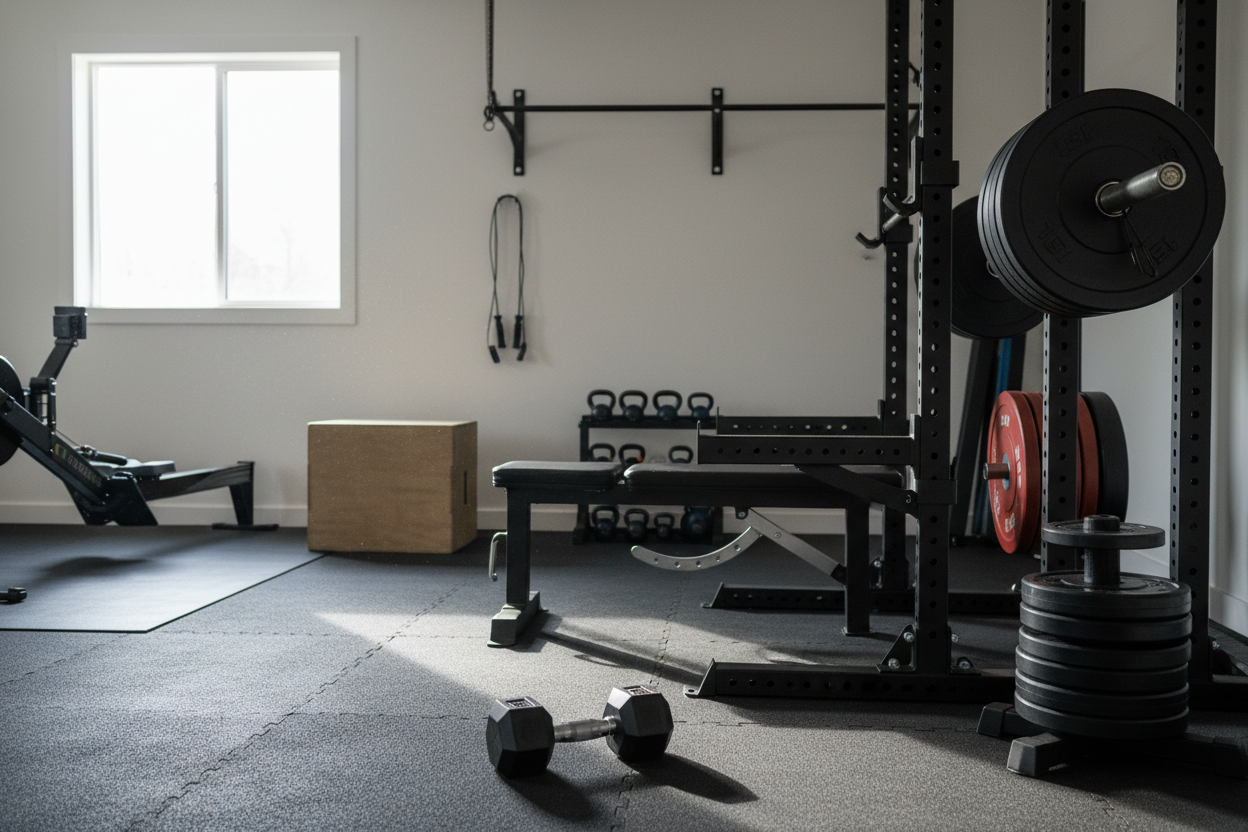
I remember the day I finally quit my $150-a-month box to build a garage gym. I bought a cheap barbell from a big-box store thinking I'd saved a fortune, only to have the sleeves stop spinning three weeks into a cycle of Grace. Finding affordable crossfit equipment that doesn't turn into a pile of scrap metal after your first high-rep workout is an art form. You need gear that handles the violence of a snatch and the grit of a 20-minute AMRAP without quitting on you.
Quick Takeaways
- Spend your money on the barbell and the rack; these are safety-critical.
- Save cash on 'dumb' iron like kettlebells and wood plyo boxes.
- Crumb rubber bumpers are the best value for durability on concrete.
- Avoid any cardio machine that costs less than $500—it's a plastic trap.
The Problem With 'Budget' Functional Fitness Gear
CrossFit is inherently violent on equipment. In a traditional bodybuilding gym, a barbell is gently placed back on a rack. In a home box, that bar is being dropped from overhead while your heart rate is 185. Most budget gear is designed for static lifting, not the dynamic, high-rep impact of a WOD. The repetitive stress of Olympic lifting and kipping pull-ups will destroy low-tier equipment faster than you can finish a round of Cindy.
I've seen cheap racks sway two inches during a simple set of pull-ups. It’s not just annoying; it’s dangerous. I'm telling you right now: stop buying cheap home gym gym equipment that was built for a spare bedroom. If the steel is thinner than 11-gauge or the welds look like popcorn, walk away. You want gear that survives the abuse, not gear that becomes a liability the second you start moving fast.
Where You Can Actually Keep Your Cash in Your Wallet
The good news is that not everything needs a premium price tag. A 53-lb kettlebell is a 53-lb hunk of iron. Unless the handle is so jagged it slices your palms, a budget cast-iron bell works just as well as a $120 name-brand one. Look for powder-coated finishes that hold chalk well, but don't feel obligated to pay for a fancy logo.
Wood plyo boxes are another area to save. It's literally just plywood and screws. If you have a drill and some wood glue, you can build one for $30, or buy a flat-pack version online for half the cost of a pre-assembled one. The same applies to wall balls and basic jump ropes. A $15 speed rope with plastic handles will get you through Double-Under Wonder just as well as a $60 aluminum version. Your lungs won't know the difference.
Where 'Cheap' Will Literally Break Your Bones
Now, the danger zone. There are three things you never buy at the bottom of the price bracket: your rig, your cardio machines, and your barbell. If your rig wobbles when you kip, you're one '3-2-1 Go' away from a structural failure. When it comes to conditioning, there is a very specific reason why cheap gym machines suck—they use friction-based resistance and thin belts that snap under the high-wattage output of a sprint.
If you buy a $200 rower, you're buying a plastic toy that will rattle apart in six months. Stick to the gold standards like the Concept2, even if you have to find one used. It's better to have no rower than a broken one taking up space in your garage.
Finding a Barbell That Actually Spins (and Doesn't Snap)
The bar is your soulmate in CrossFit. You need a multi-purpose bar with a 28.5mm shaft and at least 190,000 PSI tensile strength. For high-rep cleans and snatches, the sleeves must spin. Look for bronze bushings rather than cheap needle bearings. Bushings are slower but way more durable for being dropped repeatedly. A mid-tier bar in the $250 range is the sweet spot where performance meets price.
The Bumper Plate Dilemma
When sourcing cheap crossfit equipment, your best friend is crumb rubber. These are the plates made from recycled tires. They are wider than virgin rubber plates, which means they spread the force of the impact over a larger surface area. This protects your bar and your floor. They bounce more, so you have to be ready to catch them, but they are virtually indestructible compared to the pretty, color-coded virgin rubber plates that often crack at the center hub.
My Bare-Minimum WOD Checklist
You don't need a 20-piece gym to get fit. If you have these five items, you can do 90% of the workouts posted on the main site:
- A 20kg or 15kg multi-purpose barbell.
- 160 lbs of crumb bumper plates (a pair of 45s, 25s, and 10s).
- A single kettlebell (24kg for men, 16kg for women).
- A wall-mounted pull-up bar with enough clearance for kipping.
- A speed rope.
I once bought a set of 'bargain' rings with plastic buckles to save twenty bucks. During a set of muscle-ups, the left buckle slipped. I didn't just fall; I face-planted into the concrete. I still have the scar on my chin to remind me that 'affordable' should never mean 'unsafe.' Buy the steel buckles.
FAQ
Can I use iron plates for CrossFit?
Only if you never drop the bar. One heavy drop from overhead and you'll crack your concrete or the plate itself. If you're doing WODs, bumpers are mandatory.
Is a 1.25-lb plate necessary?
Not for most CrossFit programming. We usually jump in 5-lb or 10-lb increments. Save that cash for more chalk or a better pair of grips.
Do I need a rower right away?
No. Run 400m intervals or do burpees. Cardio is free; the barbell is where your initial budget should go.
Share:
Why the Best At Home Gym System Isn't Made of Plastic
Are Machines Good for Building Muscle? My Surprising 6-Month Test