
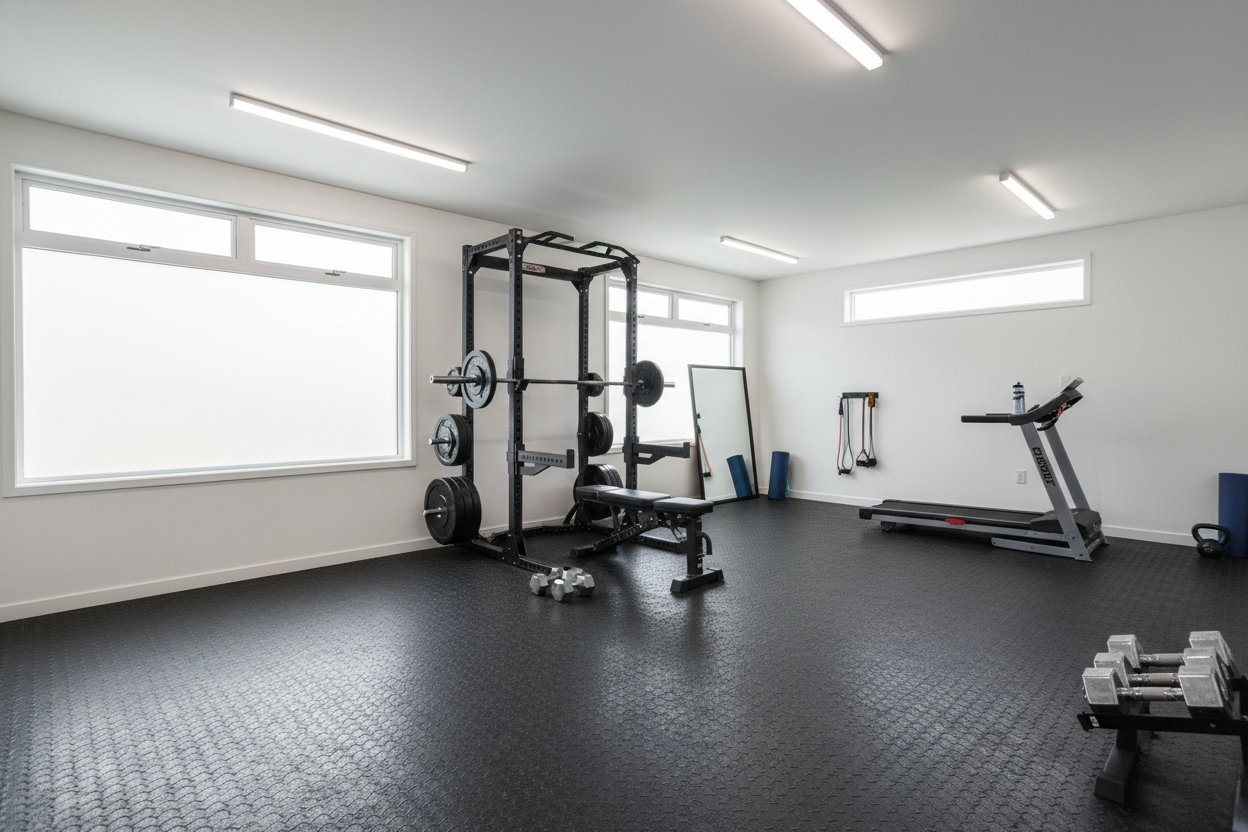
I remember the night I finally snapped. My local commercial gym hiked its monthly dues to $85 while three of the four squat racks were held together with duct tape and prayers. I spent that evening scrolling through equipment sites, trying to figure out if I could actually build the best home gym under 2000 without the whole thing feeling like a compromise. Use your head, and two grand can buy a setup that your grandkids will eventually inherit.
- Prioritize the Big Three: Spend 60% of your budget on the rack, bar, and bench.
- Steel Gauge Matters: Stick to 11-gauge steel for the rack; anything thinner feels like a toy.
- Mix Your Plates: Buy two high-quality bumpers for deadlifts and cheap iron for everything else.
- Skip the Gimmicks: Avoid 'as seen on TV' machines that promise a full-body workout in ten minutes.
Why Two Grand Is the Absolute Sweet Spot
Two thousand dollars is the golden number for a home gym. If you spend less, you’re usually stuck with 14-gauge steel racks that wobble when you re-rack 225 pounds. If you spend more, you’re often just paying for brand names or commercial-grade finishes that don't actually make you any stronger.
At this price point, you can move away from 'entry-level' gear and into 'lifetime' gear. This is where you stop buying things you’ll need to replace in two years. You are buying stability, safety, and a home gym 2000 budget allows for a barbell that won't lose its knurling after six months of heavy sets.
Where Most People Blow Their Budget (And What to Do Instead)
The biggest mistake I see is the 'all-in-one' trap. People see a massive machine with 50 pulleys and plastic shrouds and think they’re getting a deal. In reality, those pulleys usually feel like dragging a sled through sand, and the cables snap the moment you try to go heavy. You want a complete home gym that is built around a heavy-duty rack, not a plastic multi-station.
Another budget killer is the 'specialty' bench. You don't need an $800 adjustable bench that has 15 different decline angles. You need a rock-solid flat bench or a sturdy 1,000-lb rated adjustable. Save that extra $500 and put it toward a barbell that actually has a decent whip and spin.
The Core of a Home Gym Under 2000: Rack, Bench, and Bar
Your first $1,200 should go toward the 'Big Three.' This is the foundation of every home gym setup under 2000. If these three pieces are solid, you can do 90% of all effective strength movements safely. As I've mentioned when discussing the best home gym under $1000, the base stays the same, but here we are upgrading the specs for better longevity.
The Rack: Don't Skimp on Steel Gauge
Look for a power rack with 3x3-inch uprights and 11-gauge steel. This is the industry standard for 'serious' home gyms. A flat-footed rack is my personal preference because you don't have to bolt it into your garage floor, but it’s still heavy enough to stay put during pull-ups. Check the hole spacing; Westside spacing (1-inch gaps through the bench zone) is a lifesaver for finding the perfect safety height.
The Barbell: Your Direct Connection to the Weight
The barbell is the only thing you actually touch during the lift. Do not buy a $50 bar from a big-box store. You want a bar with at least 190,000 PSI tensile strength and a decent zinc or chrome finish to prevent rust. If you're doing a lot of squats, look for a bar with a center knurl so it doesn't slide down your back when you start sweating.
Sourcing Your Iron (Without Paying $3 a Pound)
Weight plates are just heavy circles. Don't let marketing convince you that you need 'precision calibrated' plates unless you’re planning on competing in a sanctioned powerlifting meet next week. For a home gym 2000 build, I recommend buying a pair of 45-lb bumper plates for deadlifts—this protects your floor and reduces noise. For everything else, find the cheapest cast iron plates you can. Used sporting goods stores are a goldmine here.
Rounding Out a Home Gym Setup Under 2000
With the remaining $500, you need versatility. A set of adjustable dumbbells is usually the best move. They take up the footprint of one shoebox but replace an entire wall of fixed weights. If you prefer guided movements or have specific rehab needs, you might look into a Smith machine home gym station, but for most, a simple DIY pulley attachment for the rack handles your rows and tricep work perfectly.
The Final Breakdown: My Exact Blueprint
Here is how I would spend the cash today: $700 for a 3x3 11-gauge power rack, $300 for a multi-purpose barbell, $250 for a competition-style flat bench, $500 for 300 lbs of mixed iron/bumper plates, and $250 for a pair of 50-lb adjustable dumbbells. This setup is a massive leap over a home gym under $300 which usually limits you to bands and light sandbags.
My Personal Experience
I once tried to save money by buying a 'pro' bench from a local department store. The first time I tried to bench 275, the back pad flexed nearly two inches to the left. I felt my shoulder click, and I spent the next three weeks doing nothing but mobility work. I sold that bench for $20 and bought a real one. Learn from my mistake: if it feels flimsy in the store, it's dangerous in the garage.
Home Gym FAQ
Do I need to bolt my rack to the floor?
If you get a flat-footed rack or one with extended base stabilizers, usually no. However, if you're doing heavy kipping pull-ups or dynamic movements, bolting it down is always the safest bet.
How do I stop my plates from rusting?
If you live in a humid area, wipe your cast iron plates and barbell down with a light coat of 3-in-1 oil once a month. It takes ten minutes and keeps the gear looking new.
Can I really get strong with just $2,000 of gear?
Absolutely. Some of the strongest people in the world train in garages with less than this. Consistency beats fancy equipment every single time.
Share:
The Real Full Gym Equipment Price Nobody Warns You About
Light Hand Weights Are Only Useless if You're Training Wrong