
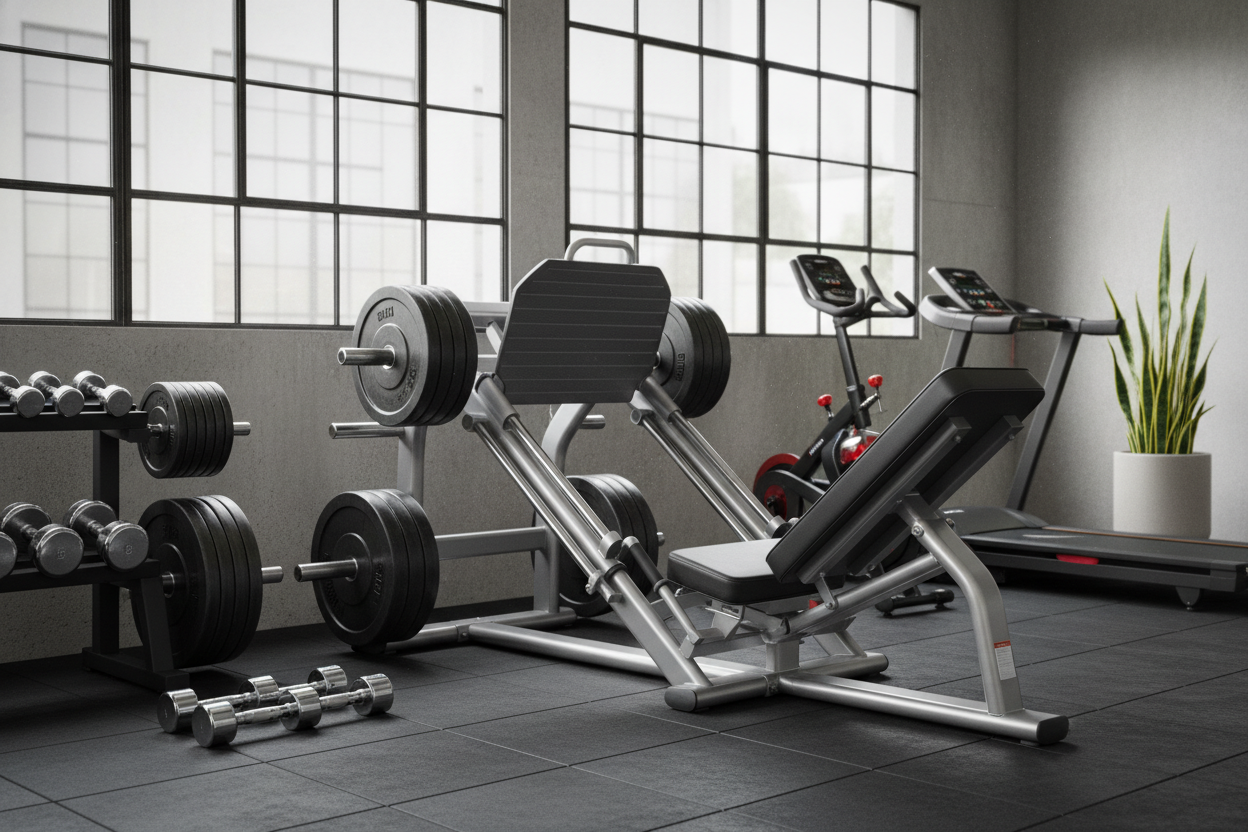
I remember scrolling through marketplaces at 1 AM, looking for a way to blast my quads without taking up the entire garage. I saw a listing for home leg press machines promising a 1,000-pound capacity for the price of a pair of high-end lifting shoes. My gut told me it was a lie, and three months later, the bent carriage on that cheap sled proved me right.
Quick Takeaways
- Static weight limits are marketing fluff; look for dynamic load ratings.
- Nylon rollers are cheap and friction-heavy; linear bearings are the gold standard.
- A compact footprint is great, but a narrow base leads to dangerous tipping.
- 11-gauge steel is the minimum for anyone lifting over three plates per side.
The Dirty Secret Behind '1,000-Pound' Capacity Claims
Many budget amazon leg press machines advertise massive weight limits that are technically 'static.' This means the frame can support that weight if it is sitting perfectly still. The moment you start moving that sled, you are dealing with dynamic loads. If you are moving 400 pounds on a frame made of thin 14-gauge steel, the metal will eventually fatigue and flex.
I have seen exercise machine leg press units where the weight horns literally start to droop after a few heavy sessions. When you buy leg press gear, look for the 'working' or 'dynamic' capacity. If a company won't specify, assume the real limit is about half of what they are advertising. You want a machine built with 2x3 inch or 3x3 inch steel tubing to ensure it doesn't fold under pressure.
Why That Cheap Sled Grinds Like Sandpaper
The biggest difference between a budget home leg weight machine and a commercial one isn't the color—it is the bearing system. Cheap sleds use nylon rollers that ride directly on the frame. Over time, heat and friction cause these rollers to develop flat spots. Once that happens, your smooth leg day turns into a jerky, grinding nightmare that is hard on your knees.
Commercial-grade units use linear bearings on solid steel rods. This is the brutal truth about buying a machine for your home: if you skimp on the guide rods, you will spend more time greasing the rails than actually training. Linear bearings allow for a 'weightless' feel where the only resistance you feel is the plates you loaded.
Will a Smaller Frame Actually Survive Heavy Days?
We all want compact leg press machines to save space, but physics is a cruel mistress. A compact leg machine often has a smaller footprint, which can make it prone to wobbling when you are racking and unracking heavy loads. If the base of the machine is narrower than the weight carriage, you are asking for trouble.
I personally prefer a 30-degree or 45-degree angle because it keeps the center of gravity lower. For example, the compact 30 degree leg press manages to save floor space while keeping the frame heavy enough to stay planted. If you can lift the front of the machine with one hand while it is empty, it is probably too light to handle your max effort days safely.
Should You Just Hunt Down an Older Commercial Rig?
There is a lot of merit to scouring the used market for a used powertec leg press or even a giant leg press machine from a closed-down Gold's Gym. These older rigs were built back when steel was cheap and shipping wasn't a nightmare. They are usually over-engineered and will outlive your house.
The downside? They are absolute bears to move. A commercial sled can weigh 500 pounds before you even add a plate. If you are in a basement or an upstairs room, a modern, well-built home model is a much smarter play. Just make sure the leg press to buy has replaceable wear parts like bushings and pads.
My Non-Negotiable Checklist Before You Spend a Dime
Before you pull the trigger on a new sled, run through this list. First, check the steel gauge—11-gauge is the sweet spot for durability. Second, look at the footplate dimensions. If it is smaller than 20 inches wide, your stance options will be severely limited. Third, inspect the safety catches. They should be thick steel, not thin pins that look like they belong on a curtain rod.
If you are looking for a solid foundation for your lower body days, checking out specialized leg press and hip thrust equipment is the best way to ensure you aren't buying a 'death trap' disguised as a deal. Don't let a cheap frame be the reason you have to take six months off for a preventable injury.
Personal Experience: The Wobbly Sled Lesson
I once bought a generic sled because it was $300 off. It looked great in photos, but the first time I loaded four plates on each side, the entire frame shivered. Every rep felt like I was balancing on a tightrope. I ended up selling it for a loss a month later. Now, I prioritize frame weight and bolt-down options over a low price tag every single time.
FAQ
Is a 45-degree or 30-degree leg press better?
A 45-degree press is standard for heavy loading, but a 30-degree press is often better for home gyms because it has a smaller vertical profile and puts less shear stress on the lower back.
Can I use standard plates on a home leg press?
Most high-quality machines use 2-inch Olympic sleeves. Budget machines sometimes use 1-inch sleeves, but I’d avoid those as standard plates aren't heavy enough to maximize the machine's potential.
How often should I lubricate the guide rods?
If you have linear bearings, a light coat of silicone spray every three months is plenty. If you have nylon rollers, you’ll need to wipe the rails down weekly to prevent gunk buildup from ruining the rollers.
Share:
Why the TuffStuff CSM 600 Might Be Too Much Machine for You
I Replaced 5 Common Workout Machines With Just One Rack Setup