
I was scrolling through Amazon at 1 AM, looking for a shortcut to a better back. I saw a lat pulldown machine for $150 and thought I had outsmarted the entire fitness industry. I hadn't. Buying a cheap exercise machine is usually just a down payment on a future injury and a trip to the scrap yard.
We have all been there. The local gym raised its rates again, and suddenly that 'all-in-one' home station looks like a steal. But after loading, testing, and eventually breaking more gear than a commercial gym manager, I’ve learned that 'budget' and 'moving parts' are two things that should never be in the same sentence.
Quick Takeaways
- Moving parts (cables, pulleys, bearings) are the first things to fail on budget gear.
- Look for 11-gauge or 12-gauge steel; anything thinner (like 14-gauge) will wobble under heavy loads.
- Cast iron plates and static bars are safe to buy cheap; complex machines are not.
- A failed cable or snapped bolt can cause serious injury during a heavy set.
- Quality gear has a higher resale value, whereas cheap machines are essentially disposable.
The Day the Cable Snapped (My $150 Mistake)
I was halfway through a heavy set of lat pulldowns, pulling about 180 pounds. There was no warning—no creaking or groaning. Just a sudden 'pop' and the sensation of the bar hitting me square in the chest as the cable whipped back like a gunshot. The 'nylon coating' on the cable had shredded, revealing a core that looked more like wire twine than aircraft-grade steel.
That $150 cheap exercise machine didn't just fail; it became a liability. When you are under a load, you are trusting the engineering of the person who built that machine. In the case of ultra-budget cheap workout stuff, that engineering is often non-existent. They are built for the person who exercises once a month, not the person who actually trains.
The aftermath was a bruised sternum and a realization that I’d wasted money I could have put toward a real rack. If you are serious about your progress, you cannot rely on gear that might fail when you finally start moving real weight.
Why Moving Parts Are the Enemy of Cheap Fitness Gear
Physics does not care about your budget. When manufacturers try to produce cheap fitness equipment, they cut corners on the most expensive components: the bearings and the pulleys. Instead of sealed ball bearings that provide a smooth, consistent pull, you get plastic bushings that create massive amounts of friction.
This friction ruins the strength curve. You’ll feel the weight 'catch' at the bottom of a rep or jerk on the way up. It’s one of the primary reasons why cheap gym machines suck. You want a 1:1 or 2:1 ratio that actually feels like the weight listed on the stack, not a hitchy mess that makes 50 pounds feel like 80 one second and 30 the next.
Furthermore, those plastic pulleys are prone to cracking. Once a pulley develops a flat spot or a hairline fracture, the cable will start to jump the track. At best, it’s annoying. At worst, it jams the machine while you’re mid-rep, putting your joints in a very compromised position.
The 'Wobble Test' and Other Online Red Flags
You can usually spot gym equipment cheap enough to fail just by looking at the specs. If the product description doesn't explicitly state the steel gauge, assume it’s 14-gauge or higher (which means thinner). For a stable home gym setups, you want 11-gauge steel. If you can shake a rack with your pinky finger, it has no business holding 300 pounds over your face.
Check the bolts. If they look like the tiny proprietary hardware you get with IKEA furniture, stay away. Real gym equipment uses heavy-duty, standard-sized grade 5 or grade 8 bolts. Another red flag? 'One size fits all' weight capacities that seem too good to be true. If a flimsy-looking bench claims a 1,000-lb capacity but only weighs 40 lbs itself, someone is lying to you.
Finally, look at the footprint. Budget machines often have narrow bases to save on shipping costs. This makes them incredibly prone to tipping. If you're doing a seated row and the front of the machine lifts off the ground, you're using a glorified toy, not a piece of training equipment.
When It's Actually Okay to Buy Cheap Gym Stuff
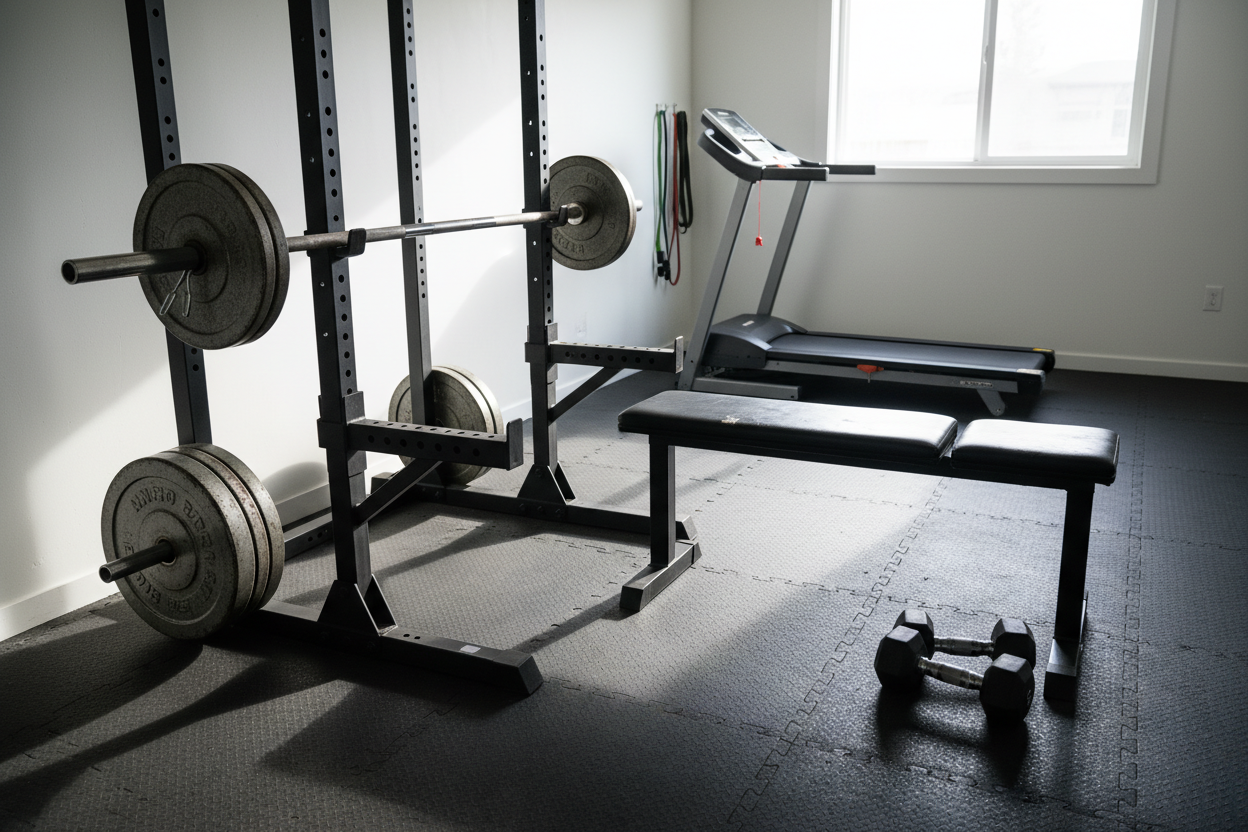
I’m not a total gear snob. There is a time and place for cheap fitness gear. That place is usually 'static' equipment. A hunk of cast iron doesn't have a failure point in the same way a pulley does. If you find cheap weight lifting equipment like old-school plates or a basic pull-up bar on Craigslist, buy it.
Static equipment—things without cables, pivots, or slides—is hard to screw up. A basic flat bench with a welded frame is a safer bet than a cheap gym stuff 'adjustable' bench that uses a thin pin to hold your weight. I’ve used $20 sandbags and $30 Olympic rings for years. They work because they are simple. The danger only enters the room when you try to buy complex mechanics on a shoestring budget.
If your budget is tight, skip the 'multi-gym' and buy a heavy kettlebell or a solid barbell. You will get a better workout and you won't have to worry about a cable snapping and taking out your drywall—or your teeth.
What to Buy When You're Broke but Need Real Gear
If you absolutely need a machine, stop looking for the 'all-in-one' miracle station. Those are jacks of all trades and masters of none. Instead, invest in single-purpose pieces that prioritize structural integrity. For example, a dedicated independent arms chest press is built to handle heavy, unbalanced loads without the frame twisting under pressure.
If you want the versatility of a cable system without the risk of a $150 Amazon special, look into a Smith machine home gym station from a reputable manufacturer. These units use guided tracks and heavy-duty steel that provide a much higher safety ceiling. They cost more, but they are built to commercial standards that can actually handle daily abuse.
Another option is to look for 'plate-loaded' machines rather than selectorized stacks. Plate-loaded gear is generally cheaper to manufacture and has fewer points of failure. You get the mechanical advantage of a machine with the simplicity of the iron you already own.
Stop Settling for Disposable Fitness Equipment
Your garage or spare bedroom shouldn't be a graveyard for broken home exercise equipment cheap enough to be bought on impulse. Every time you buy a low-quality machine that breaks in six months, you are pushing your goals further away. You’re also spending more money in the long run than if you had just bought the quality piece once.
View your gym as a long-term investment in your body. You wouldn't buy the cheapest possible tires for a car you drive 80 mph on the highway, so don't buy the cheapest possible cables for a machine you’re going to stand under. I’m telling you from experience: stop buying cheap home gym equipment that prioritizes a low price tag over your physical safety.
FAQ
Is 14-gauge steel okay for a home gym?
Only for light accessories. If you are doing heavy squats or bench presses, you want at least 11 or 12-gauge steel. 14-gauge is too thin and will flex or 'walk' across the floor when you re-rack the weight.
How can I tell if a pulley is high quality?
Look for aluminum pulleys with sealed ball bearings. If the pulley is plastic and uses a simple bolt as an axle, it will create friction and eventually wear out or crack under heavy use.
Are cheap weight plates worth it?
Yes. As long as the hole is the right size for your bar and the weight is relatively accurate (within 2-3%), cheap iron is a great way to save money. Just don't expect them to be as pretty or as quiet as urethane-coated plates.
Share:
Your Gym Math Is Wrong: The Real Matrix Bench Press Bar Weight
The 'Best Garage Gym Equipment' Lists Are Lying to You