
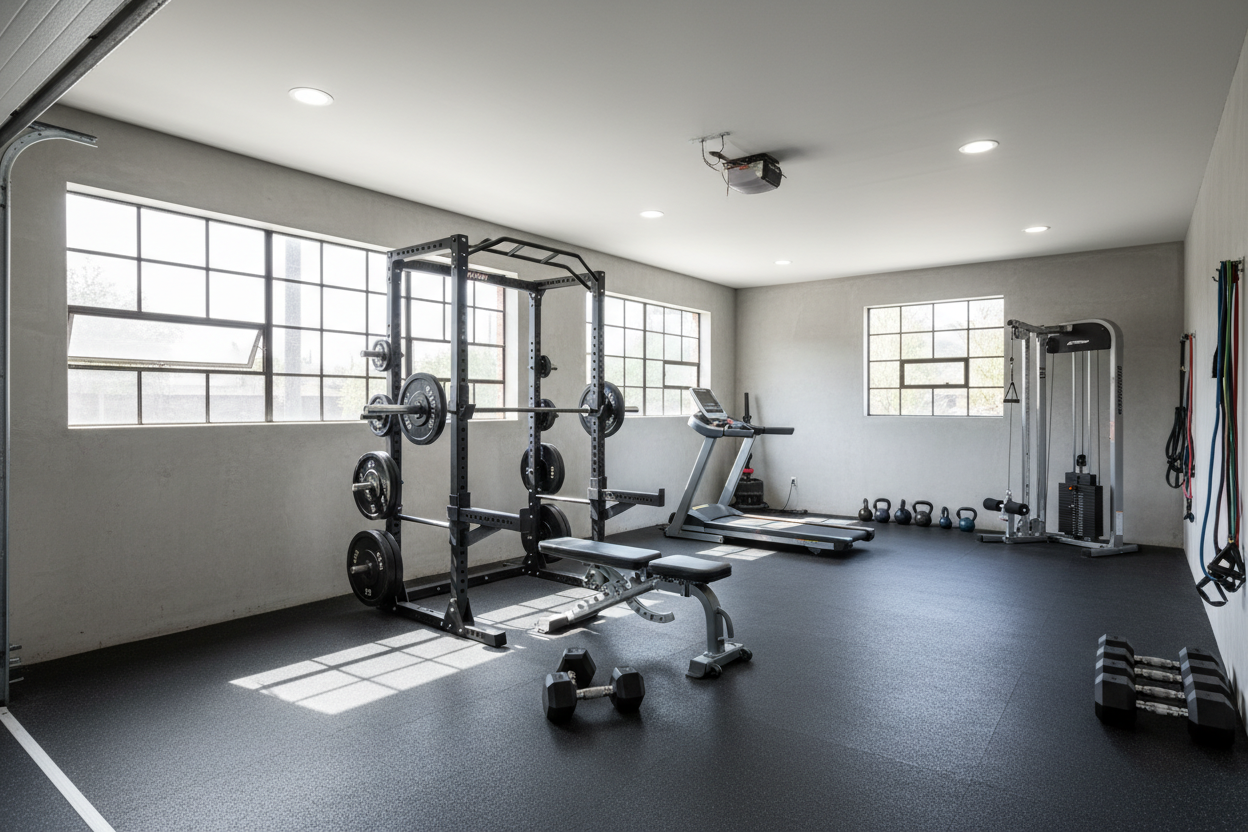
I remember standing in my garage three years ago, surrounded by $3,000 worth of 'functional' gear—kettlebells, gymnastic rings, and a plyo box—realizing I looked exactly the same as the day I started. I was fit, sure, but I wasn't big. I had fallen for the marketing that told me I didn't need heavy iron or machines to grow. I was wrong. Finding the best equipment for muscle building isn't about what looks cool on Instagram; it is about what allows you to move the most weight with the most stability.
Quick Takeaways
- Stability equals growth: The more stable the movement, the harder you can push the target muscle.
- Adjustable dumbbells are the single best space-saver for a hypertrophy-focused home gym.
- Machines aren't 'cheating'—they are essential for safely reaching mechanical failure without a spotter.
- A high-quality adjustable bench is the foundation of every upper-body growth program.
The Functional Fitness Trap I Fell Into
I spent way too long trying to build a massive chest with push-up variations and rings. It doesn't work. Or rather, it works until it doesn't. To grow, you need progressive overload that is easy to track. Trying to figure out if your 'archers push-up' was harder than last week is a nightmare compared to just adding five pounds to a dumbbell press.
When you buy general gym equipment to build muscle, you often end up with tools that are great for burning calories but terrible for mechanical tension. I eventually sold the sandbags and the battle ropes. I realized that if my goal was hypertrophy, I needed tools designed to isolate muscles, not tools designed to make me pant for air while my form broke down.
Why Chasing Mass at Home is Hard (Without the Right Gear)
The biggest hurdle to building mass in a garage is the fear of getting pinned. If you're training for growth, you need to be within one or two reps of total failure. Doing that on a standard barbell bench press when you're alone is a recipe for a viral 'gym fails' video or a trip to the ER.
This is why I shifted my focus toward equipment that offers a built-in safety net. I actually ran a surprising 6-month test where I ditched the barbell for machines and heavy dumbbells. My growth exploded because I finally felt safe enough to actually grind out those last two reps that trigger the most hypertrophy. You need gear that lets you focus on the squeeze, not on surviving the set.
The Core Setup: What Actually Works for Growth
If I had to start over with a $1,000 budget, I'd buy two things: a heavy-duty adjustable bench and a pair of loadable dumbbells. This is the best muscle building equipment for anyone tight on space. Look for a bench with a 1,000-lb capacity. Even if you don't lift that much, that rating usually means the frame won't wobble when you're trying to stay stable during heavy inclines.
For dumbbells, skip the cheap plastic sets. You want something that feels like a real handle. Loadable Olympic-sleeve dumbbells are great because you can use the same plates you use for your bar. Being able to micro-load with 1.25-lb plates is the secret to breaking through plateaus that stop most home lifters in their tracks.
Don't Sleep on Machines for Mass
The elitists will tell you that machines are for 'toning.' They're wrong. Some of the best muscle building machines are actually cable-based. A dual-pulley system allows you to keep constant tension on the muscle through the entire range of motion—something a dumbbell simply can't do because of gravity.
If you have the room, a combo Smith rack is the ultimate pivot for a home gym. It combines the safety of a guided track with the versatility of a cable crossover. When you're shopping for a Smith machine home gym station, pay attention to the linear bearings. You want a bar that moves like it's on ice. If there is any friction or 'stutter,' it'll kill your mind-muscle connection faster than a bad playlist.
Targeting the Stubborn Lower Body at Home
Leg day is where most home gyms fail. You can only do so many goblet squats before your grip gives out before your quads do. To truly mimic the best gym machines for muscle building like a hack squat or leg press, you have to get creative with your footprint. I've found that a dedicated hip thrust machine is one of the few muscular strength machines that actually fits in the corner of a garage while providing commercial-grade stimulus for the posterior chain.
By using machines that lock your torso in place, you remove the lower back as the limiting factor. This allows you to absolutely demolish your legs without feeling like your spine is going to compress. It’s the difference between 'exercising' and 'training for size.'
How to Actually Fit This Stuff in a Garage
You don't need a 2,000-square-foot warehouse. My current setup fits in a 10x12 section of my garage. The trick is vertical storage and multi-use pieces. Use wall-mounted racks for your plates and choose a rack that has a small footprint but includes a pull-up bar and cable attachment. If you can still park your car in the driveway, you've done it right. Just make sure you have at least 8 feet of ceiling height if you plan on doing any overhead pressing or pull-ups.
FAQ
Do I really need a Smith machine for muscle growth?
You don't 'need' it, but it's the safest way to hit true failure on squats and presses when you're training alone. The fixed path lets you focus entirely on the muscle contraction rather than balancing the weight.
Are adjustable dumbbells better than a full rack of fixed ones?
For a home gym, yes. A full rack of fixed dumbbells takes up 10 feet of wall space. A good pair of adjustable ones takes up two square feet. The time it takes to change weights is a fair trade for the space you save.
Can I build muscle with just a cable machine?
Absolutely. Cables provide constant tension, which is a huge driver for hypertrophy. If you have a high/low pulley system, you can hit every single muscle group effectively.
Share:
What Actually Makes the Best Workout Gym Machines Worth Buying
Why the Best At Home Gym Machine Is Built for Solo Lifters