
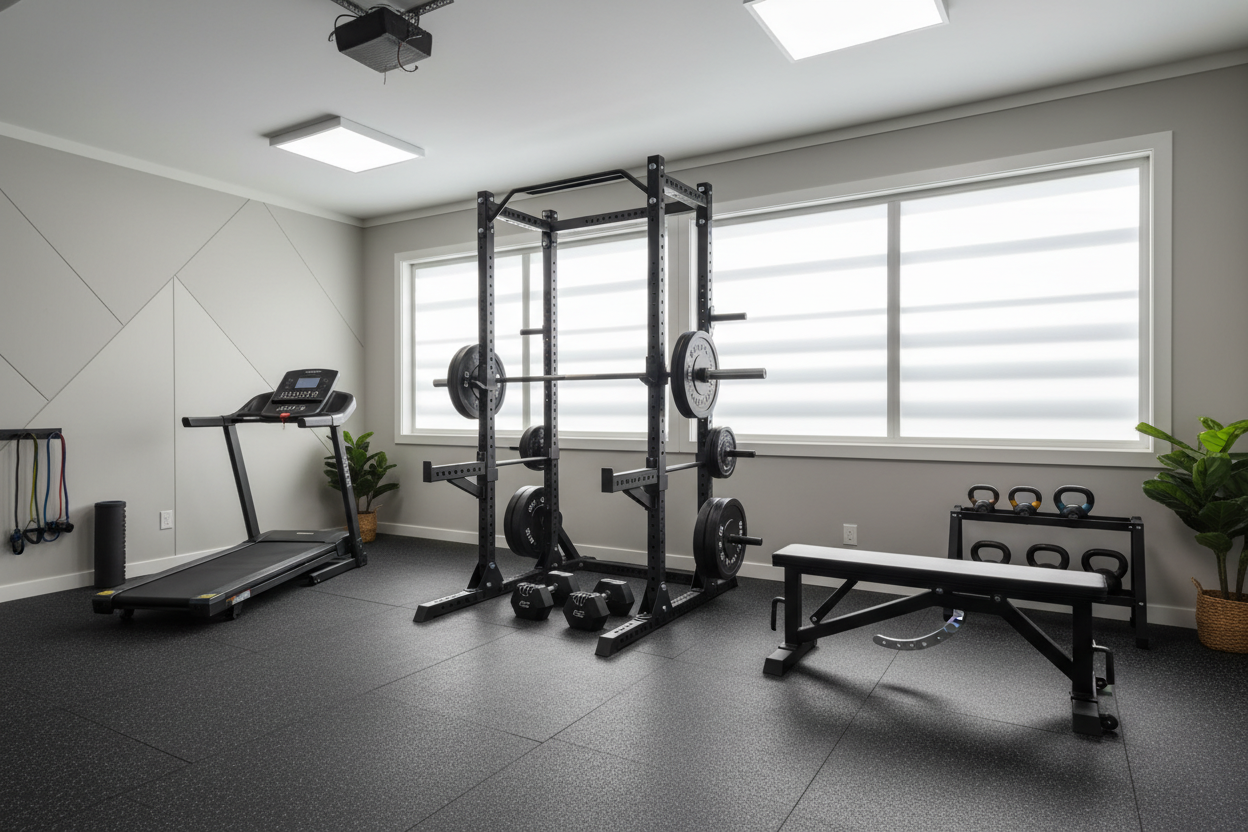
I’ve spent the last decade scouring Craigslist at midnight and testing the best home gym equipment under $500 because I’m cheap, but I’m also a snob about gear. My first setup was a shaky bench and a bar that felt like it was made of recycled soda cans. It was a mistake that cost me more in the long run when I had to replace everything six months later.
- Focus on the Big Three: Buy a rack, a bench, and iron. Skip the cables for now.
- Avoid Multi-Gyms: If it claims to do 20 exercises for $400, it does all of them poorly.
- Buy Used Iron: Plates are just heavy circles. Don't pay retail for them.
- Steel Matters: Look for 12-gauge or 14-gauge steel at minimum for your rack.
Why $500 is the Most Dangerous Budget in Fitness
Manufacturers know that $500 is the magic number. It’s the price point where a beginner feels comfortable clicking 'Buy Now' on a whim. Because of that, the market for home gyms under $500 is flooded with garbage designed to look good in a render but feel terrible in your hands.
I’ve seen dozens of these 'all-in-one' machines that use plastic pulleys and 1-inch thin-walled tubing. They promise a full-body workout, but the friction in the cables makes 50 pounds feel like 20, then suddenly 80 as the plastic catches. You’re better off buying three things that will last twenty years than one machine that will end up as a clothes hanger by Christmas.
The Trap of the Cheap All-in-One Amazon Special
When searching for the best home gyms under $500, you’ll see bundles that include a rack, a bench, and a 'lat tower' attachment. Avoid these like a plague of locusts. At this price, the 'lat tower' is usually just a thin cable that snaps or a pulley system that grinds. I once tested a cheap pulley system where the weight stack swung so much it nearly tipped the whole unit over during a set of tricep pushdowns.
Instead of falling for the gimmick, look for reliable home gym essentials that prioritize structural integrity. You want 2x2 inch steel tubing at the very least. If the weight capacity is listed at 300 lbs, that’s usually the static limit—meaning if you actually drop 200 lbs on it, it’s going to bend. Aim for gear rated for at least 500 lbs to give yourself a safety buffer.
The Core Setup: Where Your Money Should Actually Go
If I had to build a home gym under $400 from scratch tomorrow, I’d split the budget strategically. You need a place to squat/press, a place to lie down, and things to lift. I’d spend $200 on a squat stand, $100 on a flat bench, and the remaining $100 on used iron plates. This gives you a foundation for every major compound movement.
Finding home gym equipment under $500 requires you to be a bit of a hawk on local marketplaces. Iron plates don't expire. A rusted 45-lb plate weighs the same as a shiny new one after five minutes with a wire brush and some spray paint. Don't waste your precious $500 on shipping heavy metal to your door when you can find it in a neighbor's garage for half the price.
Prioritizing the Squat Stand or Half Rack
For a home gym under $450, a half-rack or a set of independent squat stands is your best bet. Look for J-cups with a rubber liner to protect your bar’s knurling. If you buy a rack with bare metal J-cups, you’ll be crying when your barbell starts rusting where the finish was scraped off. Skip the fancy color options and focus on hole spacing; 2-inch spacing is standard and lets you find accessories later.
The Flat Bench Squeeze
This is where most people mess up. They buy a $90 adjustable bench that wobbles the second they try to bench press more than 135 lbs. I’ve been there—trying to stay balanced on a 10-inch wide pad that feels like it's mounted on a pivot. For a home gym under 500, buy a solid, fixed flat bench. It’s safer, more stable, and usually has a higher weight capacity for the same price as a crappy adjustable one.
What If Your Budget is Even Tighter?
If you realize $500 is still out of reach, don't buy the plastic-coated cement weights. They leak sand and they’re so bulky you can’t fit enough on a bar to actually get strong. If you're looking for the best home gym under 300, I’d pivot entirely away from the barbell. Get one heavy kettlebell (24kg or 32kg) and a pair of gymnastics rings to hang from a tree or a ceiling joist. You can build a world-class physique with just those two items while you save up for a rack.
A home gym under $350 is also the sweet spot for a heavy sandbag. I’ve used a 150-lb sandbag for everything from squats to carries, and it’s virtually indestructible. It’s better to have one piece of gear you can’t break than a whole room of gear you’re afraid to use.
When You're Ready to Upgrade (The Next Phase)
Once you have your $500 foundation, stop buying the cheap stuff. The next logical step is building a home gym under $1000 by investing in a high-quality barbell. A good bar has a better 'whip,' better knurling, and sleeves that actually spin. I once used a budget bar that had no spin at all—it nearly wrecked my wrists during a power clean. Learn from my mistakes: buy the heavy-duty basics now, and save the fancy stuff for next year.
FAQ
Can I put a home gym on a second floor?
Yes, but be smart. A home gym under $300 with just some dumbbells is fine. If you’re deadlifting 400 lbs, you need to be over a support beam or in a garage. Don't risk your floor joists for a PR.
Is 14-gauge steel okay for a rack?
It's fine for most people starting out, but it will flex. If you're planning on squatting over 300 lbs regularly, try to find a rack with 11-gauge or 12-gauge steel for peace of mind.
Should I buy a barbell set from a big-box store?
Only if it's a steal. Most of those bars are rated for 300 lbs and use a bolt-on sleeve that will eventually come loose. They are fine for curls, but I wouldn't trust my life to them on a heavy squat.
Share:
The 'No-Embarrassment' Beginner Gym Machine Workout I Give Newbies
Why Commercial Weight Room Designs Ruin Home Gym Setups