
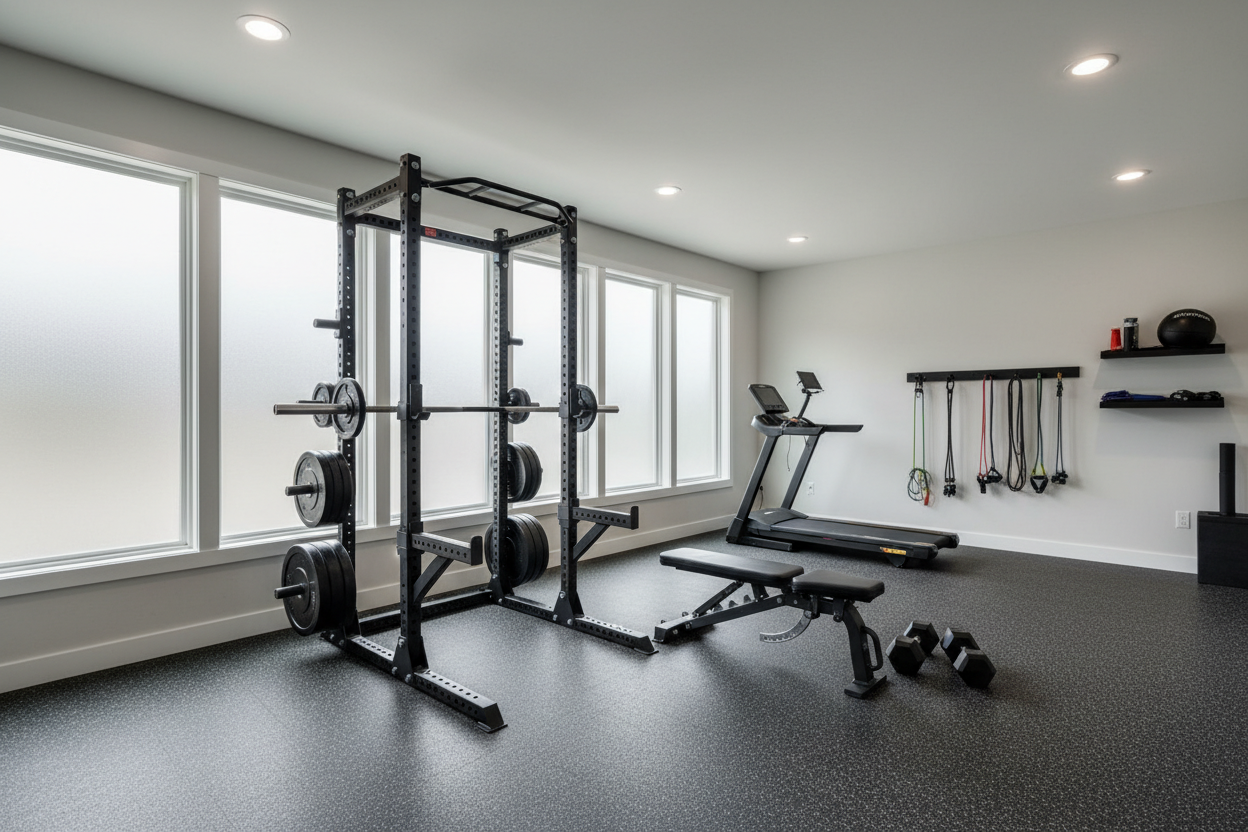
I remember staring at a $6,000 invoice for a 'bespoke' power rack five years ago. It had a fancy laser-cut logo and a specific shade of 'tactical grey,' but underneath the paint, it was just standard 11-gauge steel. I realized then that the industry has a funny way of overcharging you for the word 'custom.' You don't need a designer; you need a plan to hack the system.
If you've been scrolling through Instagram looking at those perfectly color-coordinated, wall-to-wall rigs, you're likely being marketed to, not coached. Building custom home gym equipment doesn't mean you need a fabrication shop in your backyard. It means understanding how to leverage modular standards to fit your specific biomechanics and your floor plan.
Quick Takeaways
- Standardize on 3x3 inch uprights with 1-inch or 5/8-inch holes to ensure maximum compatibility.
- Mix budget frames with premium 'contact point' attachments like high-end J-cups and barbells.
- Use wall-mounted storage to reclaim floor space instead of buying bulky, pre-made weight trees.
- Avoid 'custom' paint jobs—they add zero kilos to your total and 40% to your bill.
The 'Bespoke' Trap: Why You're Overpaying
The fitness industry loves the word 'custom' because it justifies a massive markup on what is essentially commodity steel. Most of the time, when a company sells you a custom rig, they are just taking their standard catalog and changing the powder coat color or cutting the uprights six inches shorter. You are paying a premium for a change that takes a CNC saw about thirty seconds to execute.
True custom fabrication is rare and usually unnecessary. Marketing teams want you to believe that your 8-foot ceiling requires a specialized engineering feat. In reality, most high-quality modular racks are designed to be bolted together in various configurations. Unless you are building a gym for a 7-foot-tall athlete or someone with very specific physical therapy requirements, 'off-the-shelf' modularity is your best friend.
Modularity is the New Custom
The secret to a personalized gym is the 3x3 upright. Once you commit to 3x3 inch steel with 1-inch or 5/8-inch holes, the world opens up. This is the industry standard used by Rogue, Rep, and Titan. It means you can buy a solid, affordable base frame and then bolt on the world's best attachments from any brand you want. Before you start buying individual pieces, focus on the foundation for building a functional home gym.
I’ve seen guys put $500 stainless steel J-cups on a $400 rack. That’s smart. You’re putting the money where the bar actually touches the rack. This mix-and-match approach allows you to tailor the rack height, depth, and pull-up bar style to your exact body type without paying for a 'custom' label. You aren't stuck in one ecosystem; you're the architect of your own rig.
Three Ways to Personalize Your Setup on a Budget
You don't need an all-in-one monster machine that arrives on three pallets. You can piece together a highly specific training environment by focusing on three key areas: attachments, cables, and storage.
Hacking Your Power Rack Attachments
Start with a barebones rack. Most people buy the 'Pro' package and end up with three attachments they never use. Instead, buy the frame and then hunt for specialized lever arms or specialized pin-pipe safeties. I've seen lifters use these modular pieces to turn basic bodybuilding home gym equipment into a high-end functional trainer setup that rivals anything in a commercial club.
The Cable and Rail Hybrid Build
Pre-fab cable machines often have fixed widths that are either too wide or too narrow for a natural chest fly. By using standalone wall-mounted cable towers, you can set the width to your specific wingspan. If you need a controlled path for rehab or specific hypertrophy work, adding a Smith machine home gym station to your modular rack is often cheaper than a bespoke all-in-one monolith that dictates how you move.
Smart Storage Solutions That Fit Your Footprint
Generic weight trees are floor-space killers. In a garage gym, every square inch is a premium. I prefer using wall-mounted strips or bolting weight pegs directly onto the back of the rack. This keeps the center of your gym clear for actual lifting. I learned this the hard way when I finally cleared out the clutter and realized how much gym equipment in home storage was just taking up floor space and gathering dust.
When You Actually Need to Go Custom (And Who to Call)
There are times when modular isn't enough. If you're dealing with a ceiling that drops to 6 feet because of HVAC ducting, or if you have a physical disability that requires a specific entry angle for a wheelchair, call a local welder. A local fabrication shop can modify a standard rack for a fraction of what a 'fitness brand' would charge for a custom build. Just bring them the specs and the 11-gauge steel, and they can weld a custom crossmember in an afternoon.
Build Your Space for Your Mechanics, Not Instagram
At the end of the day, your gym should look like a place where work gets done, not a showroom. True custom equipment is about how the knurling feels in your hand and whether the cable ratio allows for a smooth eccentric. Don't waste your budget on custom colors or branded nameplates. Invest in the steel, the bearings, and the layout that lets you train without friction. Your PRs don't care what color the rack is.
Personal Experience: The 'Custom' Mistake
I once commissioned a local 'fitness' fabricator to build me a custom-height rack because I was convinced my 93-inch ceiling was 'too tricky' for standard gear. The rack arrived, and it wasn't square. The holes were off by an eighth of an inch, meaning I couldn't use any standard attachments. I spent more money fixing that 'custom' rack than if I had just bought a modular one and cut the uprights down myself with a $20 metal blade. Lesson learned: stick to modular standards whenever possible.
FAQ
Can I mix different brands of attachments?
Yes, as long as the upright size (e.g., 3x3) and the hole size (e.g., 1-inch) match. Always check the actual decimal measurements, as some '3x3' racks are actually 75mm x 75mm, which is slightly smaller.
Is 11-gauge steel really necessary for a home gym?
If you're bolting things to it or using heavy attachments like jammer arms, yes. Thinner 14-gauge steel can twist or dent under the leverage of heavy attachments.
How do I find a local welder for gym modifications?
Look for 'ornamental iron' or 'metal fabrication' shops. Show them photos of what you want. They usually find gym gear a refreshing change of pace from welding gates and railings.
Share:
The Honest Answer to 'Do I Need a Bench for Home Gym Lifting?'
Your Search for 'At Home Gyms Best' Is Wasting Your Money