
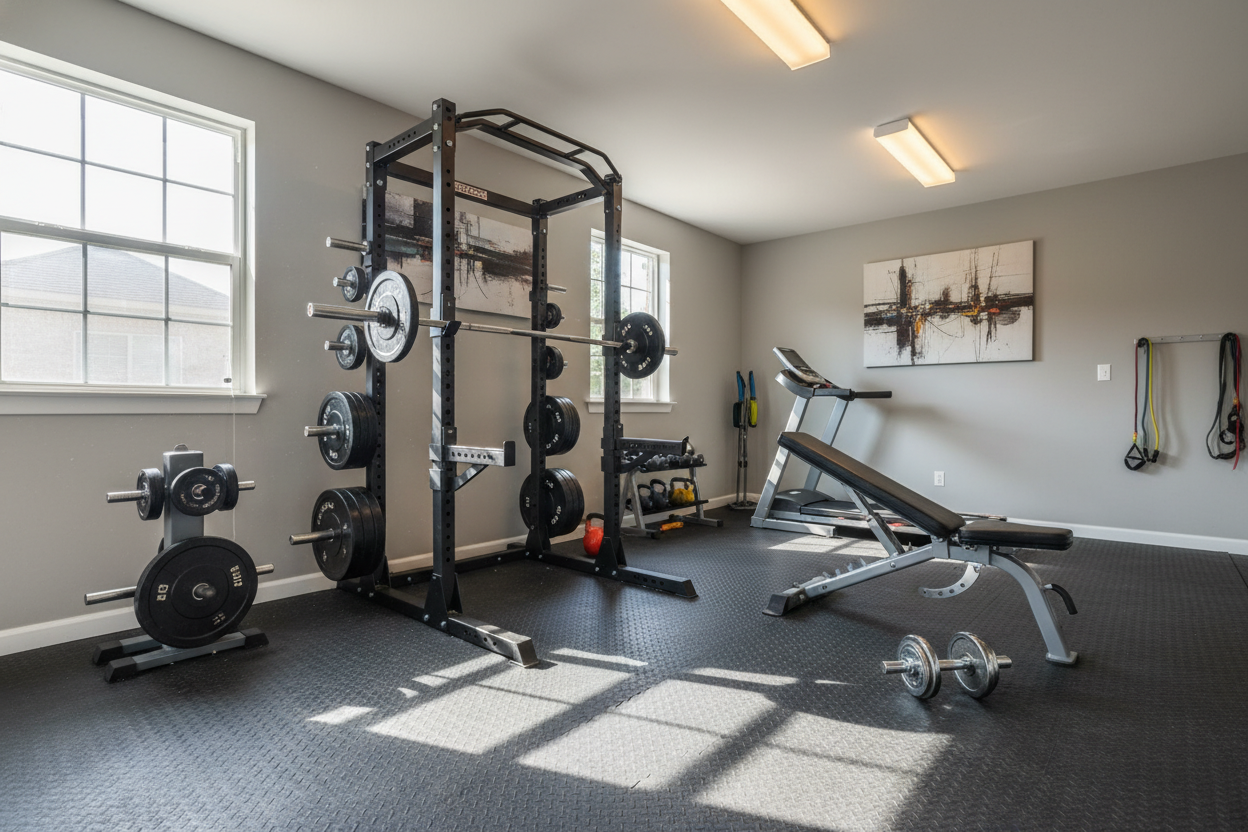
I remember staring at a $2,500 multi-station cable machine three years ago, convinced it was the ultimate solution for my cramped garage. It looked like a Swiss Army knife for gains—pulleys everywhere, a built-in pec deck, and a shiny weight stack. Six months later, the plastic pulleys were squeaking like a haunted house, the cables were fraying, and I realized I'd spent a fortune on a setup that actually limited my natural range of motion. I sold it for half what I paid and went back to basics with a free weight home gym system.
- Durability: No cables to snap or pulleys to grease. Iron doesn't break.
- Versatility: A single barbell can perform hundreds of movements that a fixed-track machine can't touch.
- Resale Value: High-quality racks and plates hold their value for decades; cheap multi-gyms become scrap metal.
- Better Mechanics: Free weights force your stabilizer muscles to work, building real-world strength.
The Illusion of the Do-It-All Cable Tower
The marketing for cable towers is seductive. They promise forty exercises in one footprint. But here is the reality: unless you are spending five figures on commercial-grade equipment, those home-grade cables feel sticky. The resistance isn't smooth, and you spend more time maintenance-checking the tension than actually lifting. When I finally shifted my mindset toward a dedicated home gym, I realized that a home gym free weight system forces you to master the basics. You can't cheat a squat when there isn't a cable helping you balance. It’s just you and the gravity acting on the iron.
The Core 3: Piecing Together a Complete Free Weight Home Gym
Building a complete free weight home gym doesn't require a warehouse full of gear. You only need three things to be 90% effective: a power rack, an Olympic barbell, and a set of plates. I recommend an 11-gauge steel rack with 3x3 inch uprights. It sounds like overkill until you're racking a heavy set of squats and the rack doesn't even budge. For the barbell, look for something with a 190,000 PSI tensile strength—it’s the sweet spot for durability and 'whip.' Whether you choose bumper plates for Olympic lifts or classic iron for that old-school clang, these three pieces form the foundation of every serious strength program from Starting Strength to 5/3/1.
Don't Cheap Out on Your Bench (Seriously)
Your bench is the most underrated safety component in your gym. I’ve made the mistake of buying a $100 'pro' bench from a big-box retailer only to have it wobble the second I picked up 80-pound dumbbells. It’s a terrifying feeling. You want a heavy-duty adjustable weight bench that features a wide tripod base and a high-density foam pad. If the pad is too soft, your shoulders will sink in, ruining your leverage. Look for a weight capacity of at least 800 pounds; that might sound high, but remember that includes your body weight plus the iron you're pressing. A solid bench is the difference between a confident PR and a trip to the chiropractor.
Spotting the Best Free Weight Equipment in a Sea of Junk
If you're hunting for the best free weight equipment, stop looking at the paint job and start looking at the specs. High-quality gear usually has a powder-coat finish that feels slightly textured, not slick and glossy. Check the knurling on the barbells—it should be grippy enough to stay in your hands during a sweaty deadlift without drawing blood. I’ve seen too many 'bargain' sets where the chrome starts flaking off the sleeves after a month. Real equipment is built to be dropped, sweated on, and used daily. If a company doesn't list the steel gauge or the PSI of their bars, they are hiding something. Stick to brands that live and breathe garage gym culture.
When Does a Smith Machine Actually Make Sense?
I know, I know—I just spent five paragraphs praising free weights. But there is a time and place for fixed tracks. If you train solo and love pushing to absolute failure on movements like incline presses or hack squats, a smith machine home gym station can be a smart secondary addition. It provides a safety net that free weights don't. While it shouldn't be the centerpiece of your free weight home gym system, it’s a killer tool for hypertrophy-focused finishers where you want to isolate the muscle without worrying about stabilizing the load. Just don't let it replace your barbell squats entirely.
The Blueprint: Putting Your Iron Setup Together
Start with the rack and the bar. You can do almost everything with just those two. Next, get enough plates to grow into—don't just buy what you can lift today. I always tell people to stop overpaying for iron by looking for local deals or buying plate bundles from reputable online dealers. Once you have the basics, add the adjustable bench. This roadmap keeps you from blowing your budget on fancy attachments you'll only use once a month. Build the core, master the movements, and your home gym will outlast any membership you've ever had.
FAQ
Is a 14-gauge steel rack okay for home use?
It depends on how much you lift. If you never plan on going over 300 pounds, it might suffice. However, for anyone serious about long-term strength, 11-gauge steel is the standard for a reason—it’s significantly more stable and won't flex under load.
Should I get bumper plates or iron plates?
If you plan on doing cleans or snatches where you'll drop the bar, get bumpers. If you're strictly doing powerlifting (squat, bench, deadlift), iron plates are thinner, allowing you to fit more weight on the bar and saving you money.
How much space do I really need?
A standard Olympic bar is 7 feet long. You need at least 9 to 10 feet of width to comfortably load plates without hitting the walls. A 10x10 foot area is the 'goldilocks' zone for a full rack setup.
Share:
I Tried an Upside Down Squat Machine for 30 Days (Here Is What Happened)
Avoid Flimsy Plastic: Best Home Exercise Equipment for Seniors