
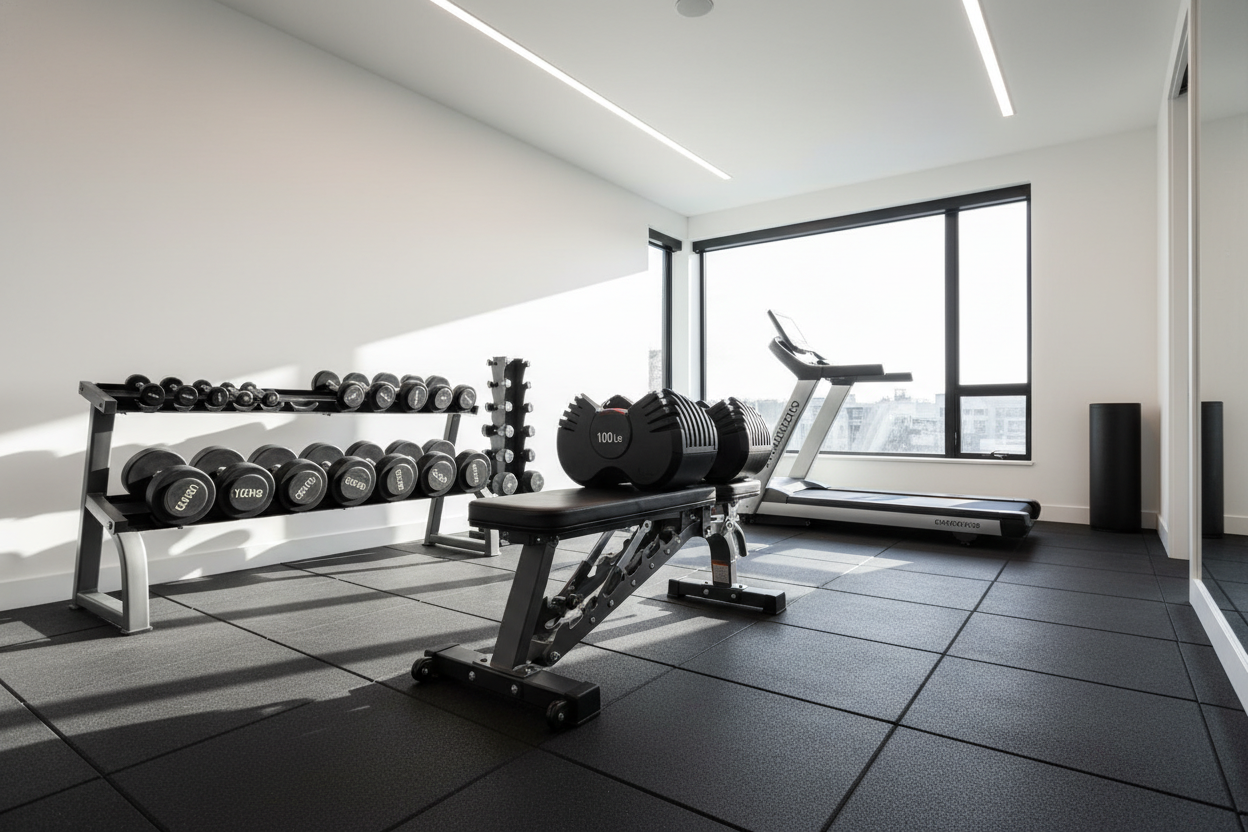
I remember the first time I tried to bench a pair of 100 pound weights in my garage. No spotter, just me, a rickety bench, and a lot of hope. Buying 100 lbs dumbbells isn't like buying a set of light 25s for lateral raises; the stakes are significantly higher when triple digits are hovering over your ribcage.
Most people start their home gym journey with a cheap set of dial-up weights, but once you start moving toward a 100 lb weight sets, the physics of the equipment changes. You aren't just looking for weight anymore; you're looking for structural integrity that won't fail mid-rep.
- Safety First: Steel locking mechanisms are mandatory, not optional, for heavy loads.
- Flat Ends: The ability to rest the weight on your quads is essential for the 'kick-up' into a press.
- Durability: If you can't drop them in an emergency, they don't belong in a heavy lifting program.
- Footprint: A full 5-100 lb dumbbell set takes up about 10-12 feet of wall space.
The Terrifying Reality of Bailing a Heavy Press Alone
In a commercial gym, you usually have a spotter or at least a floor designed to take a beating. At home, when you're pushing a 100 pound dumbbell set, you are the only line of defense. If your grip slips or your shoulder gives out, those weights are coming down fast.
This is where the 'bale' becomes a skill. You need to know that if you drop those 100 lb dumbbells, the heads won't snap off or the plates won't fly out of the cradle. I've seen cheap 100 pound adjustable dumbbell models where the pins sheared off after a single drop from six inches. That’s not just a gear failure; that’s a trip to the ER waiting to happen.
Fixed vs. Adjustables: Why the 100-Pound Mark Changes Everything
When you're looking for 100lb dumbbells for sale, you'll notice a massive price gap between fixed iron and adjustables. Fixed dumbbells are virtually indestructible. They are the gold standard for heavy pressing because there are zero moving parts to fail. I ended up swapping my dial-up weights for a rubber hex set because I got tired of the rattling noise every time I hit a heavy set of rows.
However, a full dumbbell set 50-100 lbs is a massive investment in both cash and floor space. If you're working in a tight 10x10 spare bedroom, a 100lb adjustable dumbbell set is often the only logical choice, provided you don't buy the bottom-of-the-barrel plastic versions.
The Hidden Danger of Plastic Dials Under Massive Loads
Many budget adjustable dumbbells 100 lbs each rely on internal plastic gears to hold the plates in place. This is fine for a 20-pound curl, but it's a disaster for 100 lb weights. Over time, those plastic teeth wear down, and the plates can become loose.
If you are going the adjustable route, you need heavy-duty adjustable dumbbells that utilize steel-on-steel locking. You want a mechanism that physically blocks the plates from sliding out, rather than just friction or plastic tabs. It costs more, but your face is worth the extra hundred bucks.
The Kick-Up Test: Do Your Heavy Weights Dig Into Your Thighs?
One thing people forget when shopping for a 100 pound adjustable dumbbell is the 'kick-up.' To get 100s into position for a chest press, you usually rest them on your knees and kick your legs back. If the dumbbell has a sharp adjustment pin or a hollow 'cage' end, it's going to dig into your quads like a dull knife.
The best 100 lbs adjustable dumbbells have a flat, smooth end-cap. This mimics a traditional pro-style dumbbell and allows you to transition from the floor to the bench without bruising your legs before the set even starts.
How to Build Your Heavy Dumbbell Arsenal Without Going Broke
You don't necessarily need a 10 100 dumbbell set to get strong. In fact, buying a full heavy dumbbell set 50-100 is often a waste of money for most home lifters. You're better off being strategic with your purchases.
I usually recommend a hybrid approach. Use a smaller adjustable set for your warm-ups and accessory work, then buy specific pairs of fixed weights for your 'big' lifts. I've written before about why you might only need a few specific pairs like 80s, 90s, and 100s to cover your heavy pressing needs. If you want the ultimate peace of mind, just grab a solid rubber hex dumbbell set for those top-end weights and call it a day.
Personal Experience: The $400 Mistake
I once bought a pair of 100lb adjustable dumbbells from a brand I won't name that used a lot of 'high-impact' plastic. They felt solid enough until I had to bail on a set of heavy shoulder presses. I dropped them from about waist height onto stall mats. The plastic selector ring shattered instantly, sending 10-pound plates rolling across my garage like loose change. I learned the hard way: if you're training with 100 pound weights, the equipment needs to be as tough as the workout.
FAQ
Can I drop 100 lb adjustable dumbbells?
Generally, no. Even high-end models shouldn't be tossed around like iron. If you plan on dropping your weights regularly, go with fixed rubber hex or pro-style dumbbells.
Is a 50-100 dumbbell set too much for a beginner?
Unless you're already a seasoned lifter, you probably won't touch the 100s for a while. Start with a set that goes up to 50 or 60, then buy 100 lb weights individually as you hit your strength milestones.
What is the best 100 lb dumbbell for small spaces?
Look for 'expandable' sets. Some brands allow you to buy a base 50 lb set and add 'expansion kits' later to reach 100 lbs. This saves space and spreads out the cost.
Share:
Are All-In-One Home Weight Lifting Machines Actually Worth It?
I Tested 5 Pieces of Affordable Cardio Equipment (Only 1 Survived)