
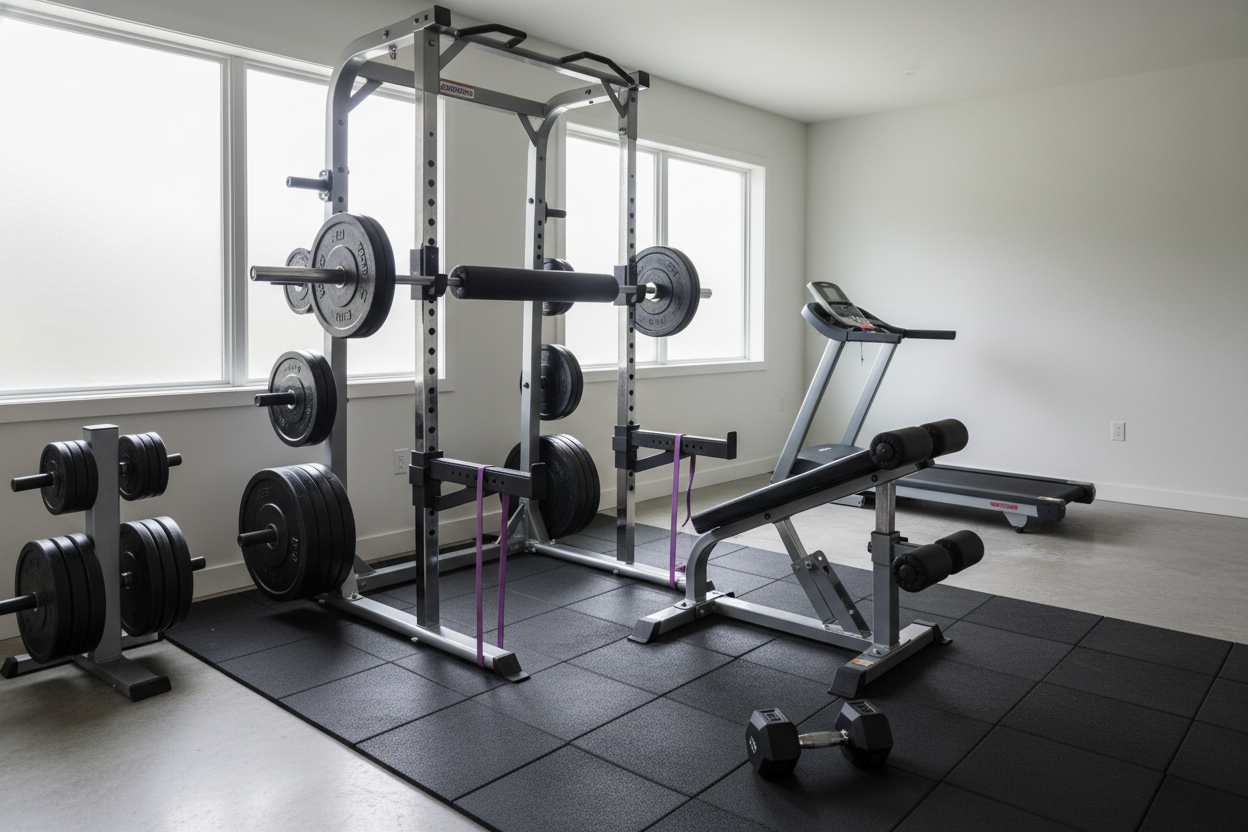
I have spent way too many hours in my garage gym trying to balance a 45-pound barbell on my lap while shimmying into position against a bench. It is a literal pain in the pelvic bone. You spend half your energy just keeping the bar from tilting like a seesaw, and by the time you reach your working sets, your stabilizers are fried before your glutes even wake up.
That is why the machine version is so tempting. But the barbell purists will tell you that if it is on tracks, it does not count. They are wrong. If you want to know are smith machine hip thrusts effective, the answer is a resounding yes—if you know how to work around the fixed path and dial in your positioning.
Quick Takeaways
- Eliminating balance allows for significantly higher mechanical tension on the glutes.
- Setup is everything; a three-inch shift in bench placement changes the entire movement.
- You can safely push to absolute failure without a spotter or the bar rolling off your hips.
- Range of motion issues are easily fixed with a couple of bumper plates.
The Great Glute Debate: Free Weights vs. The Fixed Track
The standard barbell hip thrust is the undisputed king of social media, but it is also a logistical nightmare. People ask are smith machine hip thrusts effective because they worry about the 'missing' stabilizer work. Here is the truth: your glutes do not care about stabilizing a wobbling bar; they care about load and stretch.
When you lock into a fixed track, you remove the side-to-side instability. This lets you focus 100 percent of your neural drive on hip extension. You are not losing gains; you are just specializing the stimulus. For hypertrophy, that is exactly what we want.
Why a Fixed Bar Actually Unlocks Heavier Lifting
The biggest perk of a home gym Smith machine is the stability. When you perform a hip thrust with assisted bar mechanics, the machine handles the balance. This means you can load up 20 to 30 percent more weight than you could with a free barbell.
In my experience, this is where the real growth happens. Because you are not worried about the bar sliding toward your chin or floor, you can grind out those last three reps where the glutes are screaming. It turns a compound movement into a high-intensity isolation exercise that targets the gluteus maximus with surgical precision.
Nailing the Setup: Don't Ruin Your Lower Back
Most people hate this movement because they do not know how to set up smith machine for hip thrust sets properly. If the bench is too far away, you strain your hamstrings. If it is too close, your knees take the brunt. You want your shins to be vertical at the top of the rep.
To master how to use a smith machine for hip thrusts, start by centering your bench. Line up the middle of the bench with the bar. When you sit down, the bar should rest right in the crease of your hips. If you find yourself sliding or the bar feels like it is crushing your hip bones, you need to fix an awkward hip thrust setup by adjusting your bench height or adding a thicker pad.
What to Do When the Bar Bottoms Out
A common complaint is that the smith machine too high for hip thrusts, meaning the safety pegs or the bottom of the track stop the bar before you get a full stretch. This is an easy fix. Grab two 45-lb bumper plates and place them where your feet go. By raising your feet, you artificially increase the distance the bar can travel, giving you that deep, muscle-building stretch at the bottom.
Dialing in the Execution for Maximum Tension
Learning how to properly do hip thrusts on smith machine tracks requires a different 'feel' than free weights. Since the bar moves vertically, you have to position your body so your hips drive straight up into that path. Keep your chin tucked to your chest and your ribs down—this prevents your lower back from arching and taking over the lift.
I prefer using a high-quality rig like the Full Body Multi Training Station because the linear bearings are smooth. If the machine is jerky, you lose that mind-muscle connection. Drive through your heels, pause for a full second at the top, and control the weight on the way down. No bouncing.
Leveling Up: Changing the Resistance Curve
If you really want to torch your glutes, try banded smith machine hip thrusts. Most Smith machines have pegs at the base. Loop a heavy resistance band over the ends of the bar. This creates 'accommodating resistance,' meaning the weight gets heavier as you reach the top of the rep—exactly where the glutes are strongest and most active.
The Final Verdict on Machine Glute Training
Are they effective? Absolutely. While the barbell version has its place for overall athletic development, the Smith machine is superior for pure glute hypertrophy. It allows for more weight, better focus, and safer failure sets. If you have the equipment, stop overthinking it and start loading the plates.
My Personal Take: The Bench Height Trap
I learned the hard way that bench height is the silent killer of hip thrust gains. I used to use a standard 17-inch flat bench, and at 5'10", it was too high. I ended up pivoting on my mid-back instead of my shoulder blades, which led to a week of Vitamin I (Ibuprofen) for my lower back. I switched to a 14-inch riser, and the difference was night and day. If it feels 'off,' it probably is—adjust your heights before you adjust your weight.
FAQ
Is the Smith machine better than a barbell for glutes?
It is not necessarily 'better,' but it is more stable. This stability allows most lifters to use heavier weights and achieve better isolation of the glute muscles compared to a free barbell.
How do I stop the bar from hurting my hips?
Use a specialized thick foam bar pad. If you do not have one, a rolled-up yoga mat or even a folded towel works in a pinch, but a dedicated squat pad is worth the twenty bucks.
Why do I feel this in my quads instead of my glutes?
Your feet are likely too close to your butt. Move your feet further out until your shins are vertical at the top of the movement. This shifts the tension away from the quads and onto the posterior chain.
Share:
I Tested the Mikolo Smith Machine for 30 Days. Here's the Truth.
Why Your Bench Feels Weird (Blame the Smith Machine Angle)