
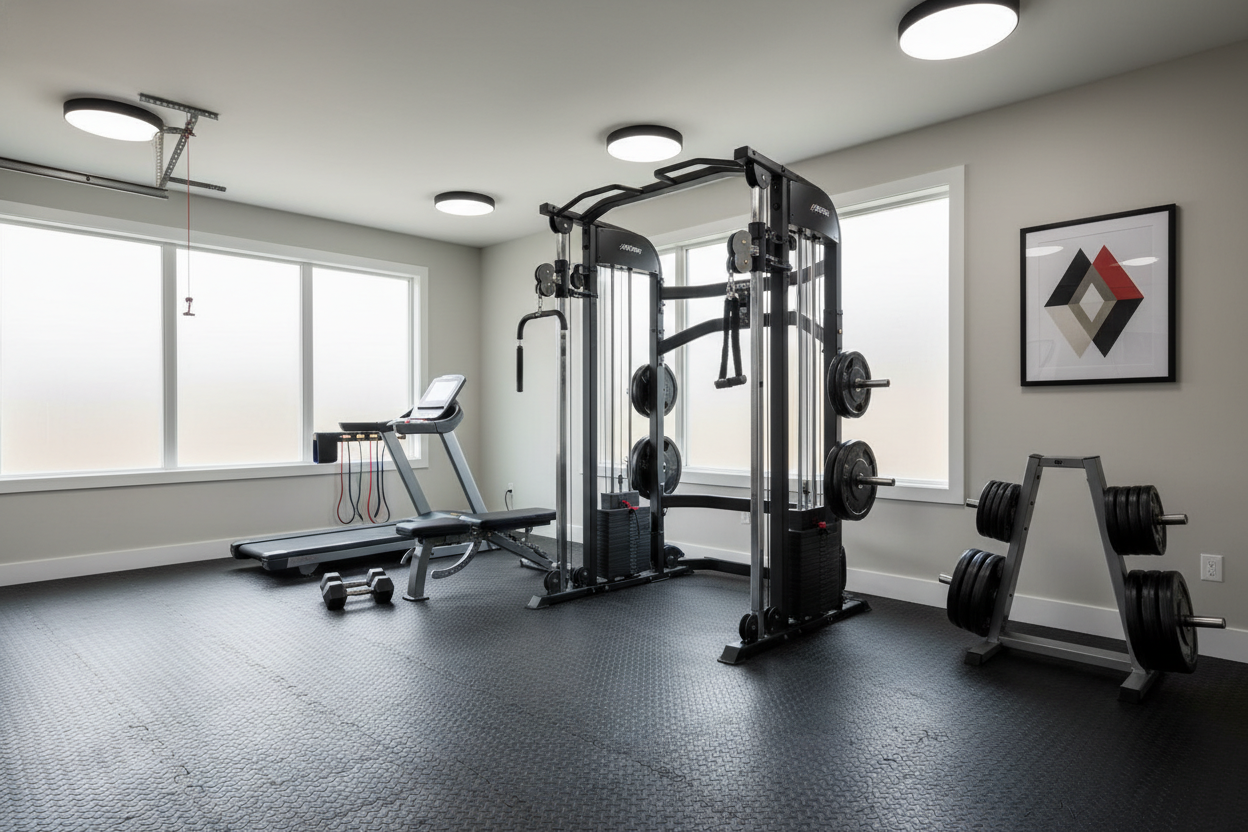
I was scrolling through my feed the other night, dodging ads for 'AI-powered' fitness mirrors, while sitting on a 20-year-old bench that smells like old sweat and iron. It made me wonder: have the latest fitness machines actually improved our training, or are we just paying a premium for an iPad glued to a pulley system?
I've spent the last decade testing everything from vintage Nautilus gear to the newest machine fitness equipment hitting the market. The truth is somewhere in the middle. Some of these new fitness machines are absolute junk, while others solve problems that used to require a 2,000-square-foot commercial facility.
Quick Takeaways
- Screens are distractions; focus on the pulley ratio and steel gauge.
- Modern combo units are finally stable enough for heavy lifting.
- Dedicated glute machines are a legitimate upgrade over barbell setups.
- Commercial machines still offer a smoother 'feel' than most home versions.
Stop Falling for the Touchscreen Trap
The biggest scam in the industry right now is the 'smart' machine. Manufacturers are slapping a 24-inch 4K display on a frame made of 14-gauge steel and calling it premium. If the machine requires a $39/month subscription to work, you aren't buying a piece of equipment; you're renting a tablet.
Most of these new gym machines hide terrible mechanical designs behind their software. I've seen 1:1 pulley ratios on machines that should be 2:1, leading to a jerky, uneven stroke. I recently spoke with an industry insider about why cheap gym machines suck, and it usually comes down to saving $50 on bearings and hiding it with a shiny UI.
The Modern Mechanics That Actually Got Better
It's not all bad news. While some brands focus on apps, others are actually looking at biomechanics. The machine fitness equipment we're seeing today often features better converging and diverging axes that actually follow the way your joints move. If you're over 40, your shoulders will thank you for choosing a modern chest press over a straight-bar machine from 1985.
The Rise of the True Compact Combo
Space is the biggest enemy of the garage gym. In the past, if you wanted a leg press and a hack squat, you needed two massive footprints. The latest engineering has finally given us the compact leg press hack squat combo. These units use a 30-degree angle to save floor space without the carriage wobbling like a shopping cart with a bad wheel.
Glute Isolation Finally Makes Sense
I used to hate training glutes. Setting up a heavy barbell for hip thrusts is a pain in the neck—literally. You spend ten minutes hunting for a pad and a bench that won't slide across the floor. A dedicated hip thrust machine is one of the few modern upgrades I'll defend. It keeps the tension where it belongs and saves your shins from the barbell scrape.
What Commercial Gyms Still Get Right
Even with my garage full of gear, I still miss the feel of a high-end commercial leg extension. There is a specific smoothness to a 300-pound selectorized stack that home gear struggles to replicate. When I think about the machines gym vets actually miss, it's usually those heavy-duty, fixed-path units that let you grind out reps without worrying about the machine tipping over.
How to Vet New Gym Machines for Your Garage
Before you drop three grand on a new gym machine, look at the specs, not the marketing. Is the frame 11-gauge steel? Are the pulleys aluminum or cheap plastic? If you want versatility, a Smith machine home gym station often provides more value than three different single-use machines. It gives you a safe way to push to failure without a spotter, which is the whole point of using machines in the first place.
Personal Experience: The Cable Fiasco
Two years ago, I bought a 'cutting edge' cable machine because it looked great in photos. Two weeks in, the plastic pulley housing cracked during a heavy set of face pulls. It took six weeks to get a replacement part from a company that cared more about their app updates than their supply chain. Now, I stick to brands that prioritize the 'iron' over the 'internet.'
FAQ
Are machines better than free weights?
Neither is 'better.' Free weights build stability, but machines allow you to isolate muscles and push to absolute failure safely. Use both.
What steel gauge should I look for?
11-gauge is the gold standard for home gyms. 14-gauge is okay for light use, but it will flex if you're actually moving heavy weight.
Is digital resistance as good as iron?
Digital weight feels different. It provides constant tension, which is great, but it lacks the inertia of real plates. I still prefer the feel of gravity.
Share:
I Maxed Out a Cheap Leg Press Machine (Here Is What Broke)
I Put Professional Exercise Equipment in My Garage (And Regretted It)