
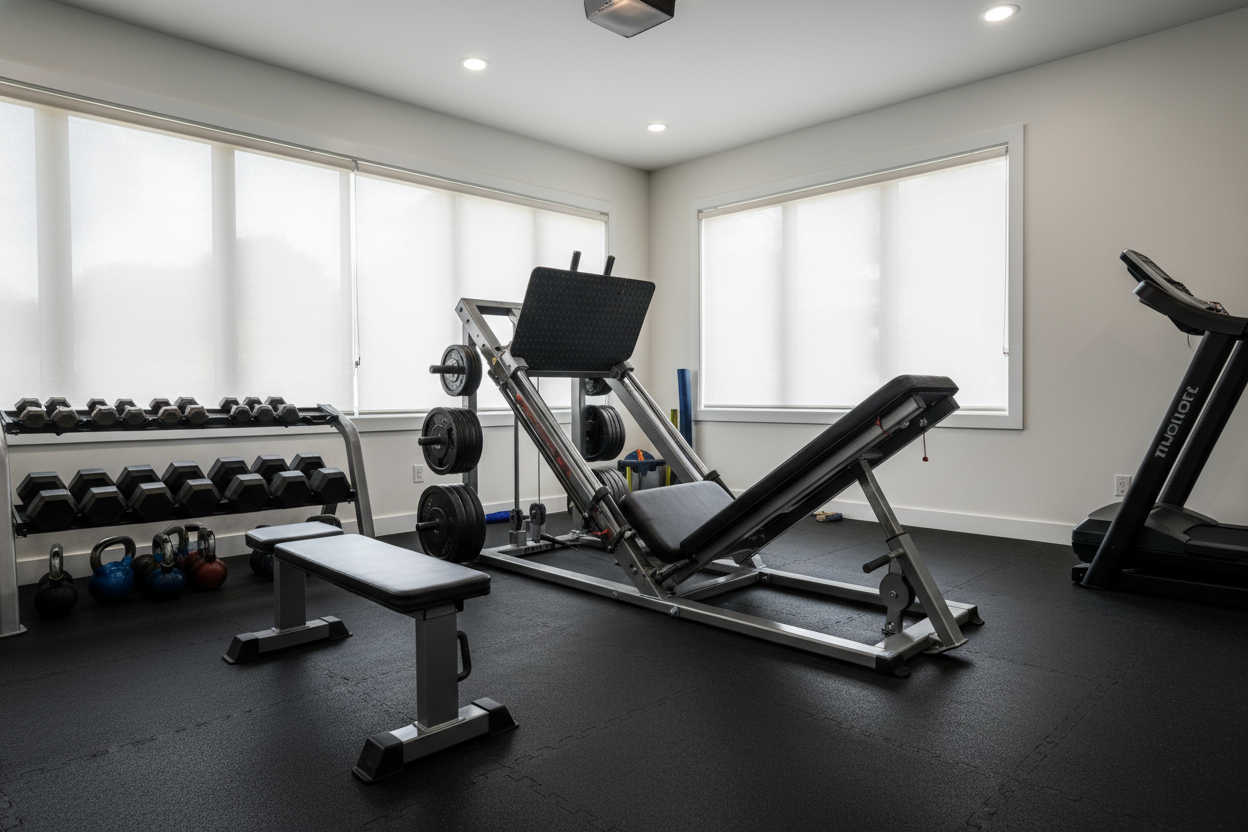
I was scrolling through marketplace listings at midnight, frustrated by the skyrocketing prices of commercial-grade iron. I saw it: a cheap leg press machine with a price tag so low it felt like a typo. The temptation to save three thousand dollars over a name-brand sled is a siren song for any garage gym owner trying to build massive quads on a budget.
I bought it, built it, and then I tried to break it. If you are tired of high gym fees and want a leg sled for your home, you need to know exactly where these budget manufacturers cut corners before you put your spine on the line.
Quick Takeaways
- 14-gauge steel is the standard for 'budget' machines, but it flexes dangerously under 400+ pounds.
- Cheap nylon pulleys and plastic rollers create massive friction, making the eccentric phase feel jerky.
- Safety catches on bargain units are often poorly welded and can fail during a true max effort.
- Poor ergonomics in cheap designs often lead to excessive lower back strain.
Why I Decided to Risk Buying a Budget Sled
The price gap in the fitness industry is wider than my stance on a sumo squat. You have high-end commercial units that cost as much as a used Honda, and then you have the 'no-name' budget options flooding the market. For most of us, spending $5,000 on a single piece of equipment isn't just unrealistic—it's impossible.
I wanted to see if a leg press cheap enough for a hobbyist could actually survive a real training block. The marketing photos always show a fit model using two plates, but I wanted to know what happens when you actually load it up. Is the 'home gym tax' really necessary, or are we all just paying for a brand name and some powder coating?
The First Red Flags: Assembly and Steel Gauge
The first sign of trouble arrived in a box that looked like it had been through a war zone. As I started unboxing, the '14-gauge steel' felt more like heavy-duty aluminum foil. For context, a quality rack or sled should be at least 11-gauge steel. Thin steel means more vibration and a higher chance of the frame warping over time.
The welds were the next red flag. Instead of clean, stacked-dime beads, these looked like someone had dripped hot glue onto the joints. When you are sitting under several hundred pounds of iron, you want to trust the structural integrity of the machine. These welds didn't inspire that trust. Then there were the nylon pulleys—cheap plastic components that I knew would be the first thing to snap under tension.
What Actually Happens When You Load 400 Pounds
Testing day was a wake-up call. I started light, but once I crossed the 400-pound mark, the machine started to 'talk' to me—and it wasn't saying anything good. The track wobble was the most terrifying part. As the sled moved down the rails, it shifted side-to-side by nearly half an inch. That kind of instability is a recipe for a knee injury.
The friction was also unbearable. On a high-end machine, the sled glides. On this cheap leg press machine, the plastic rollers groaned against the paint. It made 400 pounds feel like 600 on the way up and 200 on the way down because the friction was doing half the work. Worst of all, the safety catch—the only thing standing between me and a crushed ribcage—visibly bent when I racked the weight firmly.
The Biomechanical Trap of 'Leg Press Cheap' Designs
Beyond the materials, the actual geometry of budget machines is often flawed. Most cheap manufacturers just copy a silhouette without understanding the physics. On this unit, the footplate angle was fixed in a way that forced my heels to lift at the bottom of the rep. This shifted all the tension from my quads directly into my patellar tendons.
This design also forced my pelvis into a 'butt wink' position, pulling my lower back off the pad. It reminded me of the common debate about whether a leg press Smith machine setup is viable; if the path of travel isn't perfectly aligned with your natural mechanics, you're asking for a herniated disc. A budget sled that ruins your back isn't a bargain—it's a liability.
Smarter Ways to Spend Your Garage Gym Budget
If you have $500 to $800 to spend, don't waste it on a flimsy full-sized sled. You are better off looking for a compact 30 degree leg press that uses thicker steel and a smaller footprint. These mid-tier machines often prioritize build quality over sheer size, giving you a much safer experience.
Another option is to get creative with the equipment you already have. For example, learning how to do a reverse leg press on Smith machine can provide a similar stimulus to a vertical leg press without requiring a dedicated, bulky machine. If you must have a sled, look for used commercial gear on the secondary market before clicking 'buy' on a generic Amazon listing.
The Final Verdict: Save Your Money or Upgrade?
Buying cheap often means buying twice. After three months of use, the rollers on my budget machine flat-spotted, and the frame developed a permanent creak. I ended up selling it for a fraction of what I paid and investing in something that won't collapse on me. If you're serious about leg day, look for 11-gauge steel, linear bearings instead of plastic rollers, and a weight capacity that is at least double what you plan to lift.
If you're ready to stop gambling with your safety, I recommend browsing a curated selection of leg press hip thrust machines that are actually built for heavy home use. Your quads (and your spine) will thank you.
FAQ
Is 14-gauge steel okay for a leg press?
Only if you are a beginner or using very light weights. For anyone planning to load more than 300 pounds, 14-gauge steel flexes too much and lacks the long-term durability needed for heavy compounds.
What is the most important feature on a budget leg press?
The safety catches. If the machine doesn't have multiple, heavy-duty lockout points that you can reach easily at the bottom of a rep, do not buy it. Your life literally depends on that component.
Can I upgrade the rollers on a cheap machine?
Sometimes. If the machine uses standard-sized bearings, you can swap plastic rollers for stainless steel versions. However, this won't fix a flimsy frame or poor structural welds.
Share:
What It Actually Feels Like to Lift on a Digital Weights Machine
Are the Latest Fitness Machines Actually Better Than 90s Iron?