
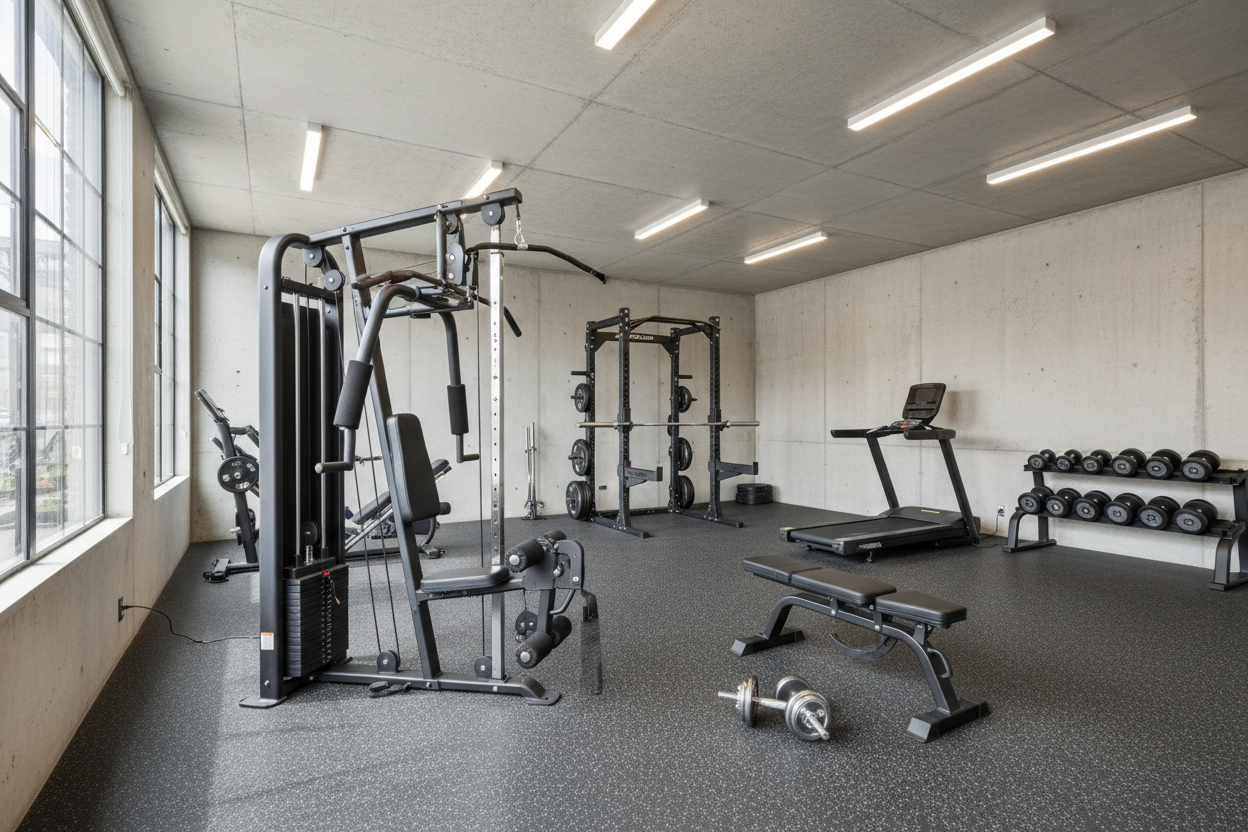
You walk into a big-box commercial gym and it is a literal labyrinth of powder-coated steel, pulleys, and selectorized weight stacks. It feels like you need to touch every single piece of equipment to justify that monthly membership fee. I have been there—staring at a sea of Life Fitness and Hammer Strength units, wondering how many machines should i do at the gym to actually see a bicep vein or add an inch to my legs.
The reality is that most people treat the gym like an all-you-can-eat buffet. They take a small serving of fifteen different things and leave feeling bloated but unsatisfied. If you want to actually grow, you need to stop machine-hopping and start focusing on the few movements that move the needle.
Quick Takeaways
- Limit yourself to 3 to 5 machines per workout.
- Prioritize compound machines (Leg Press, Chest Press) over isolation 'fluff.'
- Intensity beats volume; two sets to failure are better than five sets of 'going through the motions.'
- Quality over quantity prevents the dreaded 'junk volume' trap.
The All-You-Can-Lift Buffet Trap
Commercial gyms are designed to look impressive. They want rows upon rows of machines because it sells memberships. But for the lifter, this creates a paradox of choice. You see someone doing a cable crossover, so you jump on that. Then you see the lateral raise machine, so you hit three sets there. Before you know it, you have done twelve different exercises, but none of them with any real intensity.
I see this every Monday night. Guys spend two hours doing every chest machine in the building. By the time they get to the fourth machine, their central nervous system is fried, and they are just moving weight from point A to point B without any mechanical tension. You are not training; you are just participating in a very expensive form of cardio.
So, How Many Machines Should You Do at the Gym?
If you are looking for a hard number, the answer is usually 3 to 5 machines per session. This depends on your split, but even on a full-body day, you should not be touching more than five selectorized pieces. If you are doing a dedicated leg day, hitting a heavy hack squat, a leg press, and maybe a seated leg curl is plenty if you are actually pushing the intensity.
The goal is to avoid the point where productive training turns into counterproductive waste. I have analyzed how many machines should I use at the gym before the law of diminishing returns kicks in, and for most of us, anything past that fifth machine is just adding fatigue without adding muscle. You are better off doing two more sets of heavy presses than moving on to a low-value fly machine.
The 3-to-4 Rule for Hypertrophy
Hypertrophy—fancy talk for muscle growth—requires mechanical tension. To get that, you need to be able to recruit as many muscle fibers as possible. When you do 10 different machines, your effort is diluted. I would much rather see you take 3 machines and push them to absolute, teeth-gritting failure than see you breeze through 10 machines at 70% effort.
Think of your energy like a battery. If you spread that charge across a dozen devices, nothing stays powered for long. Focus that charge on four key movements, and you can actually trigger an adaptation response. My best gains didn't come when I had a 20-exercise circuit; they came when I got brutally strong on a handful of core movements.
Compound vs. Isolation: Picking Your Heavy Hitters
Not all machines are created equal. A leg press that can hold 1,000 lbs is a heavy hitter. A seated calf raise machine is an accessory. When deciding how many machines should you do at the gym, your first three choices should always be compound movements. These are machines that involve more than one joint moving—think chest presses, rows, and leg presses.
Save the isolation stuff (the 'fluff') for the very end, and only if you have the gas left in the tank. I always look for the best machines at the gym you should actually copy at home because those are the ones that offer the highest ROI for your time. If a machine doesn't allow for progressive overload—meaning you can't easily add weight or reps over time—it shouldn't be in your top five.
Replicating the Perfect Machine Routine in Your Garage
The irony of the commercial gym is that you spend half your time waiting for a machine to open up. That is why I eventually moved my training to my garage. You do not need twenty different pieces of equipment to get a world-class workout. In fact, most of the 'essential' machine movements can be covered by one or two versatile pieces of kit.
A versatile Smith machine setup is often the 'cheat code' for home lifters. It allows you to do stabilized presses, squats, and rows without needing a spotter or a 5,000-square-foot facility. When you are outfitting your own home gym, focus on the 3-5 movements that actually matter. You will find that your workouts get shorter, your intensity goes up, and you finally stop spinning your wheels in the machine-hopping cycle.
Personal Experience: The 15-Exercise Failure
Early in my lifting days, I followed a pro bodybuilder's routine I found in a magazine. It had 16 different exercises for back day. I spent two and a half hours in the gym, used every cable attachment known to man, and felt like I had accomplished something. The problem? I didn't get any stronger for six months. I was so exhausted from the sheer volume that I could never use heavy weight on any of it. I swapped that nonsense for a routine with just four movements—weighted pull-ups, heavy rows, and two machines—and my back width exploded. More is rarely better; better is better.
FAQ
Is 5 machines enough for a full-body workout?
Absolutely. A leg press, a chest press, a row, a shoulder press, and a lat pulldown cover every major muscle group in the body. If you do 3 sets of each to failure, you will be crawling out of the gym.
Can I do more machines if I am an advanced lifter?
Advanced lifters actually often do less volume but with higher intensity. They know exactly which machines work for their biomechanics and they don't waste time on the ones that don't. Stick to the 3-5 rule regardless of your level.
Should I do machines or free weights first?
Usually, you want to hit your most taxing movements first. If you are doing a heavy barbell squat, do that before you jump on the leg press. Use machines to safely push your muscles to failure once your stabilizers are tired from the free weights.
Share:
I Was Wrong About the Smith's Machine (And You Are Too)
I Tested the New Equipment at Planet Fitness (Is It Any Good?)