
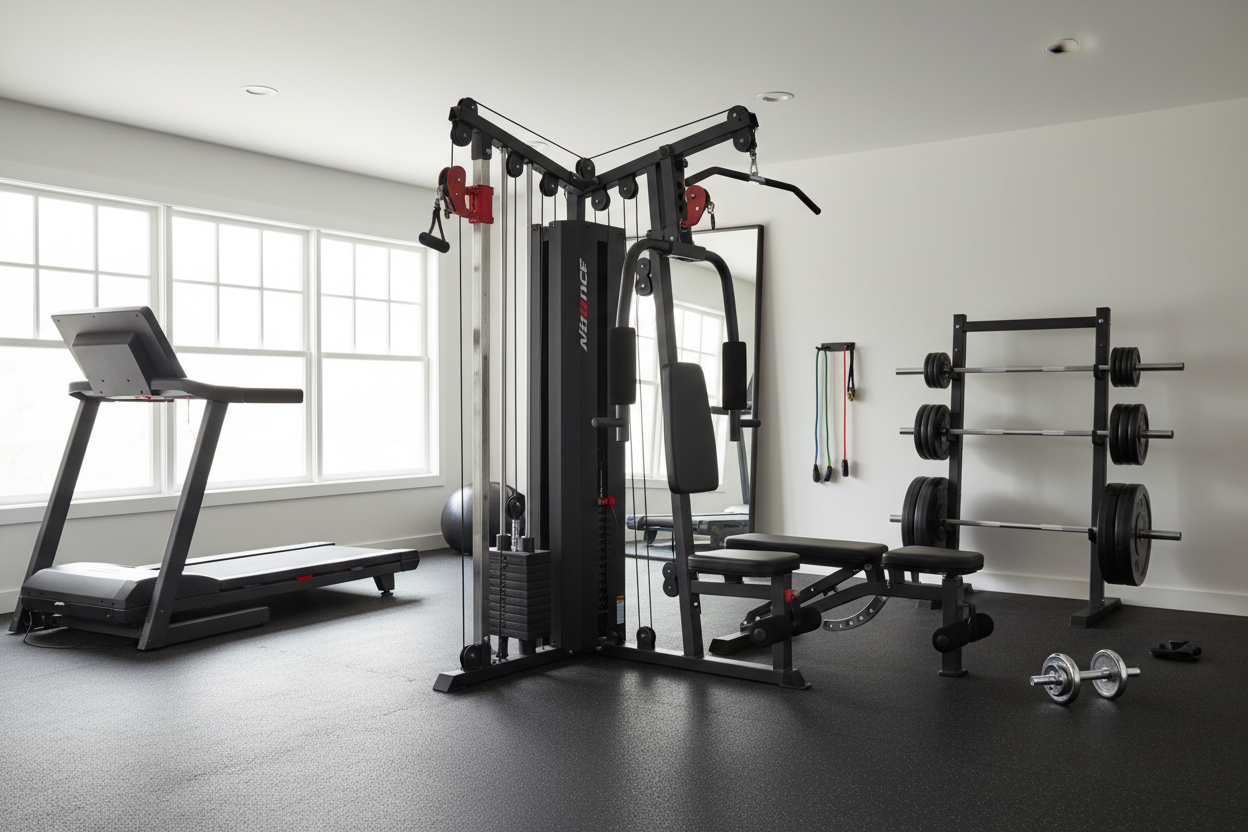
I remember staring at a $3,000 cable crossover, wondering if the extra zero on the price tag actually bought me smoother reps or just a prettier logo. Most people get paralyzed by the weight machine cost because they're looking at the wrong things. They see shiny powder coating and think 'pro-grade,' while the actual bearings are made of plastic and the frame wobbles under a 100-pound load.
Quick Takeaways
- Steel gauge is the foundation; don't settle for less than 11-gauge for serious lifting.
- Aluminum pulleys beat nylon every single time for long-term smoothness.
- Ignore the built-in tablets; focus on the weight ratio and cable quality.
- A 'lifetime warranty' often excludes the parts that actually break, like cables and pads.
Are You Paying for Steel or Just a Sticker?
Let's talk about the 'dirty secret' of the fitness industry: white-labeling. You see a branded weight machine on a flashy website and think it's a bespoke piece of engineering. In reality, it probably rolled off the same assembly line in China as the 'budget' version you saw on Amazon at 2 AM. The difference? A $500 markup for a vinyl sticker and a slightly better customer service email address.
If you're going to pay a premium, make sure the engineering actually changed. Real manufacturers invest in custom-molded pads and proprietary pulley geometries. The 'sticker brands' just pick a color from a catalog. Don't be the person who pays double for the exact same 2x2-inch steel frame just because the logo looks cooler.
The Three Components That Actually Justify a Weight Machine Cost
When you're trying to justify the price, look at the skeleton. 11-gauge steel is the gold standard for garage gyms. It’s thick, heavy, and won't migrate across your floor when you're pushing for a PR. 14-gauge is for people who use their equipment as a laundry rack. If the spec sheet doesn't list the steel gauge, assume it's thin.
Then there are the pulleys and guide rods. Nylon pulleys are fine for a year, but they eventually develop flat spots. Aluminum is forever. Also, pay attention to the guide rods. If they aren't solid, polished chrome, they'll pit and rust, making every rep feel like you're dragging a sled through gravel. We've seen plenty of fluctuations in weight machine gear pricing based on raw steel costs, so if the price seems too low to be true, they likely cut corners on the metal thickness or the rod plating.
Don't Fall for the Digital Screen Trap
Nothing grinds my gears like a $2,000 machine that requires a $40/month subscription just to see your stats. You're buying a smart weight lifting machine that will be an obsolete paperweight in five years when the software stops being updated. A tablet doesn't make you stronger; 300 lbs of physical weight stacks do.
If the 'cost' is coming from a 10-inch screen and a 'community leaderboard,' walk away. Spend that money on a heavier weight stack or better upholstery. I've yet to see a built-in screen that works better than a $10 magnetic phone mount and a free workout app. Physical iron doesn't have software glitches.
How to Shop Weight Machine Setups Like a Garage Gym Veteran
When you shop weight machine options, ignore the marketing photos of people smiling. Look at the footprint and the weight ratio. If a functional trainer is only 48 inches wide, you're going to be cramped during chest flies. A 2:1 ratio means a 200-lb stack only gives you 100 lbs of actual resistance. That's fine for tricep extensions, but you'll max it out on rows in three weeks.
Check the warranty fine print. A 'limited lifetime warranty' often only covers the frame—which is the part least likely to break. Look for at least 5 years on the moving parts and 1 year on the cables and upholstery. If they only offer 90 days on the cables, they know those cables are trash.
Where You Should Actually Put Your Money
Spend your cash on mechanics, not versatility. I'd much rather have an independent arm chest press machine than a 'multi-gym' that tries to do ten things poorly. Independent arms force your stabilizer muscles to actually work and prevent your dominant side from doing all the heavy lifting.
I once bought a 'commercial-grade' lat pulldown from a liquidator. It looked beefy, but the guide rods were slightly bowed. Every time I hit the bottom of the movement, it would catch and jerk. I spent three months trying to lube it up with silicone spray before I realized the frame was just cheap, thin-walled steel that had warped during shipping. Cheap steel isn't just a budget choice; it's a performance killer.
FAQ
Is 11-gauge steel really necessary?
Yes, if you're lifting heavy. It provides the mass needed to keep the machine stable. Thin steel flexes under load, which ruins the smooth feeling of the pulleys.
Why are weight stacks so expensive?
Shipping 200+ lbs of dead weight is a logistical nightmare, and the machining required for the center holes to be perfectly aligned costs money. You get what you pay for in stack smoothness.
Can I put a commercial machine in my garage?
Usually, but measure your ceiling height twice. Commercial units are often 84-90 inches tall, which can interfere with standard garage doors or low basement rafters.
Share:
Why the Best Fitness Training Equipment Does More Than One Thing
Don't Reply to That Universal Weight Machine for Sale Ad Yet