
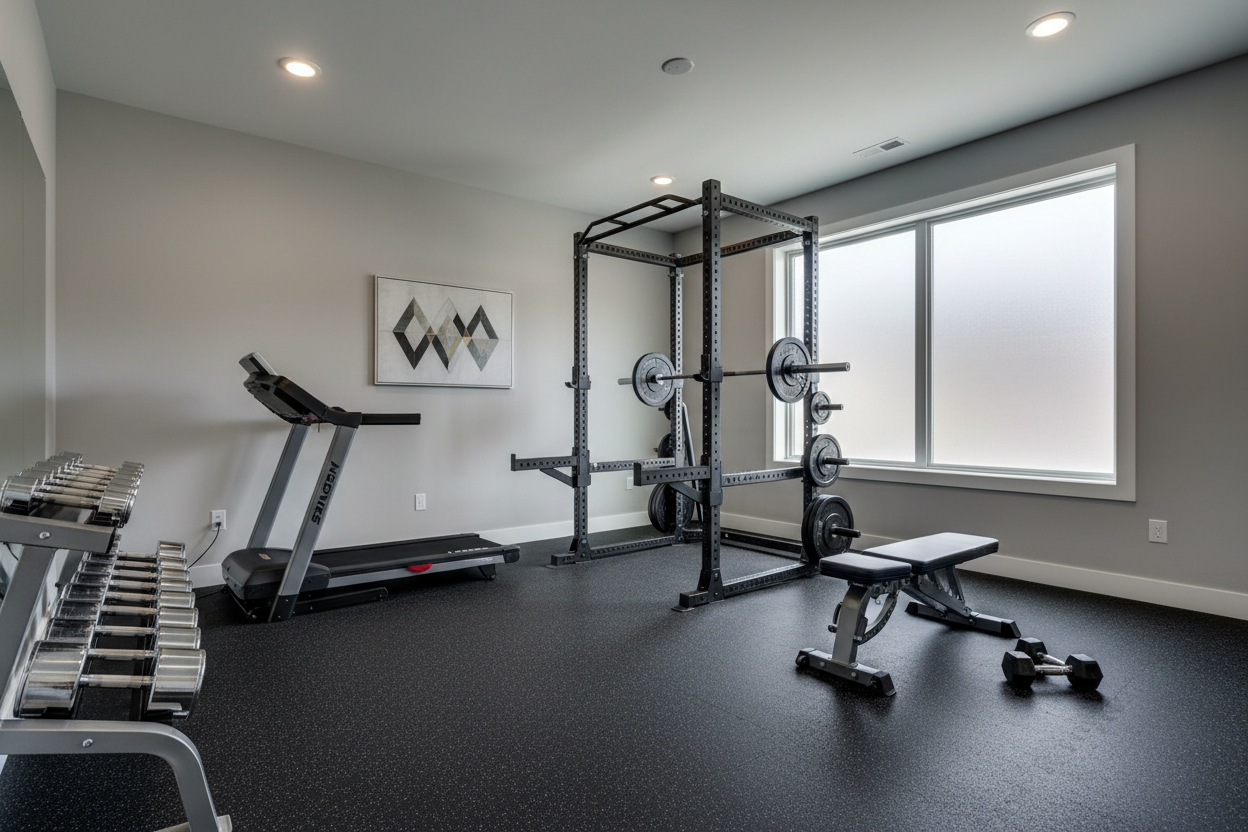
I remember the night I finally quit my commercial club. I was standing in a puddle of someone else's sweat, waiting for a squat rack that three teenagers had been using for curls for forty-five minutes. I did the math on my drive back. Between the membership fees, the gas, and the wasted time, I realized I could afford to build a gym at home that didn't smell like a middle school locker room.
- Prioritize a heavy-duty power rack over flashy machines.
- Avoid thin-walled steel; look for at least 14-gauge or thicker.
- Horse stall mats are the secret to cheap, indestructible flooring.
- Budget for a quality barbell first—it is your primary point of contact.
Coming Home From the Gym for the Last Time
Walking home from the gym for the last time felt like a massive weight off my shoulders. For years, I tolerated the compromises of a standard fitness club—crowded locker rooms and broken cables—because I thought I couldn't replicate that experience in a garage. I was wrong. The math is simple: a $60 monthly membership is $720 a year. In three years, you've spent over two grand on a place you have to drive to. For that same money, you can own a setup that lasts a lifetime.
My first mistake was thinking I needed 40 pairs of dumbbells. You don't. You need a barbell, a rack, and enough plates to make you sweat. When you build an inhouse gym, you are the owner, the janitor, and the head coach. You choose the music, you don't wait for equipment, and you never have to deal with a 'closed for maintenance' sign on the one piece of gear you needed that day.
The 'Mini Gym Set' Trap (And What Actually Works)
The biggest mistake I see beginners make is buying a flimsy mini gym set from a big-box sporting goods store. These 'all-in-one' stations look great in the glossy photos, but they are built with thin, hollow steel that rattles the moment you load more than 100 pounds. I learned this the hard way when I tried a budget at home gym setup that felt like it was going to tip over during every set of pull-ups.
If you want a gym for house use that actually holds up, you need mass. You want a rack that weighs more than you do. A real at home gym needs to feel solid. If the uprights are less than 2x2 inches, keep walking. You're looking for 2x3 or 3x3 steel tubing. That is the difference between a toy and a tool.
Anchor Your Space With a Serious Rack
Your rack is the heart of your sanctuary. Don't cheap out here. I recommend starting with a rack with a low row system. This single piece of equipment allows you to squat, bench, and press safely while giving you the cable versatility for back days. It occupies a 4x4 or 4x5 foot footprint, which is essential when space is at a premium.
When I was testing different setups, I noticed that racks with integrated plate storage felt significantly more stable. Even if you aren't bolting it to the floor, having 300 pounds of iron anchored to the base of the frame keeps things from shifting when you're re-racking a heavy set of squats. This is the foundation of a home gym that actually gets used.
The Truth About Plastics and Pulleys
The 'feel' of a commercial gym usually comes from the pulleys. Cheap machines are often built with cheap plastic pulleys that create friction and jerky movements. When you are the one maintaining the gear, you want sealed bearings and nylon or aluminum wheels. Friction is the enemy of progressive overload.
In my experience, if the cable feels like it's 'catching,' you aren't getting a true weight reading, and you're more likely to snap a line. Look for 1,000-lb or 2,000-lb rated aircraft cables. It sounds like overkill until you're doing face pulls and the cable snaps toward your nose. High-quality pulleys turn a basic workout gym at home into a pro-level experience.
Do You Really Need a Home Gym With Installation?
Deciding whether to buy a home gym with installation depends on your patience and your toolkit. Most modern racks come with decent instructions, but you'll need a set of heavy-duty wrenches or an impact driver. If you're buying a complex home gym system with multiple cable cross-overs and selectorized stacks, paying a pro is worth every penny. It beats spending twelve hours on your Sunday swearing at a bag of mislabeled bolts.
I personally prefer the DIY route because it teaches you how the machine works. When a cable needs tensioning or a bolt needs tightening six months down the line, you'll know exactly where to look. However, if you are ordering a full home gym system, having a team drop it off and bolt it down ensures your floor is leveled and the unit is safe from day one.
Upgrading to a Competition Home Gym Down the Road
You don't need to build a competition home gym overnight. Start with the essentials: a rack, a bar, and some bumper plates. As you get stronger, you can add specialized gear like a safety squat bar or a GHD. The beauty of a gym at home is that it evolves with your goals. Last year, I finally added a dedicated deadlift platform because the noise was bothering my neighbors. It wasn't part of the original plan, but it was a necessary upgrade.
Stick to standard hole spacing (like 2-inch centers) so you can buy accessories from different brands later. If you buy a proprietary rack with weird sizing, you're locked into their ecosystem forever. Build smart, buy heavy, and stop paying for a membership you have to share with 500 strangers.
FAQ
How much space do I actually need?
A 10x10 foot area is the sweet spot. It gives you enough room for a full-size rack and a 7-foot Olympic bar with a little walking room on the sides. If you're in a tight apartment, a folding rack can fit in a 2x4 foot footprint when not in use.
Will my neighbors complain about the noise?
If you're dropping heavy deadlifts, yes. Invest in 3/4-inch horse stall mats and look into 'silencer pads' if you're training on a second floor or in a shared-wall garage. Rubber coated plates also help dampen the clang of iron.
Is a 14-gauge steel rack strong enough?
For 90% of lifters, yes. It's usually rated for 500-800 lbs. If you're squatting over 500 lbs regularly, you should step up to 11-gauge 3x3 steel for that extra peace of mind and zero frame flex.
Share:
How Stance Changes the Smith Machine Squat Muscles Worked
Local Gym Equipment Shops vs. Online: Who Actually Wins?