
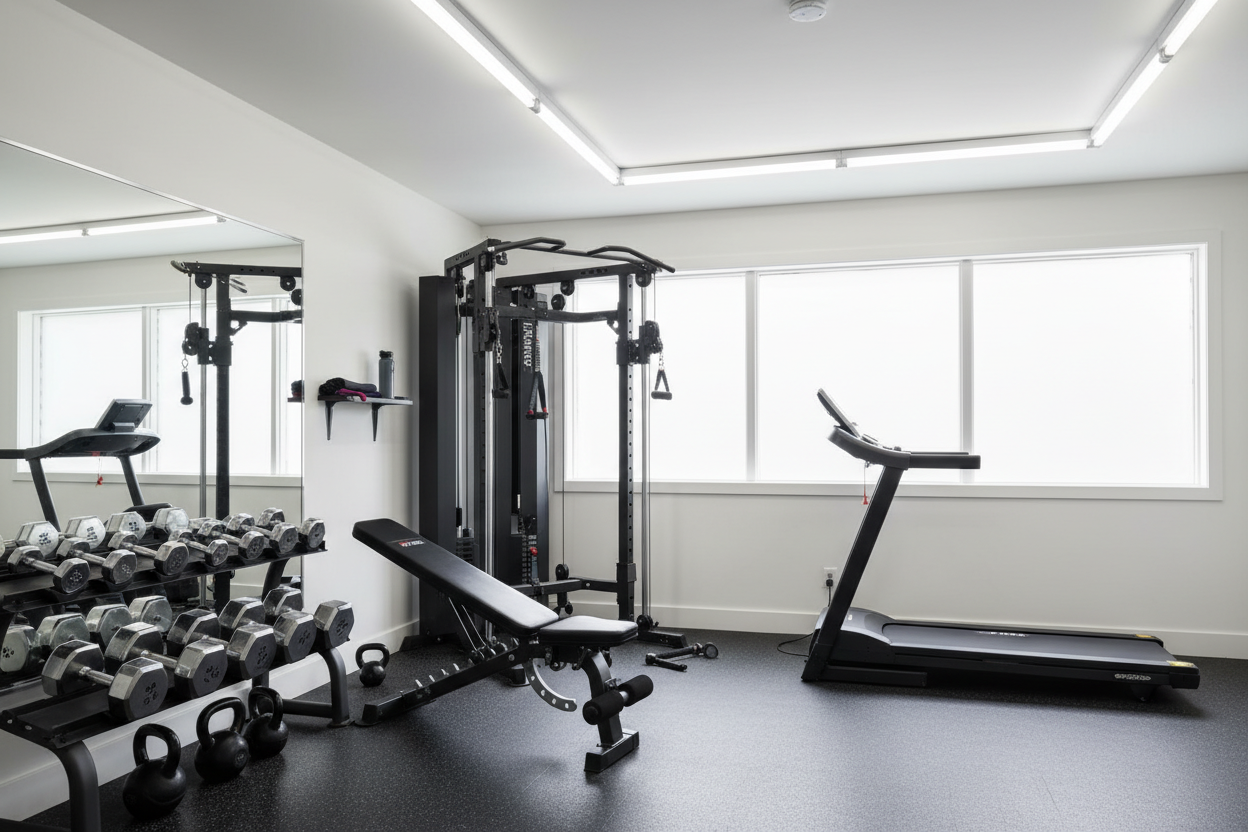
I spent years thinking I needed a 400-square-foot garage to actually get strong. Then I moved into a condo where the only available space was a literal nook in the spare bedroom. I realized that building a corner home gym isn't about buying the smallest gear; it's about buying the smartest gear.
You don't need a massive footprint to move heavy iron. You just need to stop thinking like a commercial gym owner and start thinking like a tetris master. I managed to fit a rack, a bench, and a cable system into an 8x8 area without it feeling like a cluttered storage closet.
Quick Takeaways
- Prioritize vertical storage for everything from plates to bars.
- Avoid 'compact' gear made of thin 14-gauge steel; it's a safety hazard.
- A quality bench that stands upright is non-negotiable.
- Corner-specific cable towers utilize the dead space where walls meet.
Why Most 'Space-Saving' Gear Is a Massive Trap
If you search for small-space fitness gear, you'll be flooded with flimsy, infomercial-grade junk. These brands sell wobbly, lightweight frames to people who are desperate for space. It's a trap. When you're working in tight quarters, you actually need higher quality gear, not lower. Why? Because you can't afford a rack that shifts three inches every time you re-rack a squat.
Cheap corner gym equipment usually relies on thin steel and plastic bushings. After three months, the cables start to fray and the frame starts to squeak. I look for 11-gauge steel and at least 2x3 tubing. If it doesn't weigh enough to feel anchored to the floor, it doesn't belong in your house. You want your gym to feel like a tank, even if it's only the size of a walk-in closet.
The Anchor: Picking a Rack That Actually Fits
The rack is the heart of the setup. In an 8x8 space, a full 4-post power rack is usually a mistake because it eats the center of the room. I've tested folding racks that mount to the wall, but they can be a pain if your studs aren't perfectly spaced or if you have baseboard molding that interferes with the hinge.
For a lot of lifters, a smith machine home gym station is the ultimate footprint-to-functionality winner. Modern versions use high-end linear bearings that feel incredibly smooth, unlike the sticky machines you remember from the 90s. This setup allows you to train to failure safely when lifting alone in a tight corner, providing a built-in spotter that doesn't require an extra three feet of clearance for safety arms.
The Bench Problem (And How to Solve It)
A standard commercial bench is about 55 inches long. If that stays flat on your floor, you've just lost a massive chunk of your training area. I've spent too many sessions tripping over bench legs while trying to do lateral raises. It’s infuriating.
The solution is an adjustable weight bench designed for vertical storage. You want something with a built-in kickstand or a frame design that lets it sit upright against the wall. When I’m done with presses, I flip my bench up, and suddenly I have floor space for deadlifts or stretching. Look for a pad gap of less than two inches and a weight capacity of at least 600 lbs so you don't feel like you're balancing on a toothpick.
Sneaking Cable Work Into the Margins
You don't need a ten-foot-wide cable crossover to get functional trainer benefits. The 'dead space' in a corner—the actual 90-degree intersection of your walls—is usually wasted. This is where corner weight machines like plate-loaded pulley towers shine. They have a triangular footprint that tucks right into the corner.
I use a single-post pulley system that takes up about 2 square feet of floor space. It’s enough for face pulls, tricep pushdowns, and even low-row variations if the footplates are positioned correctly. By using plate-loaded options instead of a selectorized weight stack, you save about $500 and a hundred pounds of shipping weight, plus you can use the plates you already own for your barbell work.
The Layout Mistakes That Will Drive You Crazy
My first attempt at this was a disaster. I laid down cheap foam puzzle mats that slid around the moment I tried to do a burpee. Switch to 3/4-inch stall mats immediately. They smell like a tire shop for a week, but they won't budge and they'll protect your subfloor from dropped 45s.
Another pro tip: check your outlet placement before you bolt anything down. I once blocked the only outlet in the room with a heavy rack and spent six months reaching behind it with a coat hanger to plug in a fan. I realized that finding the best weight equipment is only half the battle; the other half is the geometry of the room. Measure your ceiling height three times, especially if you plan on doing pull-ups. There is nothing worse than hitting your head on the drywall during your first set.
FAQ
Can I really squat heavy in a corner gym?
Yes, provided you use a rack with a high weight rating and solid floor anchors. I've loaded 405 lbs in a small corner setup without any stability issues. The key is using 11-gauge steel frames.
What is the minimum space needed for a barbell?
A standard Olympic bar is 7.2 feet long. You need at least 8.5 to 9 feet of width to comfortably load plates without hitting the walls. If you have less than that, look into a 'shorty' bar which reduces the sleeve length.
Are corner cable machines as good as gym versions?
If they use aluminum pulleys and high-tensile cables, yes. The main difference is the weight ratio. Many home units are 1:1 or 2:1, so make sure the resistance feels right for your strength level.
Share:
Every Type of Squat Machine at the Gym, Ranked by Quad Growth
The Only 3 Things You Should Actually Build for a Homemade Gym