
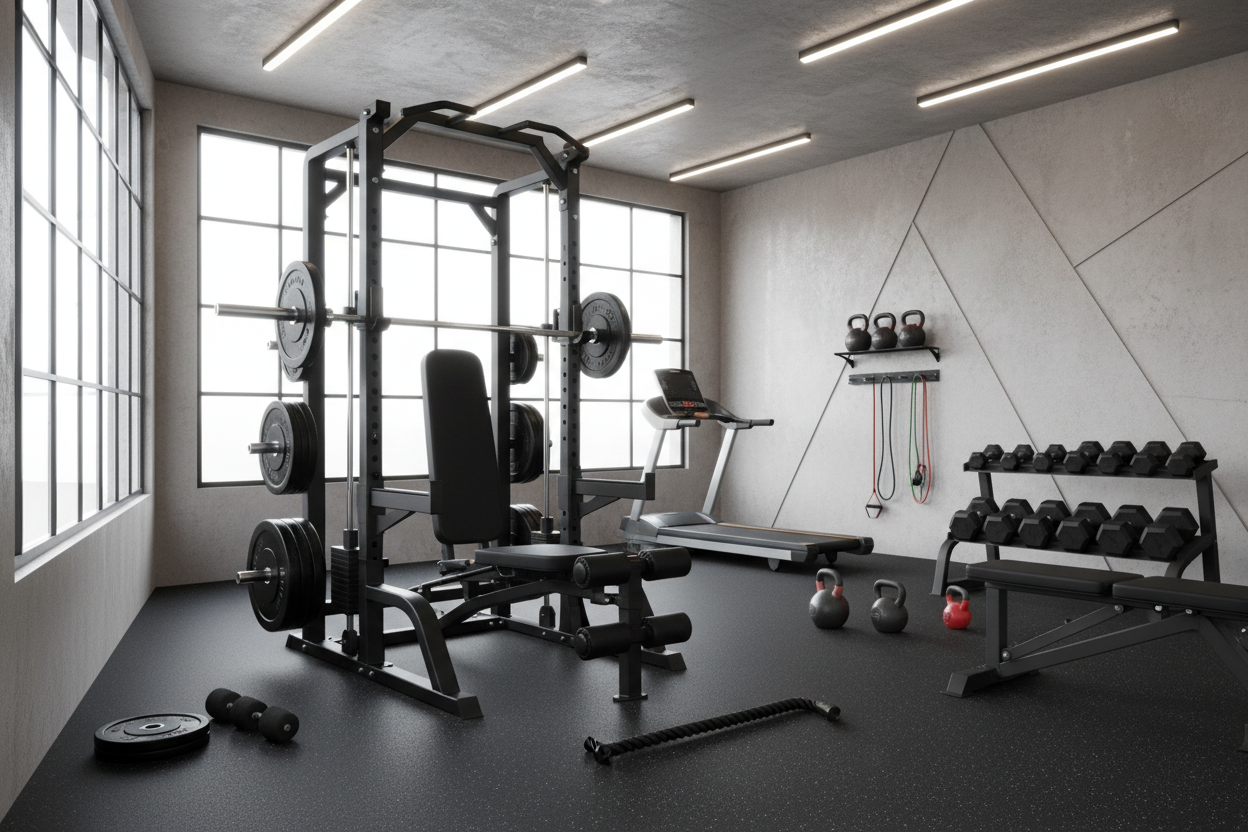
I remember the day my first rack arrived. I spent three hours bolting it together, stood back, and immediately started scrolling through Amazon at midnight for smith machine accessories because the bare-bones setup felt incomplete. It is a slippery slope. One minute you are buying a simple barbell, the next you have a garage full of specialized handles and plastic gadgets that you have not touched in six months.
I have spent thousands of dollars and hundreds of hours testing these things. Most of them are junk. They are either built with thin 14-gauge steel that flexes under a real load or they are so clunky to install that you end up skipping the exercise entirely. I am here to tell you which ones actually earn their keep on your rack.
Quick Takeaways
- Stick to heavy-duty steel; if it is plastic or thin aluminum, it will break.
- Prioritize the leg press plate first—it is the biggest utility boost you can get.
- Always double-check your upright size (2x2, 2x3, or 3x3) before ordering.
- Master the basics before buying niche attachments for 'novelty' movements.
The Trap of Buying Every Shiny Gym Attachment
It is easy to get suckered in. You see a video of someone doing a complex movement with a specialized smith machine add ons and you think, 'That is the missing piece for my gains.' Reality check: 80% of those attachments end up as expensive coat racks. I have a corner of my gym I call the 'Graveyard of Good Intentions' filled with flimsy landmines and awkward stirrup handles.
The goal of a home gym is efficiency. If an accessory takes five minutes to set up for a three-minute set, you will stop using it. You want gear that integrates seamlessly with your modular smith machine setup without requiring a toolbox every time you want to switch from chest to back.
The Only 4 Smith Machine Accessories You Actually Need
If I were starting over today, I would only buy these four. First: a heavy-duty leg press plate. Look for one that is at least 24 inches wide with a textured, non-slip surface. It turns your smith machine into a vertical leg press that can handle 400+ lbs without shaking. Second: functional cable crossover arms. If your machine has the pulleys, these allow for chest flies and cable crossovers that feel as smooth as a commercial gym.
Third: adjustable dip handles. These need to be rock-solid. If there is any 'wiggle' when you grip them, they are a safety hazard. Look for handles with a 1.5-inch diameter for a comfortable grip. Fourth: a multi-grip pull-up bar. The standard straight bar kills my wrists; having neutral and angled grips is a joint-saver for high-volume training. These four items maximize your floor space and your training ROI.
The Smith Machine Add Ons That Will Just Collect Dust
I have seen some truly useless smith machine add ons lately. Cheap core trainers that sleeve over the bar are usually the first to go. They have too much 'play' in the connection, making the movement feel jerky and mechanical. Flimsy pegboards and over-engineered band pegs also fall into this category. If the band peg is not made of solid cold-rolled steel, it will bend the first time you loop a heavy 100-lb resistance band around it.
Instead of hunting for the next weird gadget, stick to the complete smith machine workout guide to master the foundational lifts. You do not need a specialized 'glute-isolator' attachment if you know how to set up a proper smith machine hip thrust with a standard bench and a good pad.
Warning: Check Your Upright Dimensions Before Buying
This is where most people mess up. They buy a 3x3-inch accessory for a 2x2-inch rack and wonder why it is rattling around. You need to know your steel. Most entry-level machines use 2x2-inch uprights with 5/8-inch holes. High-end, commercial-grade racks use 3x3-inch steel with 1-inch holes. If you try to force a 1-inch pin into a 5/8-inch hole, you are going to have a very bad afternoon.
Grab a tape measure. Measure the outside width of the steel tube and the diameter of the adjustment holes. If your rack uses non-standard spacing, you might be locked into buying accessories from the original manufacturer. Do not assume 'universal' actually means universal.
Should You Piece It Together or Buy a Fully Loaded Rig?
If you are currently looking at a $500 machine and $600 worth of add-ons, stop. The math does not favor you. Buying an all in one smith machine with cable crossover is almost always cheaper and more stable than trying to Frankenstein a basic rack together. Integrated accessories are designed to share the same weight stack and center of gravity, which prevents the machine from tipping during heavy dips or pull-ups.
For those who want the absolute maximum versatility in a single footprint, a full body multi training station is the way to go. It avoids the headache of mismatched parts and gives you a professional feel. I have wasted enough money on aftermarket parts that did not quite fit to know that sometimes, buying the complete package is the smartest move for your wallet and your sanity.
Personal Experience: My $150 Mistake
I once bought a 'universal' lat pull-down attachment from a third-party seller. On paper, it looked great. In reality, the cable was three inches too long, meaning I lost all tension at the top of the movement. I tried to fix it with heavy-duty carabiners and zip ties (don't do that), but it was never right. I eventually scrapped it. Now, I only buy accessories that are either OEM or from brands with a proven track record for tolerances. If the specs don't list the exact steel gauge, I keep scrolling.
FAQ
Will 3x3 accessories fit my 2x3 rack?
No. Even if you can get the pin through, the attachment will be loose and tilt forward under load. This is dangerous for things like dip bars or spotter arms. Always match the accessory size to your upright dimensions exactly.
Are plastic-lined J-cups worth the extra money?
Yes, 100%. Unlined metal J-cups will chew up the knurling on your bar and make a deafening screech every time you re-rack. The UHMW plastic liners protect your investment and keep the gym quiet enough that your neighbors won't hate you.
Can I use a leg press attachment on any smith machine?
Only if the bar has a high enough weight rating and the machine is bolted down or heavy enough to stay stable. A leg press puts a lot of horizontal force on the frame. If your machine is a lightweight model, it might tip if you don't have enough plates stored on the back pegs.
Share:
I Ditched 6-Day Workout Splits for 4 Basic Barbell Exercises
I Hate Running, So I Tested Real Gym Equipment for Walking