
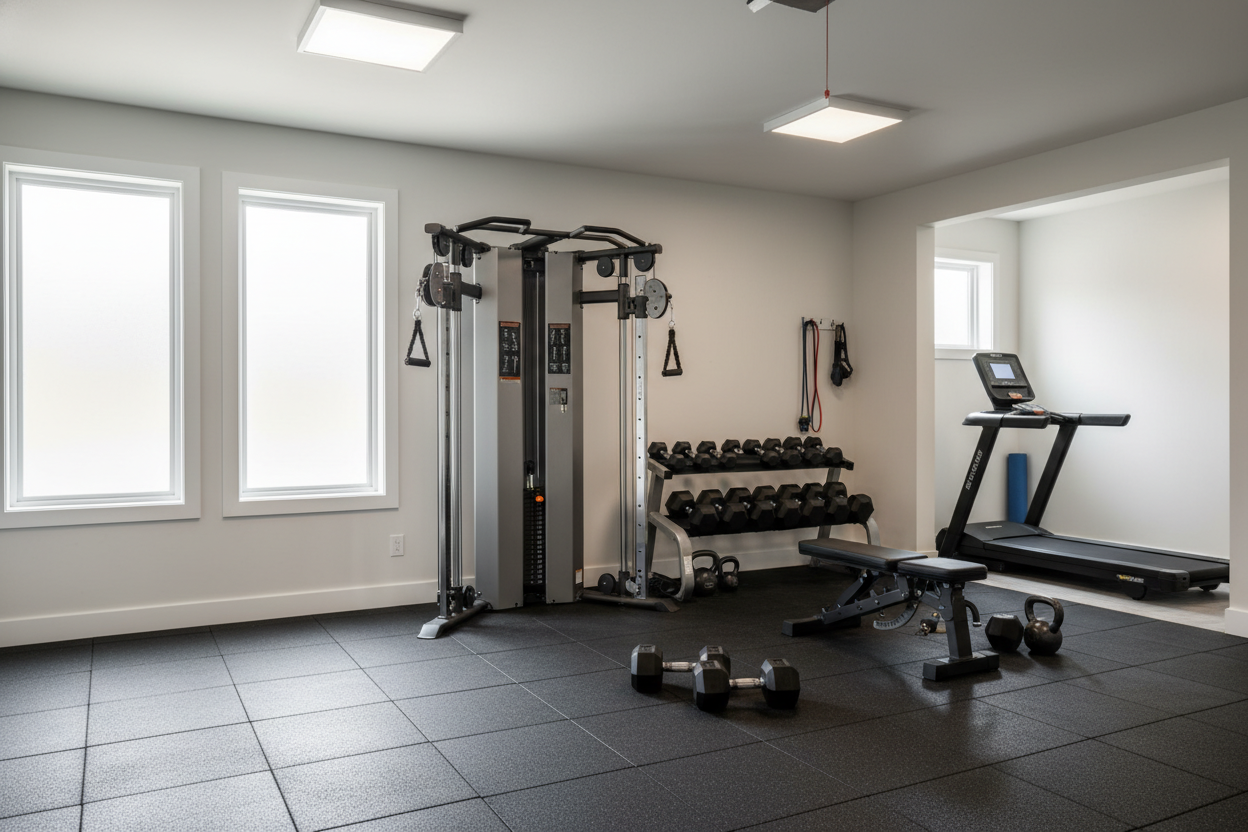
I’ve spent the last decade in warehouses and garage gyms, assembling gear that looked great in a glossy catalog but felt like a medieval torture device once I actually sat in it. We’ve all been there: you hop on the best exercise machine at a high-end club, only to realize your elbows are flaring out at a weird angle or the seat doesn't go quite high enough. It’s frustrating, and more importantly, it’s a fast track to tendonitis.
Quick Takeaways
- Standard gym machines are usually designed for a 5'10" male; if you’re shorter or taller, you need to be picky about adjustability.
- The 'pivot point' of the machine must line up with your joint’s axis of rotation to avoid joint shearing.
- Don't prioritize footprint over ergonomics; a small machine that hurts to use is just an expensive clothes rack.
- Look for independent arm movement and micro-adjustments in seat depth and back angles.
The 'One Size Fits All' Lie in Fitness Hardware
Most of the best gym weight machines you see in commercial facilities are engineered for a very specific bell curve. Usually, that’s a male around 5'10". If you fall outside that range—say you’re a 5'2" woman or a 6'4" guy—you’re basically an afterthought. I’ve seen shorter lifters having to put yoga blocks behind their backs just to reach the handles, and taller guys bottoming out the weight stack before they even hit a full range of motion.
When the machine doesn't fit, you compensate. Your lower back arches, your shoulders roll forward, and you end up training your ego instead of your muscles. The best machines aren't the ones with the most weight; they’re the ones that let you move naturally without fighting the frame of the equipment itself. If you have to contort your spine to reach the start position, it’s not the right tool for you.
Why Pivot Points Dictate Your Gains
Biomechanics isn't just a buzzword; it’s the difference between a productive session and a week of icing your elbows. On the best strength training machines, there is a clear axis of rotation—the pivot point where the machine moves. If your joint (like your shoulder or knee) isn't perfectly aligned with that pivot, the machine will pull your limb in a direction it wasn't meant to go. This is why fixed-path equipment often feels 'grindy' on the joints.
To fix this, I always look for gear that offers a bit of freedom. For example, independent arm chest press machines allow for a converging path. Instead of being locked into a rigid horizontal bar that forces your shoulders into a fixed track, these arms move inward as you press. It mimics how your muscles actually function, protecting the rotator cuff while maximizing tension on the pecs.
Footprints vs. Functionality: The At-Home Compromise
When you're building a home gym, space is the ultimate currency. I get the temptation to buy a single unit that claims to do twenty different things. But here’s the truth: massive corner multi-station machines often sacrifice ergonomics for the sake of cramming in more features. They use one pivot point for three different exercises, which means it probably doesn't fit perfectly for any of them.
The best weight machines at gym facilities usually focus on one or two movements, but at home, you need versatility. The key is finding a best training machine that uses cables or adjustable pulleys. Cables don't have a fixed pivot point, meaning they adapt to your wingspan and height rather than forcing you to adapt to them. A 3x3 foot footprint with a high-quality cable column will almost always beat a 6x6 foot multi-gym that feels like a clunky mess.
How to Test Drive Gear Like a Pro
If you're looking at a best rated exercise machine online, don't just look at the star rating. Look at the adjustment specs. Does the seat have 3 positions or 10? Is the back pad adjustable for angle? These 'micro-adjustments' are what allow you to find your specific groove. When I test a best gym workout machine, I’m looking for smooth travel and heavy-duty pop-pins that don't wiggle under load.
For those who want variety without a dozen different pieces of gear, I usually point people toward highly adjustable multi-training stations. These units allow you to move the start height of the weight in one-inch increments. That level of granularity means you can set the machine to your exact limb length, ensuring the resistance is heaviest where you are strongest, not where your joints are most vulnerable.
Building Your Setup Around Your Body (Not the Internet's)
The fitness industry loves to hype up the next big thing, but your anatomy doesn't care about trends. I’ve seen people spend thousands on gimmicky late-night ab machines that ended up being used as coat racks because they felt awkward and cheap. Your goal should be to find hardware that feels like an extension of your body.
Ignore the 'top 10' lists that don't talk about lever lengths or seat heights. The real best training machine is the one that lets you move through a full, pain-free range of motion with enough stability to actually push your limits. If it feels 'off' during the first set, it’s only going to feel worse when you’re grinding out a heavy triple.
Personal Experience: The Leg Press That Failed Me
A few years ago, I bought a budget-friendly leg press for my garage. On paper, it was great: 1,000-lb capacity, thick padding, and a small footprint. In reality? The footplate angle was fixed and the seat didn't tilt. Every time I went deep into a rep, my lower back would round off the pad. I tried to 'power through' it for a month before my lumbar spine finally revolted. I ended up selling it at a loss and replacing it with a unit that had a 4-way adjustable seat. It took up more room, but I could finally walk after leg day.
FAQ
How do I know if a machine fits me?
Sit in the machine and look for the 'axis of rotation'—it’s usually marked with a bright bolt or a sticker. That point should line up exactly with your joint (like your elbow for a curl or your knee for an extension). If you can't get them to line up, the machine doesn't fit.
Are cables better than fixed-path machines?
Generally, yes. Cables allow for a more natural, individual-specific movement path. Fixed machines are great for stability and isolating a muscle, but only if the machine's geometry matches your body's geometry.
Is a Smith machine a good 'all-in-one' option?
It can be, but look for one with a slight vertical incline (usually 7 degrees). A purely vertical Smith machine can be tough on the shoulders during presses because it forces a perfectly straight line that most humans don't naturally move in.
Share:
What Are the Smith Machine Bench Press Muscles Worked, Really?
Is a Leg Press Smith Machine Setup Actually Safe for Your Spine?