
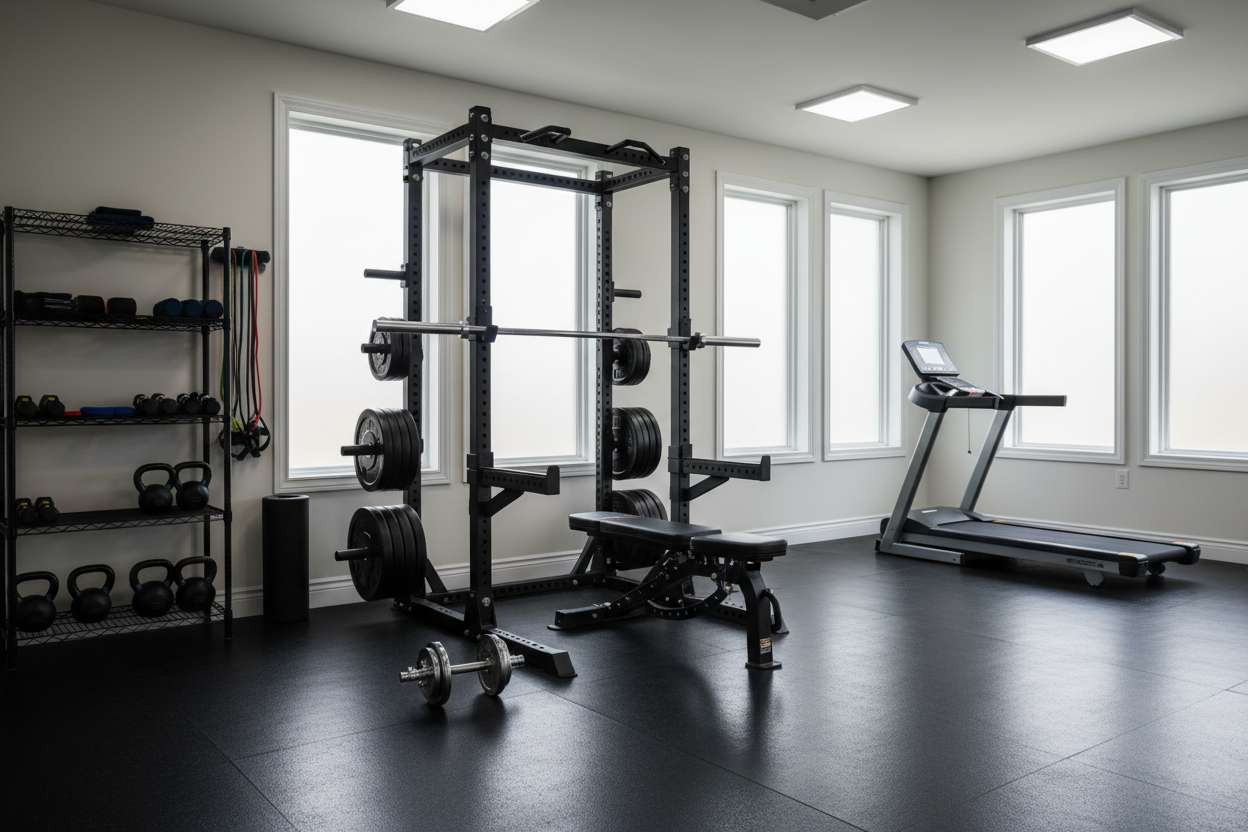
I remember the day I finally quit my $80-a-month commercial gym. I was tired of the crowds and the broken cable machines, so I started looking into an at home gym diy setup. I spent hours on forums looking at guys who built power racks out of 4x4s and buckets of Quikrete, thinking I could save a grand by being handy with a circular saw.
The truth is, most of those 'budget' projects are accidents waiting to happen. You want a gym that builds muscle, not one that sends you to the ER because a pine board gave out during a PR attempt. If you want a custom space that actually functions, you have to know where to build and where to buy.
Quick Takeaways
- Buy the steel (racks and bars); build the wood (platforms and storage).
- Horse stall mats are the only flooring choice worth your time for a home setup.
- Avoid concrete weights; the weight tolerance is garbage and they crack after three drops.
- A DIY pulley works for face pulls, but it cannot handle the friction of a real heavy lat pulldown.
The Reality Check on Wooden Racks and Concrete Blocks
I get the appeal of the lumber-yard rack. You see a guy on YouTube benching 315 on a frame made of pressure-treated 4x4s and think, 'I can do that for fifty bucks.' Here is the problem: wood is an organic material. It knots, it warps, and it splits. Unlike 11-gauge steel, wood doesn't tell you when it’s about to fail. It just snaps. If you are serious about diy fitness, you have to respect the load. A standard power rack is rated for 700 to 1,000 lbs; your backyard carpentry project is a gamble every time you unrack the bar.
Then there are the concrete weights. I tried this once. I bought the plastic molds, mixed the Quikrete, and ended up with a pair of 45-lb plates that actually weighed 42 lbs and 48 lbs respectively. Good luck balancing a barbell with a 6-lb variance. Within a month of deadlifting, the edges started chipping, leaving a fine layer of gray dust all over my floor. My DIY Gym Setup at Home Was a Disaster. Here's What to Buy. Trust me, your spine is worth more than the $100 you save on cast iron.
Where to Spend vs. Where to Splice in Your Home DIY Gym
The golden rule is simple: if it holds weight above your head or keeps the bar from crushing your chest, buy it from a pro. This means your rack, your barbell, and your plates should be manufactured steel. These are the heavy-duty home gym essentials that form the foundation of your training. You can find a solid squat stand or a power rack for less than the cost of a year's gym membership, and it will outlive you.
Where you should actually use your hands is in the environment and storage. If you are building a diy bedroom gym, you need to think about floor protection and sound dampening. Instead of buying those flimsy interlocking foam squares that pull apart when you move, go to a farm supply store and get 3/4-inch horse stall mats. They weigh about 100 lbs each and are virtually indestructible. For a home diy gym, building your own weight tree or a wall-mounted barbell rack is a great way to save cash without compromising safety. You can build a sturdy weight peg board with a few 2x4s and some 1-inch galvanized pipe nipples for a fraction of the cost of a retail rack.
Legit DIY Home Gym Equipment Ideas (Platforms & Pulleys)
The best home gym ideas diy project you can undertake is a deadlift platform. A retail platform can cost $500+, but you can build a better one for about $150. You need four sheets of 4x8 plywood and one horse stall mat. Layer two sheets of plywood on the bottom, then place a nice piece of oak or maple plywood in the center for your lifting surface. Cut the stall mat into two 2x8 strips for the sides. Now you have an 8x8 lifting area that protects your foundation and keeps the noise down during diy exercise at home.
Another solid project is the ceiling-mounted pulley. You don't need a $3,000 functional trainer for high-cable work. Buy a high-quality swivel eye pulley, some 1/4-inch vinyl-coated aircraft cable, and a few wire rope clips. Bolt the pulley into a ceiling joist, and you have a station for tricep pushdowns and face pulls. Use a loading pin to hold your Olympic plates. It won't have the smoothness of a commercial machine, but for accessory work, it gets the job done for under $40.
Can You Actually Build a DIY Multi Station Home Gym?
I have seen people try to build a diy multi station home gym using PVC pipes and clotheslines. It never works. The physics of a multi-station machine—specifically the pulley ratios and the guide rod friction—are incredibly hard to replicate in a garage. If the cable isn't perfectly aligned, it will drag, making 50 lbs feel like 80 lbs on the way up and 20 lbs on the way down. That jerky movement is a great way to tear a rotator cuff.
When you start looking at complex movements like leg presses or Smith machine tracks, the DIY route becomes a liability. A real Full Body Multi Training Station Smith Machine Dm01 uses precision bearings and guide rods that are machined to the millimeter. Trying to hack that with hardware store drawer slides is a recipe for frustration. If you want variety, buy a versatile piece of equipment and spend your DIY energy on building a custom storage wall or a heavy-duty plyo box.
Why My Next Upgrade Was Pure Steel (And Zero Plywood)
After two years of lifting on a homemade platform with a DIY pulley hanging from the rafters, I realized I was spending more time fixing my gear than lifting it. The plywood started to delaminate, and the pulley cable was fraying. I eventually traded my diy home gym equipment ideas for a professional setup. There is a psychological shift that happens when you step into a rack that doesn't wobble. You lift heavier because you trust the equipment.
If you have outgrown your homemade rig, look into a Smith Machine Home Gym Station. It consolidates about five different DIY projects into one footprint. You get the safety, the smooth cable travel, and the stability that a pile of 2x4s can never provide. Build the platform, build the racks, but let the pros handle the moving parts.
Personal Experience: The Pulley Incident
I once built a 'lat pulldown' using a plastic pulley from a hardware store and some paracord. I loaded 100 lbs on it, and on the third rep, the plastic housing of the pulley literally exploded. The weight stack crashed into my shins, and the snapped cord whipped across my face. I still have a tiny scar near my eyebrow. That was the day I realized that 'budget' DIY is often just 'dangerous' DIY. Now, I only build things that don't have a 'snap' point.
FAQ
Is it cheaper to build or buy a home gym?
It is cheaper to build storage, platforms, and benches. It is almost always better (and safer) to buy your rack, barbell, and plates. DIY weights often cost more in materials and time than used cast iron plates.
What is the best floor for a garage gym?
3/4-inch rubber horse stall mats. Do not buy the 'gym flooring' tiles from big-box retailers; they are too soft and will compress under a heavy rack.
Can I use a wooden squat rack?
You can, but you shouldn't. Wood degrades over time due to humidity and stress. For the $150 you spend on quality lumber and hardware, you can usually find a used steel squat stand on Marketplace.
Share:
Stop Charging Your Weights: The Truth About Digital Dumbbells
Stop Pointing at Stuff: Gym Equipment Pictures and Names Explained