
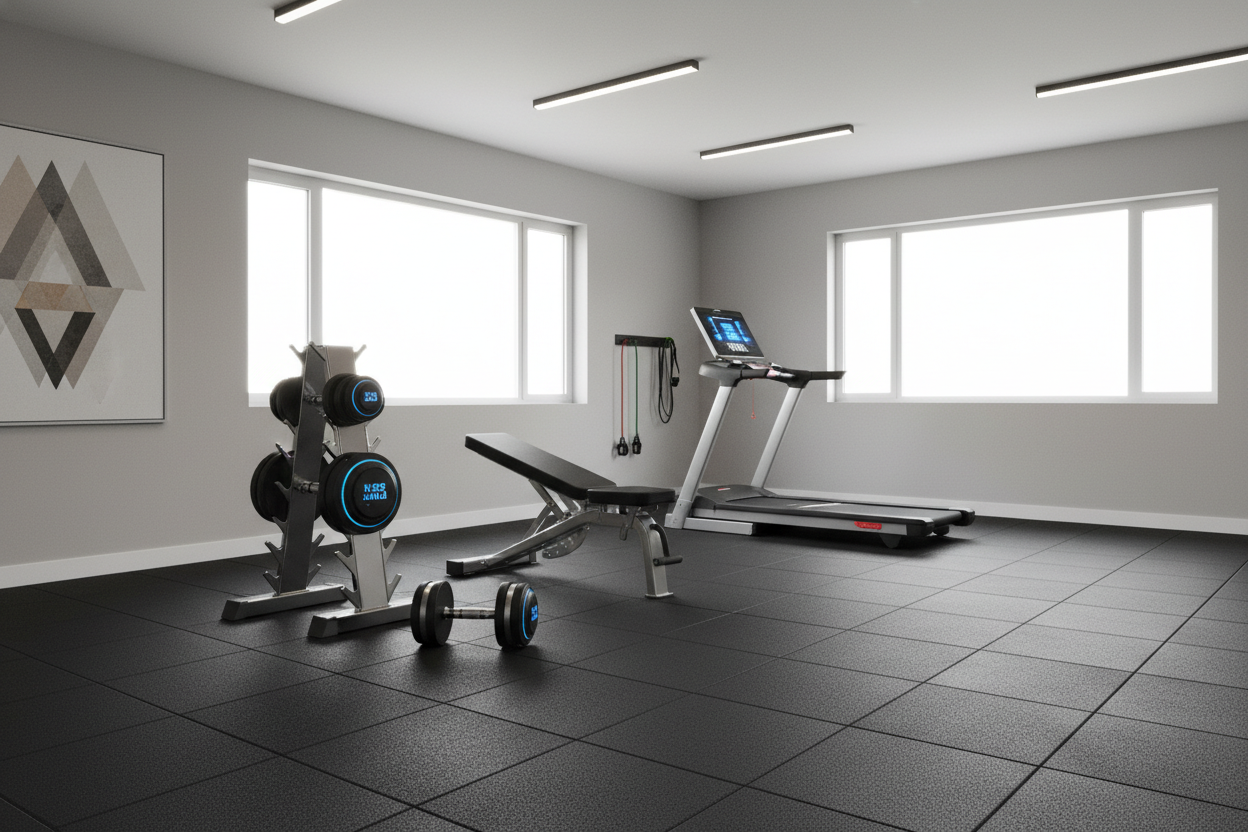
I remember the night I finally quit my big-box gym. They had just raised the monthly dues again to pay for a 'wellness suite' filled with scented air and vibrating chairs I never used, while the actual squat racks were falling apart. I went home and started scouring the internet for gear to build my own sanctuary of iron. That is when I first saw them: digital dumbbells. They looked like something pulled out of a sci-fi movie, promising to replace 20 pairs of weights with a glowing screen and a motorized internal locking system.
It sounds like the ultimate space-saver for a cramped garage. But after years of dragging cast iron across horse stall mats and testing every piece of kit that hits the market, I have learned that 'high-tech' often just means 'more things that can break.' An electric dumbbell might look sleek on your Instagram feed, but does it actually hold up when you are mid-program and pushing for a new PR?
Quick Takeaways
- Digital dumbbells require a constant power source or battery charge; if the battery is dead, your workout is over.
- Motorized weight changes are often slower than high-quality mechanical dials, despite the high-tech marketing.
- Internal electronics and circuit boards make these weights incredibly fragile and impossible to drop safely.
- The high price tag often covers software and 'smart' features rather than the actual build quality of the weight.
The Shiny Promise of Push-Button Weight Changes
The appeal of an electronic dumbbell is obvious. You are standing there, heart racing after a heavy set of presses, and instead of fumbling with pins or clunky plates, you just tap a screen or use a voice command. The motor whirs, the internal pins slide into place, and suddenly you have 50 lbs in your hand instead of 20. For anyone obsessed with supersets or following high-intensity apps where every second counts, this feels like the future.
Most of these units come with integrated LED displays that show your current weight, reps, and even your lifting tempo. Some even sync to your phone to log every set automatically. If you are the type of lifter who loves data and hates keeping a paper logbook, the tech side is genuinely impressive. It turns a piece of cold steel into a connected device that knows exactly how much volume you moved in a week.
But we have to talk about the 'frictionless' claim. Manufacturers love to say these are faster than traditional weights. In a small home gym, saving space is the priority, and a single pair of handles that goes from 5 lbs to 80 lbs is a massive win. However, that convenience comes with a tether. You are either hunting for a wall outlet or worrying about a lithium-ion battery's lifespan. The moment you introduce a motherboard into a strength routine, you are no longer just lifting; you are managing a device.
What Happens When Your Weights Need a Firmware Update?
There is nothing that kills a workout vibe faster than a 'low battery' warning or a connectivity error. I have been there—pre-workout has kicked in, the belt is on, and the weights won't unlock because they are trying to sync with a server in California. When you choose an electronic dumbbell over traditional iron, you are accepting a certain level of tech-related friction. If the internal motor jams or the software glitches, you don't just have a heavy weight; you have a very expensive paperweight.
Traditional gear is built to last decades, not until the next software patch. If you want to avoid the headache of charging your equipment or troubleshooting Bluetooth, you should probably browse our standard Dumbbells instead. There is a specific kind of peace that comes with knowing your equipment will work 100% of the time, regardless of whether your Wi-Fi is down or your battery is at 2%. With digital sets, you are always one hardware failure away from a missed training day.
Then there is the issue of longevity. Most consumer electronics have a shelf life of three to five years before the battery starts to degrade or the processor feels sluggish. Contrast that with a pair of cast iron hex weights that your grandkids could eventually use. When you buy into the electric dumbbell ecosystem, you are on a treadmill of upgrades. You aren't just buying a tool; you are buying a subscription to a tech cycle that eventually leaves you behind.
Speed Test: Smart Tech vs. Mechanical Dials
I put these to the test against the gold standard of mechanical adjustables. In a head-to-head drop set—going from 50 lbs down to 20 lbs in 10-lb increments—the digital system actually felt sluggish. You press the button, wait for the 'beep,' and wait for the motor to physically move the internal locking mechanism. It takes about three to four seconds. That doesn't sound like much, but when you are gasping for air and trying to keep the tension on the muscle, it feels like an eternity.
Compare that to a high-end mechanical system like the Adjustable Dumbbells Ab01. With a quick twist of the handle, the weight is changed in less than a second. There is no motor to wait for and no screen to wake up. Mechanical dials use physical gears and pins that respond as fast as your hand can move. In my testing, the mechanical system won every single speed trial, proving that 'digital' doesn't always mean 'faster.'
The AB01 also feels more like a 'real' dumbbell. Digital versions often have a lot of internal rattle because of the motorized pins and plastic housings required to protect the sensors. When you are doing heavy rows or snatches, that rattle is distracting. A solid mechanical connection feels tighter, safer, and more like the fixed dumbbells you find in a commercial gym. If your goal is purely performance, the mechanical dial wins on speed and tactile feedback every time.
The Drop Test: Why Circuit Boards and Concrete Don't Mix
Here is the hard truth: people drop weights. Whether it is a missed rep on a heavy bench press or just setting them down firmly after a grueling set of curls, dumbbells take abuse. Digital dumbbells are packed with delicate components—accelerometers, Bluetooth chips, LED screens, and motorized actuators. These things do not handle shock well. One bad drop from waist height can crack a screen or dislodge a sensor, rendering the entire unit useless.
If you are training in a garage with concrete floors, this is a massive liability. You end up babying your weights, which is the last thing you want to do when you are training at high intensity. For a setup that can actually survive the rigors of a real home gym, you are much better off with a Rubber Hex Dumbbell Set Ds01. Those are built to be used, abused, and dropped without a second thought. The rubber coating protects your floor, and the solid iron core doesn't have any 'brains' to break.
Most digital dumbbell warranties are notoriously thin when it comes to impact damage. They are designed for 'controlled environments'—which is code for 'don't treat these like actual gym equipment.' If you like to train hard, you need gear that matches your intensity. Using electronics for strength training feels like taking a laptop to a construction site; it might work for a while, but eventually, the environment is going to win.
Are They Ever Actually Worth the Massive Price Tag?
So, who are these for? If you are a tech enthusiast who lives in a high-rise apartment, has plenty of cash to burn, and treats your workout like a light activity while watching Netflix, maybe you'll enjoy the novelty. But for the person building a serious home gym, the value proposition just isn't there. You are paying a premium for features that often hinder the actual lifting experience rather than helping it.
Instead of spending four figures on a pair of smart weights that will be obsolete in a few years, consider a more focused approach. Many lifters find that Why The Best Dumbbell Set Is Probably Only 3 Pairs is a much better philosophy for both the wallet and the workout. By picking a few strategic weights or a reliable mechanical adjustable set, you save money and gain the peace of mind that your equipment will always be ready when you are.
My personal experience? I once had a pair of electronic dumbbells die mid-workout because of a firmware 'handshake' issue between the handle and the base. I spent twenty minutes on my phone with support instead of finishing my back day. That was the day I went back to mechanical gear. If I have to charge my weights like I charge my phone, I'm not training; I'm just managing more clutter.
FAQ
Do digital dumbbells work if the power goes out?
Most require the base station to be plugged in to change weights. If the power is out and they aren't battery-operated, you are stuck with whatever weight was last selected.
Can I use digital dumbbells for CrossFit or HIIT?
I wouldn't recommend it. The constant movement and potential for dropping the weights during fast-paced circuits make them a high risk for internal electronic failure.
Are digital dumbbells more accurate than iron weights?
While they claim to be precise, the internal motors and plastic casing can actually lead to more weight variance over time compared to high-quality machined iron or steel weights.
Share:
I Tested Every Dick's Weight Bench on the Showroom Floor
Stop Building PVC Racks: A Real At Home Gym DIY Strategy