
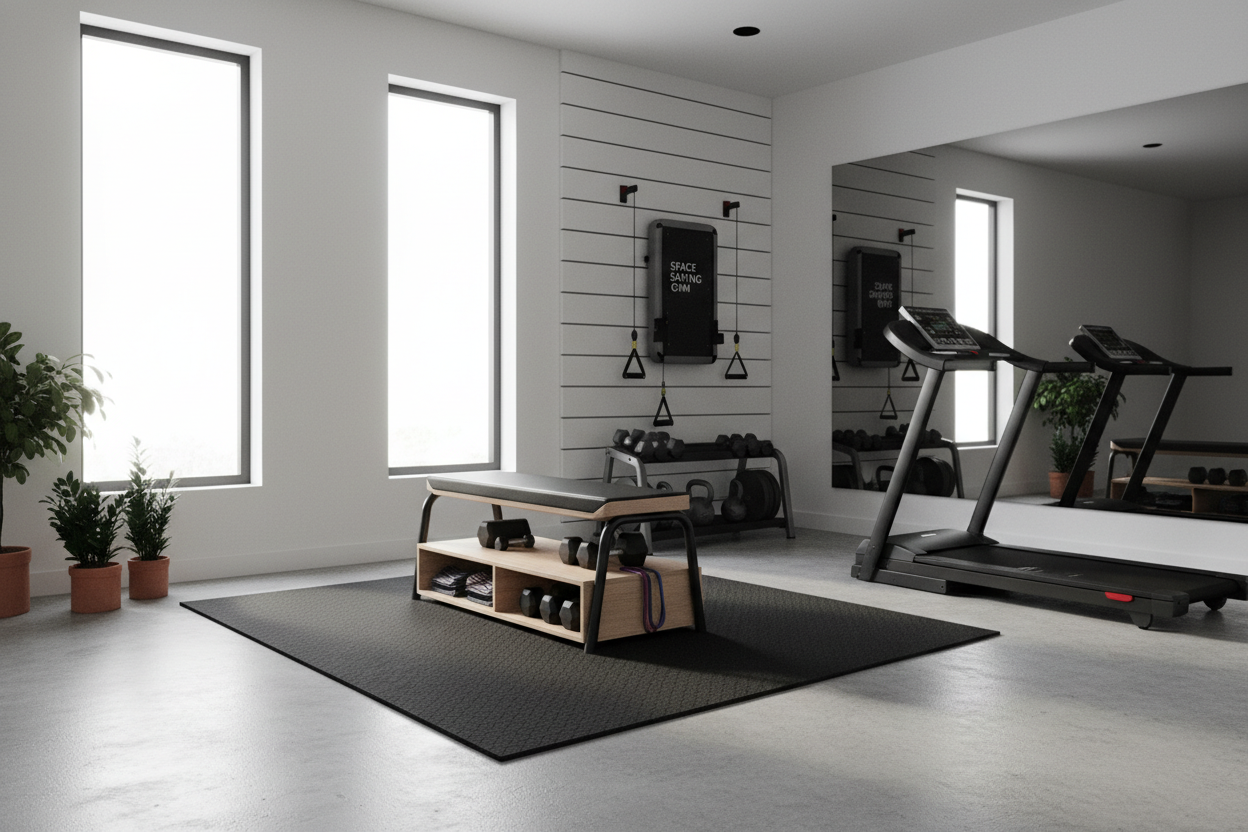
I spent three years doing what I call the 'garage gym shuffle.' Every time I wanted to hit a set of incline presses, I had to move a mountain bike, a stroller, and a dusty three-tier dumbbell rack just to get my bench in position. It sucked. My workout bench with storage finally ended that headache by consolidating two of the biggest footprints in my gym into one.
Quick Takeaways
- Reclaims roughly 6-8 square feet of floor space by deleting a standalone rack.
- Integrated storage keeps your most-used dumbbells within arm's reach for dropsets.
- Stability varies wildly; cheap units wobble when you're pressing over 60 lbs.
- Leg drive can be a nightmare if the storage shelves are too wide.
The Dumbbell Minefield in Small Home Gyms
If you are working in a cramped 10x10 spare bedroom or a one-car garage, floor space is your most valuable currency. A standard weight bench storage solution solves the 'minefield' problem. Most people buy a bench and then realize they have nowhere to put their hex dumbbells, so the weights end up scattered across the floor. This isn't just messy; it is a safety hazard when you are walking around with a heavy barbell.
By using a gym storage bench, you are effectively stacking your gear vertically. You get the utility of a flat or adjustable bench while the heavy steel shelves underneath hold your 15s, 25s, and 50s. It turns a dead zone of air under your bench into a functional tool. I found that removing my old standalone rack made my gym feel twice as big instantly.
Does a Gym Bench With Storage Actually Feel Stable?
This is the first question everyone asks: 'Is it going to tip over?' When a manufacturer hollows out the base of a bench to make room for weight storage, the center of gravity shifts. On a high-end home gym storage bench, the added weight of the dumbbells actually makes the unit more stable. It acts like a sandbag on a light stand.
However, you need to understand the math behind heavy bench pressing. If the frame is made of thin 14-gauge steel, it won't matter how many weights are stored underneath; the pivot points will still feel mushy. I look for 11-gauge steel and a wide rear stabilizer. If you are pushing heavy triples, you cannot afford a bench that shudders when you unrack the bar.
The Shin-Bashing Hazard You Need to Avoid
Here is the reality check most 'best of' lists won't tell you: some of these designs are terrible for your lifting form. A storage workout bench often has shelves that extend out toward your feet. If you like to tuck your feet back to get a solid arch and leg drive, you might find your shins slamming into a rack of 35-lb dumbbells.
I once tested a budget workout bench with weight storage that had a shelf so low I couldn't even get my heels on the ground. It completely ruined my power. Before you buy, check the 'footprint' dimensions. You want at least 12 inches of clear space near the front of the bench so your feet can plant firmly without obstruction. Bruised shins are a high price to pay for a tidy room.
Weight Capacity vs. Rack Load Limits
Specs on these hybrid units can be misleading. You'll see a '600-lb capacity' sticker and assume you're good to go. But you have to distinguish between the pad capacity and the shelf capacity. Often, that 600 lbs includes the weight of the dumbbells sitting on the rack. If you have 300 lbs of iron stored underneath, you only have 300 lbs left for yourself and the bar.
I prefer a weight storage bench that lists a 1,000-lb static rating. This ensures the frame is overbuilt. If you're a 200-lb lifter and you’re working with 100-lb dumbbells, you’re already at 400 lbs of force. Don't buy a unit that is barely rated for your current strength level; you'll outgrow it in six months and be back to browsing catalogs.
When You Should Stick to a Traditional Setup
A weight bench with storage isn't a universal win. If you are a competitive powerlifter or someone who primarily uses a power rack, these hybrids can be annoying. They are heavier and harder to wheel around. If you find yourself moving your bench every five minutes for rows, pull-ups, or squats, the extra 100 lbs of dumbbells on the bottom will make you regret the purchase.
In those cases, you are better off with a standard adjustable weight bench that is light enough to maneuver with one hand. If you have the luxury of space, a heavy-duty adjustable frame without the storage bells and whistles will almost always offer better ergonomics and a cleaner 'tuck' for your feet during heavy sets.
Final Verdict: Is the Floor Space Worth It?
For 90% of home gym owners, the answer is yes. If you are doing HIIT, general strength training, or just trying to stay fit without losing your garage to a pile of iron, a gym bench with storage is a smart play. It forces you to stay organized. When every weight has a home right under your seat, you stop leaving them on the floor.
Just stay away from gimmicky multi-use fitness equipment that promises to be a bench, a rowing machine, and a storage unit all at once. Stick to a unit that prioritizes a thick pad and a rock-solid steel frame. My floor is finally clear, my shins have healed, and I can actually park my car in the garage again. That’s a win in my book.
FAQ
Can I store kettlebells on a weight bench storage rack?
Usually not safely. Most are designed with angled rails for hex dumbbells. Flat-bottomed kettlebells will slide around or fall through unless the bench has a flat 'utility' shelf option.
How much assembly is required for these benches?
Expect about 45 minutes. Because of the storage shelves, there are more bolts than a standard bench. Use a real socket wrench; the 'toy' wrenches they include in the box will strip the hardware.
Does the weight on the rack make the bench harder to move?
Absolutely. Most have wheels, but you're still moving 200+ lbs of dead weight. If you have thick rubber flooring, it takes some serious muscle to relocate it.
Share:
The Real Reason Your Home Lifting Weights Machine Feels Awkward
Is a Used Cybex Smith Machine Too Much Rig for a Garage Gym?