
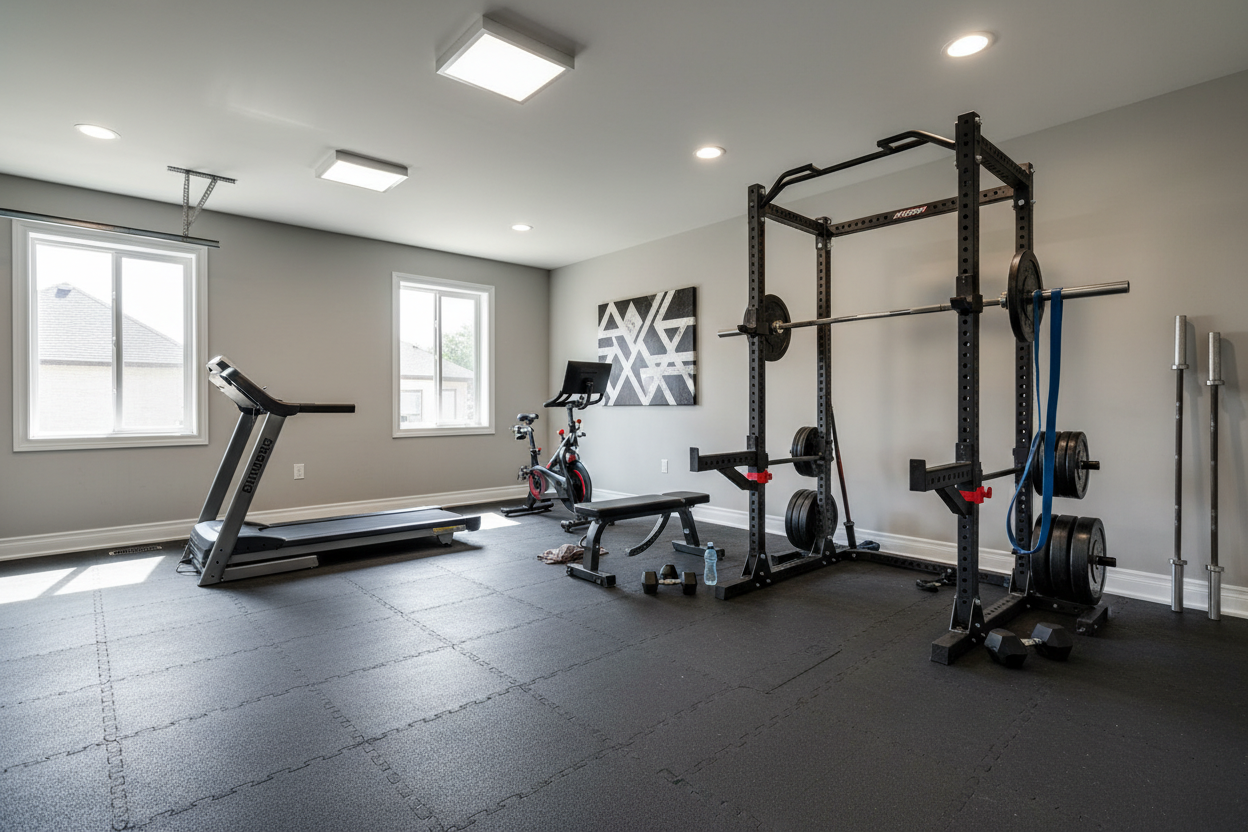
I remember the first time I bought a piece of gym equipment that 'folded for easy storage.' It was a leg press that looked like it was made of recycled soda cans. The first time I loaded four plates on it, the frame groaned like a haunted house. That was the day I realized that the best at home fitness machines aren't designed to hide under your bed—they are designed to stay exactly where you put them, no matter how much weight you throw at them.
- Heavier machines provide the stability needed for heavy progressive overload.
- 11-gauge steel is the gold standard for home gym durability.
- Wall-mounted equipment is the only effective way to save space without losing safety.
- Avoid any machine that weighs less than the plates you intend to put on it.
The Lie of the 'Stowaway' Gym
The fitness industry loves to sell you the dream of a 'hidden gym.' They show you models sliding a treadmill under a sofa or folding a squat rack flat against the wall like a Murphy bed. It sounds great until you actually try to train on it. If a machine is light enough for you to pick up and move with one hand, it is probably too unstable for serious training.
When you are grinding out that last rep of a heavy press, the last thing you want is the frame shifting an inch to the left. Flimsy gear is not just annoying; it is a mental block. You will not push yourself if you do not trust the steel. Real training requires a solid foundation, not a collection of plastic hinges and thin-walled tubing.
Weight Equals Stability (And Why Your Joints Care)
Physics is a cruel mistress. In the world of home lifting, mass is your friend. A heavy footprint means the machine absorbs the energy of the movement rather than shaking it back into your joints. This is why heavier gear is inherently safer for anyone moving beyond the beginner stage.
I look for 11-gauge steel. It is thick, heavy, and does not flex when you rack a bar. When you are using a machine that weighs 400 pounds, it stays planted. That stability allows you to focus entirely on the muscle contraction instead of stabilizing a wobbling piece of equipment. Your connective tissue will thank you for the lack of micro-vibrations during heavy sets.
The Core Pieces That Actually Move the Needle
If you are tired of wasting money on gear that ends up as a clothes rack, you need to focus on the best home workout machines that offer versatility and durability. We are talking about power racks, functional trainers, and heavy-duty benches. These are the anchors of any serious setup.
When building a dedicated home gym, you have to prioritize footprint versus utility. A solid rack might take up a 4x4 space, but it allows for hundreds of movements. Do not trade that utility for a 'multi-gym' that does ten things poorly. Buy the heavy stuff once, and you will never have to buy it again.
Going Vertical: The Smart Way to Save Space
I get it—not everyone has a 2,000-square-foot warehouse. But instead of buying folding junk, look at the best wall-mounted exercise equipment. By bolting your gear directly into the studs of your house, you are using the structural integrity of your home to stabilize your lift.
Wall-mounted racks and cable systems are the ultimate compromise. They take up zero floor space when the bar is off, but they provide the rigid feel of a commercial gym. It is the only way to save space without sacrificing the 'heavy steel' rule that keeps you safe during a PR attempt.
The Heavy-Duty All-in-One Solution
For the solo lifter, a Smith machine home gym station is often the smartest investment. I know the 'hardcore' crowd loves to hate on the Smith machine, but for a home setup, it is a lifesaver. You get built-in spotters and a fixed path that lets you train to failure safely.
The key is finding one with high-quality bearings. If the bar does not glide like it is on ice, it is garbage. A commercial-grade Smith machine provides a level of safety that tension rods or resistance bands simply cannot match, especially when you are training alone in a garage at 6 AM.
When Are Single-Use Isolation Machines Actually Worth It?
Most 'as-seen-on-TV' gadgets are single-use plastic trash. However, there are exceptions. If a machine targets a hard-to-hit muscle group with heavy weight, it earns its floor space. A dedicated glute and hip thrust machine is a perfect example.
Trying to set up a 315-pound hip thrust with a barbell and a bench is a recipe for bruised hips and a sliding bench. A dedicated glute and hip thrust machine locks you in and handles massive weight safely. If you are serious about posterior chain development, that specialized footprint is worth every square inch.
How to Spot the Best At Home Workout Machine for Your Space
Before you drop a grand on gear, run it through my 'No-BS' filter. First, check the steel gauge—11 or 12 is the gold standard. Second, look at the total unit weight; if it weighs less than the plates you are putting on it, move on. Third, check the warranty. Companies that build tanks usually back them up.
Is there a single best exercise machine for home? Honestly, no. But the best at home workout machine for you is the one that feels like it belongs in a commercial club, not a toy store. Buy for the lifter you want to become, not the one you are today.
Personal Experience
My biggest mistake was buying a 'compact' cable crossover. It was so light that every time I did a chest fly, the whole machine tipped toward me. I ended up having to bolt it to a piece of plywood and stack sandbags on the base just to make it usable. It looked ridiculous and worked half as well as a real functional trainer. Now, I won't buy anything that doesn't have a shipping weight that makes the delivery driver curse my name.
FAQ
Can I put heavy gym equipment on my second floor?
Yes, but you need to be smart. Check your floor joists and always use high-density rubber stall mats to distribute the weight. Avoid dropping heavy deadlifts, or your living room might become your new gym floor.
Is 14-gauge steel okay for a home rack?
It is fine for beginners or those using lighter weights, but if you plan on squatting over 300 pounds, you will feel the flex. I always recommend 11-gauge for the peace of mind and long-term durability.
Why is commercial gear so much more expensive?
You are paying for the 'overbuild.' Commercial gear is designed to be used 18 hours a day by people who do not care about it. In a home setting, that same durability means the machine will literally outlive you.
Share:
You Don't Need an Ab Machine With Weights (Do This Instead)
Stop Trashing Your Back: Why I Bought a Gym Roller Machine