
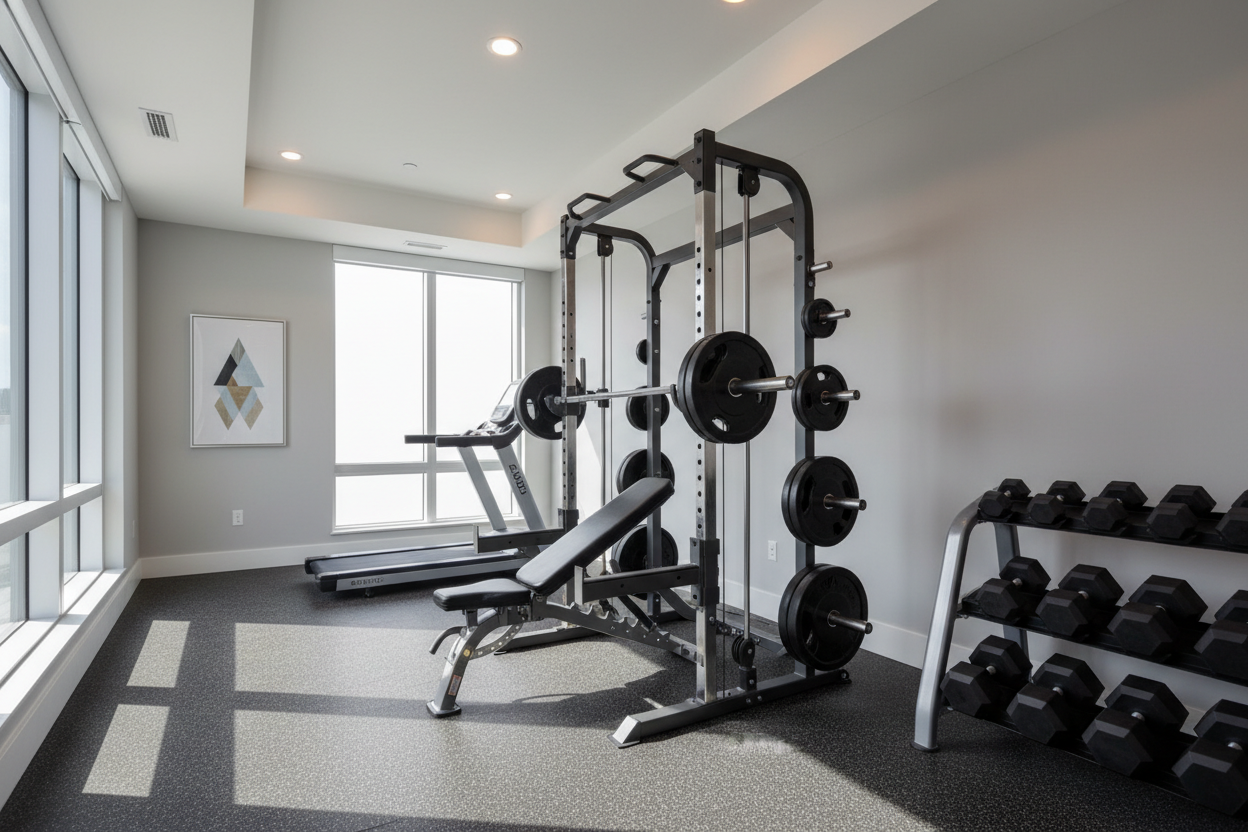
I’ve spent years in garages and commercial gyms watching people completely ignore the decline bench. Usually, it’s because setting up a barbell decline without a spotter feels like a death wish. If you miss a rep, that bar is rolling toward your neck, not your hips. That’s where the smith machine decline press comes in—it’s the smartest way to hammer your lower pecs without a trip to the ER.
Quick Takeaways
- Maximum safety for solo lifters thanks to built-in safety catches.
- Superior isolation of the sternal (lower) pec fibers compared to flat pressing.
- Requires zero energy for balancing, allowing for 10-15% more weight.
- Bench positioning is the 'make or break' factor for shoulder health.
The Real Benefit of Hitting the Decline Angle
Most lifters skip decline movements because they’re awkward. You’re upside down, your blood is rushing to your head, and if you're using a standard barbell, the balance feels totally off. But the lower chest needs that specific downward angle to truly fill out. Using a modern smith machine turns this from a sketchy balancing act into a pure hypertrophy movement.
When you remove the need to stabilize a shaky bar, you can focus entirely on the mind-muscle connection. I’ve found that I can move significantly more weight on a decline Smith than I can on a flat bench. It’s a fixed-path safety net that lets you push to absolute failure without the nagging fear of getting pinned. For a home gym owner, this is how you build a pro-level chest without a training partner.
How to Actually Align a Decline Bench Smith Machine
The biggest headache is the decline bench smith machine alignment. If you're too far forward, you're wrecking your rotator cuffs. If you're too far back, you're basically doing a weird tricep extension. You have to blame the smith machine angle if your gym uses a 7-degree pitch rather than a vertical one.
Position your bench so that when the bar comes down, it lands exactly on your lower sternum—right where your pecs meet your upper abs. If your Smith machine is angled, make sure you are lying down so the bar moves 'down and back' toward your face on the eccentric phase. This mimics the natural arc of a press and keeps the tension on the muscle, not the joint.
Step-by-Step: Nailing the Decline Smith Press
To start the decline smith press, set your bench to a 15 or 30-degree decline. Anything steeper and you’re just making yourself dizzy for no reason. Hook your feet firmly into the rollers; if you slide during the set, your alignment is trashed. Grab the bar with a grip slightly wider than your shoulders—aim for the rings on a standard Smith bar.
Un-rack the bar by rolling your wrists. Lower it under control for a three-second count. You want to feel that deep stretch in the lower pec. Don't bounce it off your ribs—the Smith machine's fixed path makes it easy to cheat, but your sternum won't thank you for the impact. Explode upward, but stop just short of a hard lockout to keep the tension where it belongs.
Mistakes That Will Ruin Your Lower Chest Gains
The most common error I see is 'ego-tilting' the bench. A 45-degree decline is for abdominal work, not heavy pressing. If the angle is too steep, your range of motion goes to zero. Also, watch your elbows. If they flare out 90 degrees from your torso, you’re asking for an impingement. Keep them tucked at about a 45-degree angle.
A decline smith machine setup can hide poor shoulder stability, but it won't save you from bad mechanics. If your shoulders feel 'pinchy' no matter how much you adjust the bench, you might be better off on a dedicated chest press machine. Some bodies just don't play well with a fixed barbell path, and there's no shame in using independent arms to save your joints.
Free Weights vs. The Fixed-Path Safety Net
In the smith machine decline bench press vs. barbell debate, purists will tell you that you're missing out on 'stabilizer muscle' recruitment. They aren't wrong, but they're missing the point. If you want to grow your chest, you want the target muscle to be the limiting factor, not your shaky wrists or a weak rotator cuff.
The barbell bench press debate usually ignores the reality of solo training. In a Smith machine, I can grind out those last two 'ugly' reps that actually trigger growth, knowing I can just flick my wrists to safety. On a free-weight decline bench, I’d have to leave those reps on the table or risk a very awkward conversation with a paramedic.
My Personal Take
I remember trying a heavy decline set on a rusty old rack in my first home gym. I didn't have a spotter, and I misjudged the rack height. I ended up 'guillotining' myself and had to slide out like a wet noodle. It was embarrassing and dangerous. Switching to a Smith machine for my heavy decline work meant I could finally load three or four plates without wondering if I’d be able to breathe afterward. The pump is better, and the peace of mind is priceless.
FAQ
Is the Smith machine decline press harder than flat press?
Usually, no. Most people are stronger on a decline because the range of motion is slightly shorter and the mechanical advantage is better for the pecs. Expect to lift about 10% more.
Does this exercise hit the upper chest at all?
Very little. This is a specialized tool for the lower and middle pec. If you need upper chest, stick to inclines at a 30-degree angle.
How do I stop myself from sliding off the bench?
If your bench doesn't have leg rollers, you shouldn't be doing decline presses on it. The rollers are the only thing keeping your spine from compressing and your body from sliding into the floor.
Share:
I Asked a Smith's Machine Shop to Build a Gym Rig. Here's the Cost.
The Machine Training Program I Give to Every Gym Beginner