
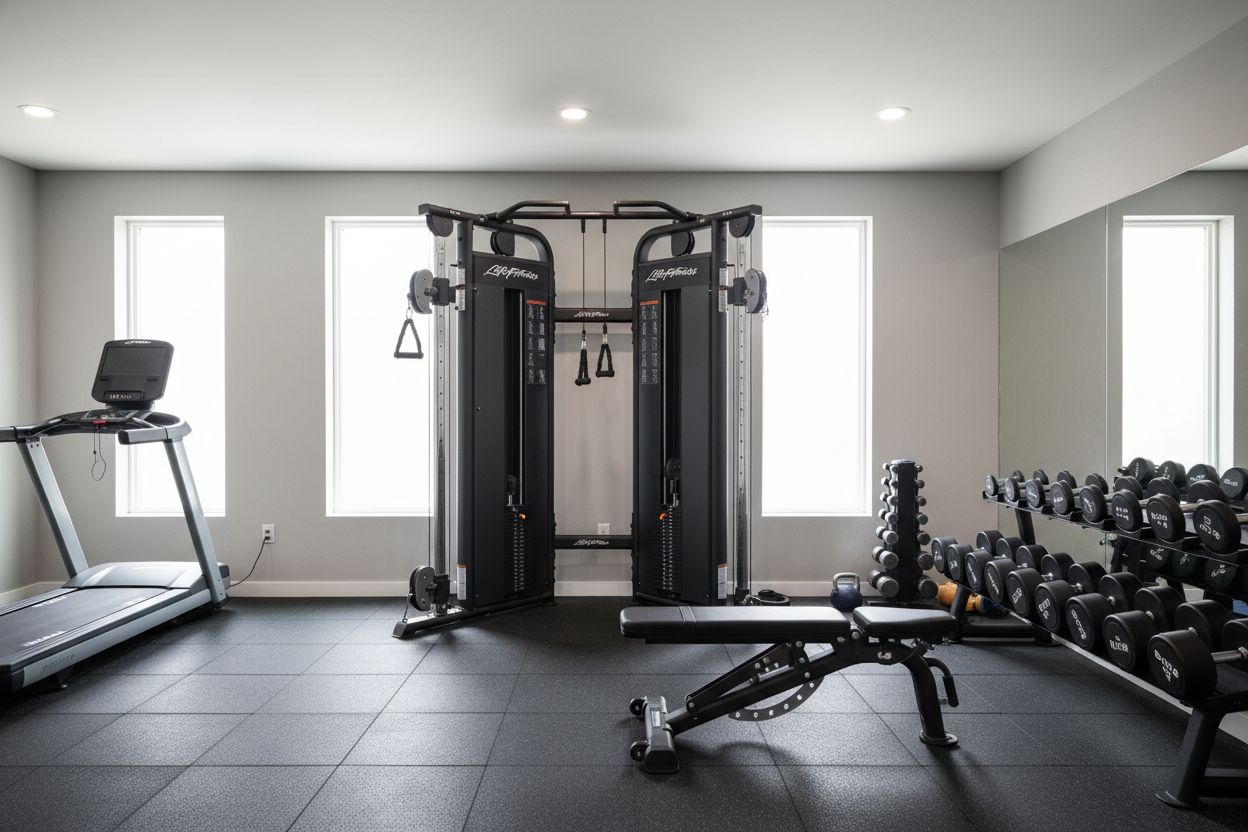
We've all been there. You're at the local big-box gym, you pin the stack at 150, and you're ripping through tricep extensions like a pro athlete. You feel like a god until you go home, try to curl a 50-pound dumbbell, and realize your strength hasn't actually tripled overnight. Understanding a life fitness weight stack conversion is the only way to keep your training data honest and your ego from writing checks your muscles can't cash.
- Most Life Fitness functional trainers use a 2:1 pulley ratio.
- If the sticker says 100 lbs, you are likely feeling 50 lbs of actual resistance.
- Cable friction and pulley wear can add 'ghost' weight to the movement.
- Always check the cable routing to determine the true mechanical advantage.
The Ego Trap of Commercial Cable Machines
Commercial gyms are designed to make you feel successful. If you feel strong, you keep paying your membership dues. It's the same psychological trick used for the Planet Fitness Smith machine barbell weight, where counterweights make a heavy bar feel like it's floating in space. Cables are the same way; they use physics to hide the truth.
When you pull on a Life Fitness handle, you aren't just lifting a plate. You're engaging a system of pulleys that distribute the load. While it feels 'smooth,' it's often because you're only moving a fraction of the actual iron on the stack. If you don't account for this, your training log is basically a work of fiction.
Breaking Down the Life Fitness Machine Weight Scale
The life fitness machine weight scale is usually a half-truth. Most Life Fitness Signature Series or Optima functional trainers are built with a 2:1 pulley ratio. This is a deliberate design choice, not a mistake. It allows for more cable travel, which is essential for athletic movements where you need the handle to move further than the weight stack can physically travel.
In a 2:1 system, the mechanical advantage is doubled. This means for every 100 lbs you select on the stack, the effective resistance at the handle is only 50 lbs. If you're coming from a plate-loaded home gym setup where 50 lbs feels heavy, this is why the commercial life fitness machine weight scale feels like you've suddenly hit a massive PR.
The Simple Math for a Life Fitness Cable Machine Weight Conversion
Performing a life fitness cable machine weight conversion doesn't require a degree in physics. You just need to look at the cable routing. If the cable goes from the handle, over a pulley, and then anchors directly back to the frame of the machine, you are looking at a 2:1 ratio. Divide the number on the stack by two. Period.
Some specialized rehab units use a 4:1 ratio. On these machines, a 100-lb stack feels like a measly 25 lbs. This is great for physical therapy, but it's a disaster for your strength tracking if you don't realize it. Always check the anchor point; the more times the cable loops back on itself before reaching the stack, the lighter that weight is going to feel.
Friction, Age, and Why 50 Pounds Never Feels Like 50 Pounds
Math is great on paper, but a gym floor is messy. If the guide rods haven't seen a drop of silicone spray since the gym opened, that 50 pounds of resistance is going to feel like 60. Friction is the 'hidden' weight that makes old machines feel 'heavy' in a bad way. You want equipment that stays smooth under heavy weight so your data stays consistent.
Worn-out plastic pulleys and frayed cables add drag. This drag isn't 'good' resistance like a heavier plate; it's inconsistent and jerky. If you're training for hypertrophy, you need that tension to be constant throughout the entire range of motion, not fighting a rusty pulley at the top of a rep.
Bringing Predictable Cable Work Into Your Garage Gym
If you're building a home gym, stop playing the guessing game. I tell everyone to buy a wall mounted cable station with 140lbs weight stack where the ratio is clearly defined. In a home environment, space is a premium, but so is the accuracy of your tracking. You don't want to wonder if you're getting stronger or if your pulleys are just getting stickier.
I once spent six months thinking my cable flyes had jumped by 30 pounds after switching gyms. I was logging 'progress' every week. When I finally went back to my old gym, I couldn't even move the weight I thought was my warm-up. I wasn't stronger; I was just doing a life fitness cable machine weight conversion in reverse without knowing it. Don't make that mistake—know your ratios.
FAQ
Why do Life Fitness machines use a 2:1 ratio?
It allows for longer cable travel and faster movements without the weight stack 'jumping' or losing tension. It's better for functional training but requires you to double the weight for the same resistance.
How do I know if my machine is 1:1 or 2:1?
Look at the cable end. If it's attached directly to the weight stack, it's 1:1. If it's attached to the machine frame after looping through a pulley on the stack, it's 2:1.
Does the weight of the handle matter?
Technically yes, but unless you're using a heavy 10-lb steel bar attachment, the weight of the handle is negligible compared to the stack resistance.
Share:
I Swore I'd Never Spend $600 on a Rogue Bench (Then I Did)
Don't Overthink the Best Equipment for Home Workout Spaces